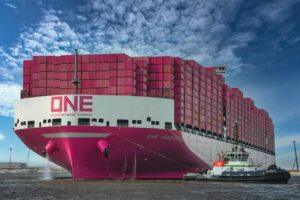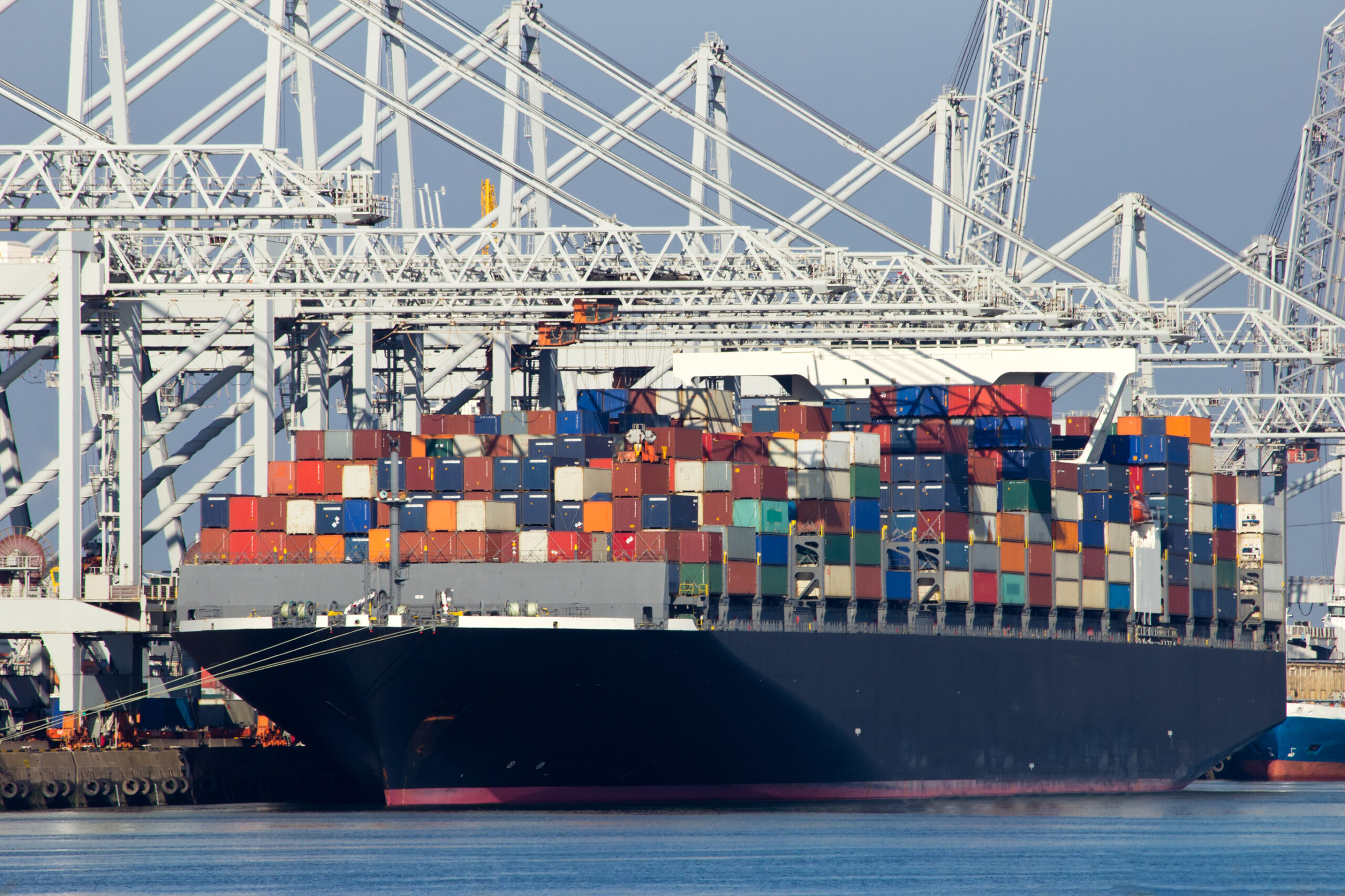
Liner shipping nearly doubled the number of dual-fuel ships on the water in the year to September. The number of dual-fuel container ships and vehicle carriers in service has grown from 180 in September 2024 to 353 in September 2025.
With over 350 ships already operating, dual-fuel capability has become a tangible and growing part of the global container fleet.
Today, there are over 350 dual-fuel container ships and vehicle carriers sailing. 682 more dual-fuel container ships and vehicle carriers have been ordered.
New ships with the technology to run on low- and zero-GHG fuels is one of the critical ingredients to decarbonise shipping.
Container ship and vehicle carrier orders are now 79% dual-fuel. Specifically, 79% of container ship orders by DWT and; 85% of vehicle carrier orders by DWT are for dual-fuel ships. 14% of orders for the rest of the fleet by DWT are dual-fuel ships.
Future fuel demand is led by methanol and methane dual-fuel container ship orders; 80% of container ships orders by TEU are dual-fuel.
Much of the public debate on sustainable transport focuses on what people see every day, from urban mobility to electric vehicles.
Shipping happens mostly out of sight and is often described as a “hard-to-abate” sector, even though oceangoing vessels carry around 80% of global trade.
Speaking at the United Nations launch of the Decade of Sustainable Transport, WSC president and chief executive officer Joe Kramek underlined that shipping’s energy transition is a major opportunity for nations to invest in renewable marine fuels and infrastructure.
He also stressed that the “ocean leg” of supply chains must be fully included in the work of the Decade of Sustainable Transport.
“Liner shipping is investing USD 150 billion to build 1,035 dual-fuel ships by 2030, designed to run on low- and zero-GHG fuels,” Joe Kramek said. “These are firm orders already placed. We hope the Decade of Sustainable Transport can bring the public and private sectors together to unlock affordable green marine fuels and infrastructure, seizing the economic opportunities of shipping’s decarbonisation and accelerating emissions cuts across global supply chains,” Joe Kramek concluded.