Shipping companies Hapag-Lloyd and North Sea Container Line (NCL) have won ZEMBA’s second tender to deploy hydrogen-derived e-fuels, enabling member companies to reduce ocean transport emissions through scalable e-fuels.
The container line Hapag-Lloyd is a winner of its second tender for ocean shipping using hydrogen-derived e-methanol.
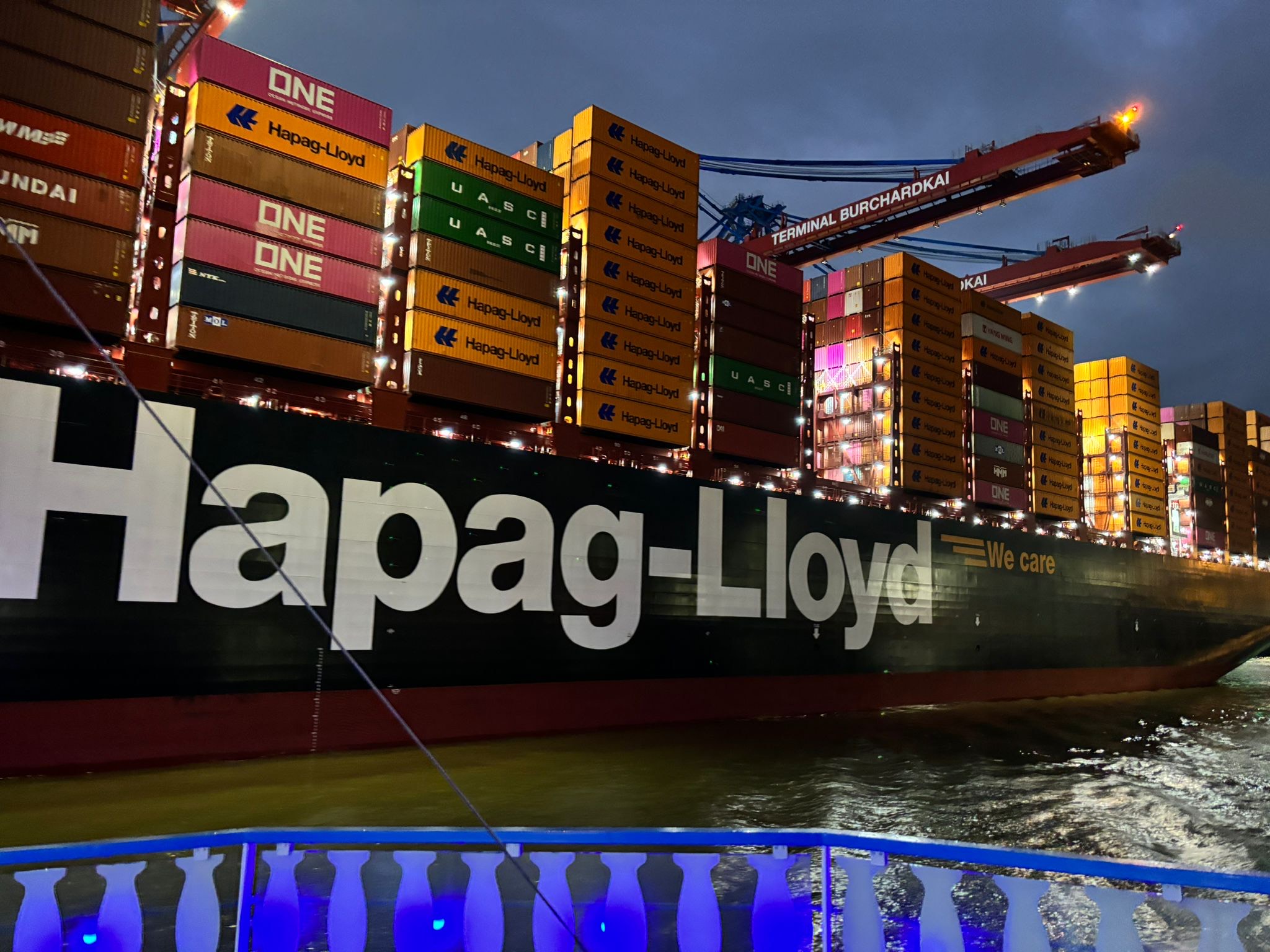
Beginning in 2027, Hapag-Lloyd will deploy e-methanol on a trans-oceanic lane on large methanol dual-fuel containerships.
On the other hand, NCL will deploy the world’s first e-ammonia-powered containership, serving a northern European trade lane.
The Zero Emission Maritime Buyers Alliance (ZEMBA) is a non-profit buyer’s group within the maritime sector, currently comprising over 45 members, including international heavyweights like Amazon, IKEA, and Nike.
Through this agreement, ZEMBA members have committed to collectively abate at least 120,000 metric tons of CO₂e over a minimum of three years.
According to ZEMBA, this effort will enable participating member companies, including cofounders Amazon, Patagonia and Tchibo, and members including Beiersdorf, Brooks Running, Green Worldwide Shipping, IKEA, Nike, Poly Medicure Ltd., and Sport-Thieme to deploy e-fuels on an initial 20 billion tonne nautical miles of transport activity over three years, with some members extending to five years.
“At a time when sourcing scalable e-fuels remains a major challenge for the entire industry, winning the second ZEMBA tender is a significant milestone for us. Deploying e-methanol is an essential step in our journey to reach net-zero fleet operations by 2045. We are very grateful for the trust that all ZEMBA members have placed in our capabilities, and we remain fully committed to reducing greenhouse gas emissions and contributing to a greener future for global shipping,” said Rolf Habben Jansen, CEO of Hapag-Lloyd.
Both fuels will be made with low-carbon hydrogen produced with renewable energy and will deliver a carbon intensity reduction of at least 90% on a lifecycle basis compared to conventional high-emission fuel.