“Methanol is gaining attention as a practical and scalable alternative fuel for deep-sea shipping. This is supported by over 450 methanol-capable vessels in operation and on order and technical solutions now available for all major ship types,” classification society DNV said in a new report.
DNV’s latest white paper, Methanol fuel in shipping, highlights that “methanol-fuelled engines and technical systems have reached high readiness levels, and that existing global production sites, storage facilities, and a growing bunker fleet are providing a strong platform for wider adoption.”
In addition, industry stakeholders are already investing in the fuel, with China accounting for 43 percent of planned global low-GHG methanol production capacity.
But, as with all alternative fuels, methanol’s future role will depend on a combination of regulatory, economic, and operational factors, DNV notes.
Knut Ørbeck-Nilssen, chief executive officer maritime at DNV, said: “As the maritime industry explores pathways to a lower-carbon future, it is important to consider a range of practical and scalable solutions.
“There is no one-size-fits-all answer, and different shipping segments and geographies will require different approaches. Methanol is one option that draws on established technologies and infrastructure, and it is encouraging to see the industry’s growing interest in a variety of alternative fuels.”
The report highlights that certain bio- and e-methanol pathways can deliver very low or even negative lifecycle emissions, and that methanol’s compatibility with existing port infrastructure and the availability of interim bunkering solutions may also reduce complexity and cost for shipowners.
However, the report notes that cost and availability remain significant barriers, as is the case for many alternative fuels.
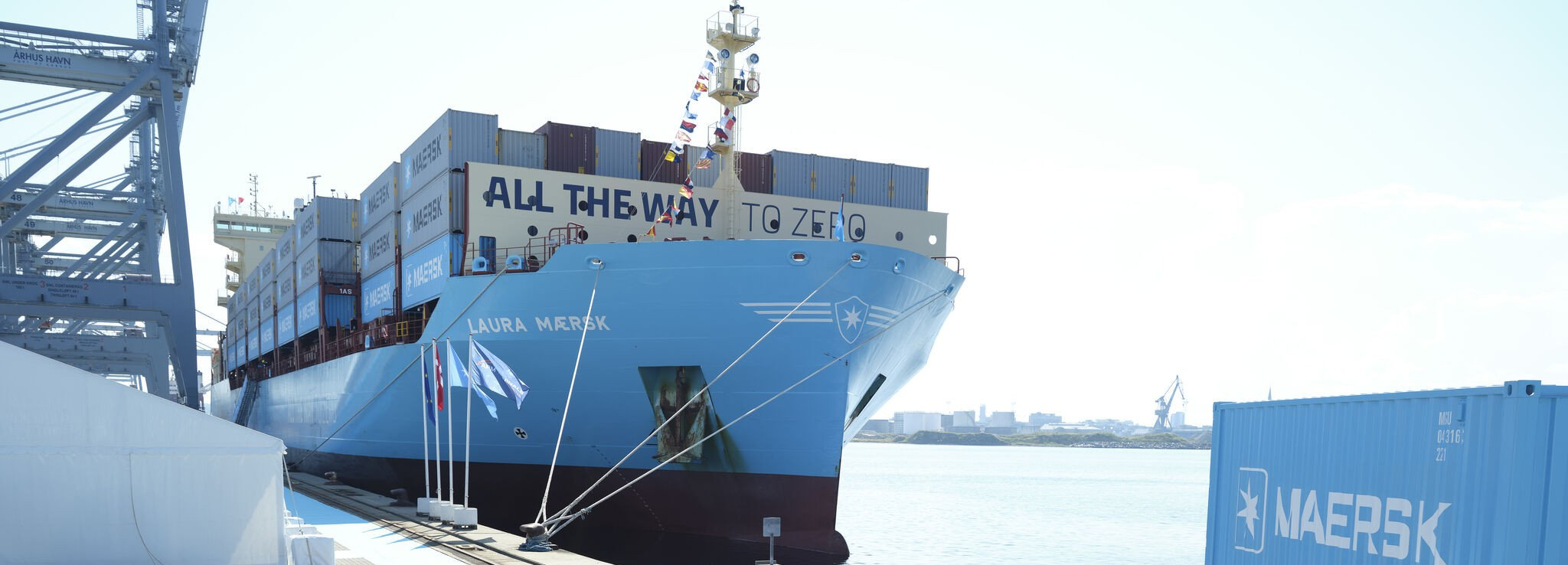
Recently, Danish shipping giant A.P. Moller-Maersk (Maersk) said that it is trailing an ethanol-methanol blend on its methanol containership Laura Maersk as part of its efforts to explore multiple technological and fuel pathways.
The 2,100-teu (twenty-foot-equivalent) vessel is now testing a new mix of 90% methanol and 10% ethanol.
The E10 fuel blend bunkered on the Laura Maersk consists of 90% methanol and 10% ethanol.
Maersk’s approach involves real-world testing under operational conditions, ensuring that any new fuel solutions are not just innovative but also reliable and scalable.
“At Maersk we need to go down different routes to achieve our climate targets. One option is to test some new fuels on the vessels that we have in operation. Laura Maersk is our methanol vessel that has bunkered methanol for the last three years. She has been burning the methanol with no issues but today we are trying something completely new by adding ethanol. We have added 10% today, to the methanol that is delivered to her called an E10,” Peter Normark Sørensen, the senior fuel transition manager at Maersk, said.