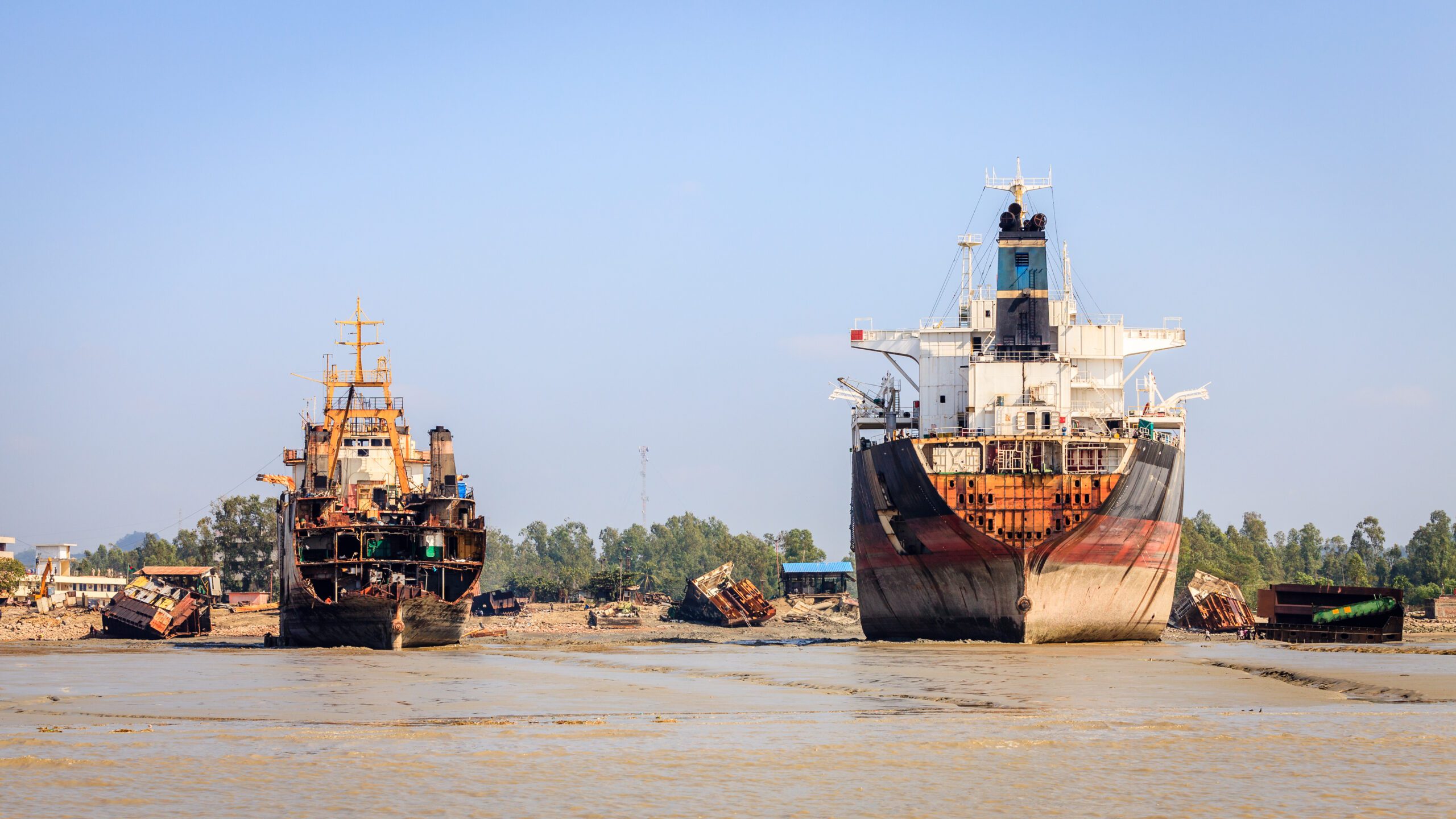
New data released by the NGO Shipbreaking Platform show that 321 ocean-going commercial vessels were sold to the scrap yards in 2025. Of these, 214 large tankers, bulkers, offshore platforms, cargo- and passenger-ships were broken down on the beaches of Bangladesh, India and Pakistan, amounting to more than 85% of the gross tonnage dismantled globally.
The data reveals that 85% of the global tonnage scrapped last year was broken down on three beaches in Bangladesh, India, and Pakistan. Bangladesh and India remain the shipping industry’s first choices for scrapping.
In South Asia, eleven workers lost their lives in 2025, and at least another sixty-two workers injured due to unsafe working practices.
“Clearly, the Hong Kong Convention does not set a standard that ensures safe and environmentally sound practices. Now under review at the IMO, it will be key to bolster its requirements, including ways to phase out the fatally flawed beaching method,” commented Ingvild Jenssen, executive director and founder of NGO Shipbreaking Platform, adding that better enforcement of the Basel Convention’s restrictions on hazardous waste trade need to be ensured through measures that effectively hold the shipping industry accountable.
“This entails shifting responsibility to the states that actually have control over the owners of assets intended for disposal,” Jenssen said.
The Platform warns that the low number of ships that have been scrapped these past years due to favourable operating rates hides a growing backlog of aging tonnage that is expected to head for the breaking yards in the coming years.
The backlog also includes hundreds of tankers operating within the so-called “shadow” or “dark” fleet. It is concerned that these ships, which skirt regulations, will continue to do so with the owners seeking cash, crypto, and foreign currency deals to avoid sanctions.
China tops the 2025 Dumpers List, according to the NGO, with 21 Chinese-owned vessels sold to South Asian shipbreakers, primarily in Bangladesh. This occurs despite China’s domestic capacity to recycle ships in dry-dock facilities.
South Korea and the UAE follow closely, with 19 and 17 vessels beached respectively. In addition, more than 60 vessels departed from the territorial waters of these countries for dismantling in South Asia.
The NGO points out that the UAE Ship Recycling Regulation, which entered into force in June 2025, explicitly prohibits vessels from leaving UAE territorial waters for scrapping at beaching- and landing yards.
The NGO Shipbreaking Platform also notes that Turkey is one of the few non-EU destinations that can receive EU-flagged end-of-life vessels, but says that its ship recycling sector has come under mounting scrutiny.
At the EU level, broader economic and industrial transformations aimed at enhancing clean industries are taking place.
Trade unions, the recycling and steel sectors, and civil society organisations are calling on the EU to curb the export of EU owned end-of-life vessels that may cause harm to third countries and recognise the role maritime secondary steel can play in decarbonising not only steel production, but also construction.