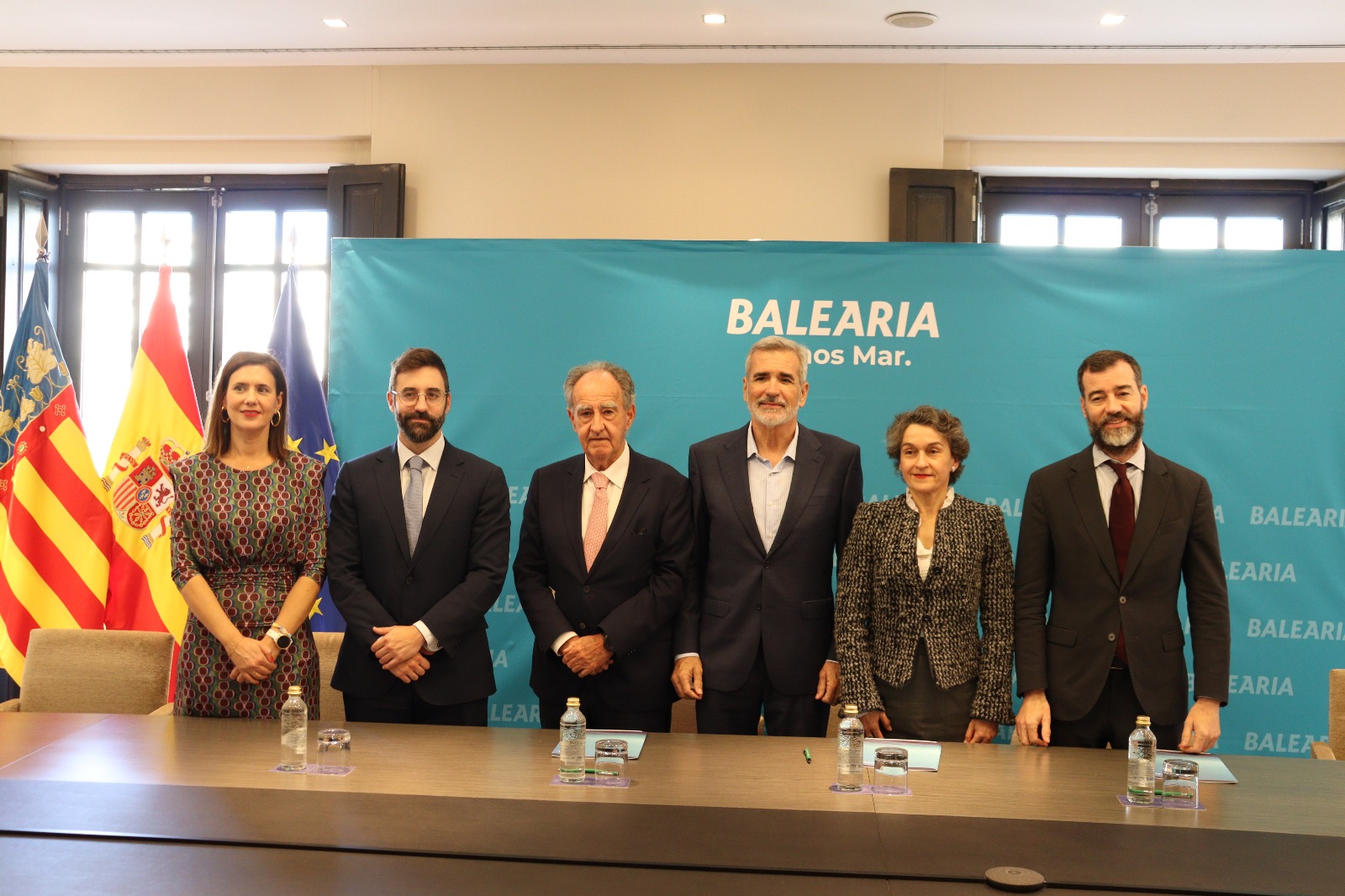
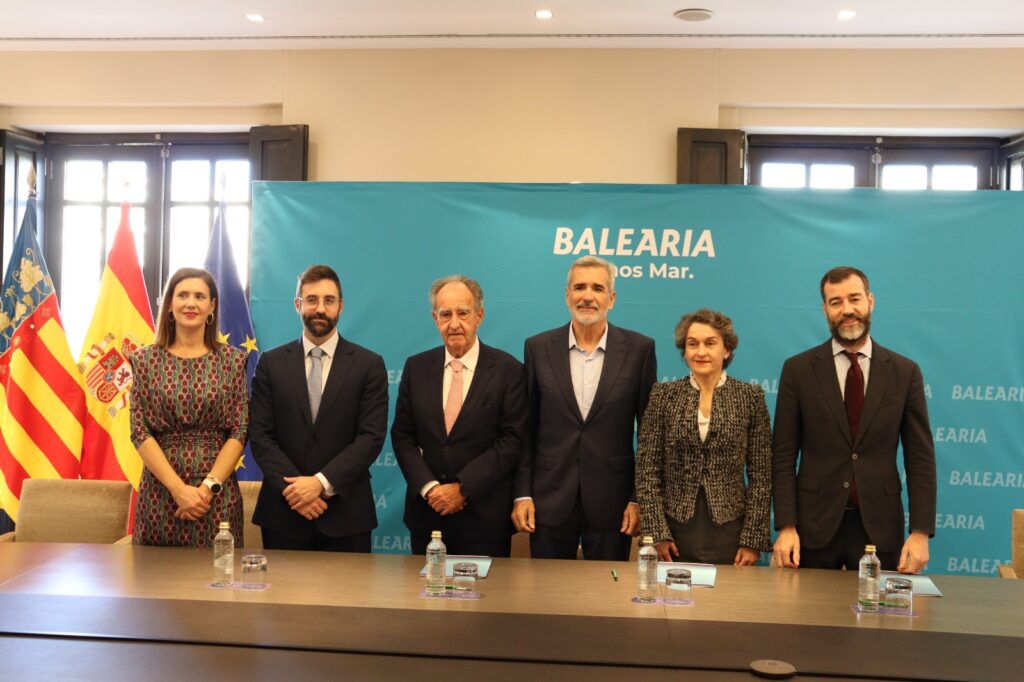
Three shipping entities have signed a major agreement last week to develop the first green maritime corridor in Spain. The shipping company Baleària, with a fleet portfolio of ferries/fast ferries, and the ports of Palma and Valencia are teaming up to promote the decarbonisation of the maritime-port sector.
The initiative aims to decarbonisation the sector, with a target to operate with zero emissions on this route by 2030, using biofuels in the two Baleària vessels serving passenger and freight transport along this line.
Baleària plans to decarbonise the Valencia-Palma route by 2030, dedicating two of its ships to this line, equipped with dual-engines that will run entirely on biogas by that year. The company will also install onboard batteries to provide renewable electricity for auxiliary use during navigation, along with OPS connection systems in the ships.
For their part, the port authorities of Valencia and the Balearic Islands, as part of their decarbonisation plans, will accelerate the construction of infrastructures for charging batteries in port, and will explore the availability and development of low-carbon fuel supplies.
The chairman of Baleària, Adolfo Utor, stressed that this is a pioneering project for Spain’s maritime decarbonisation: “It is a sustainable competitive bet, which will be two decades ahead of the goal of zero emissions by 2050. The Valencia-Palma route will be the first green corridor between two Spanish ports. This public-private agreement will mean a significant advance in the mobility of passengers and essential goods between the mainland and the Balearic Islands”.
Baleària is a shipping group in Spain with more than 25 years of history in the maritime transport of passengers, vehicles and goods.
Meanwhile, the shipping company Odfjell has launched the first operational green corridor between Brazil and Europe with its chemical tankers using certified sustainable biofuel.
“We have established an offtake of B24 sustainable biofuel blend in Rio Grande to secure long-term fuel availability,” the company said.
The corridor will operate 12-15 voyages per year, each lasting around 40 days.
The Ports of Antwerp-Bruges, Rotterdam and Rio Grande are working together with Odfjell to advance the green corridor through increased efficiency and optimized port-stay processes.
“We do this to demonstrate that certified fuel, technology, and infrastructure are already available,” highlighted CEO Harald Fotland. “Through this, we show that sustainable biofuel is a viable option for deep-sea shipping today.”
Fotland emphasized that this is not a one-off demonstration but a long-term commitment.
The Norwegian minister of climate and environment, Anders Bjelland Eriksen, stated: “We congratulate Odfjell on taking the lead and demonstrating what is possible when business and public authorities cooperate across national borders to reduce emissions.
“Green shipping corridors over long distances are still in their early stages, and this therefore represents an important first step on the path toward zero emissions. The ocean is the link in trade between Brazil and Norway. This new green shipping corridor is the result of Norway’s cooperation with Brazil on more climate-friendly shipping. We will continue this work with the aim that more vessels can gradually adopt a wider range of low- and zero-emission fuels.”