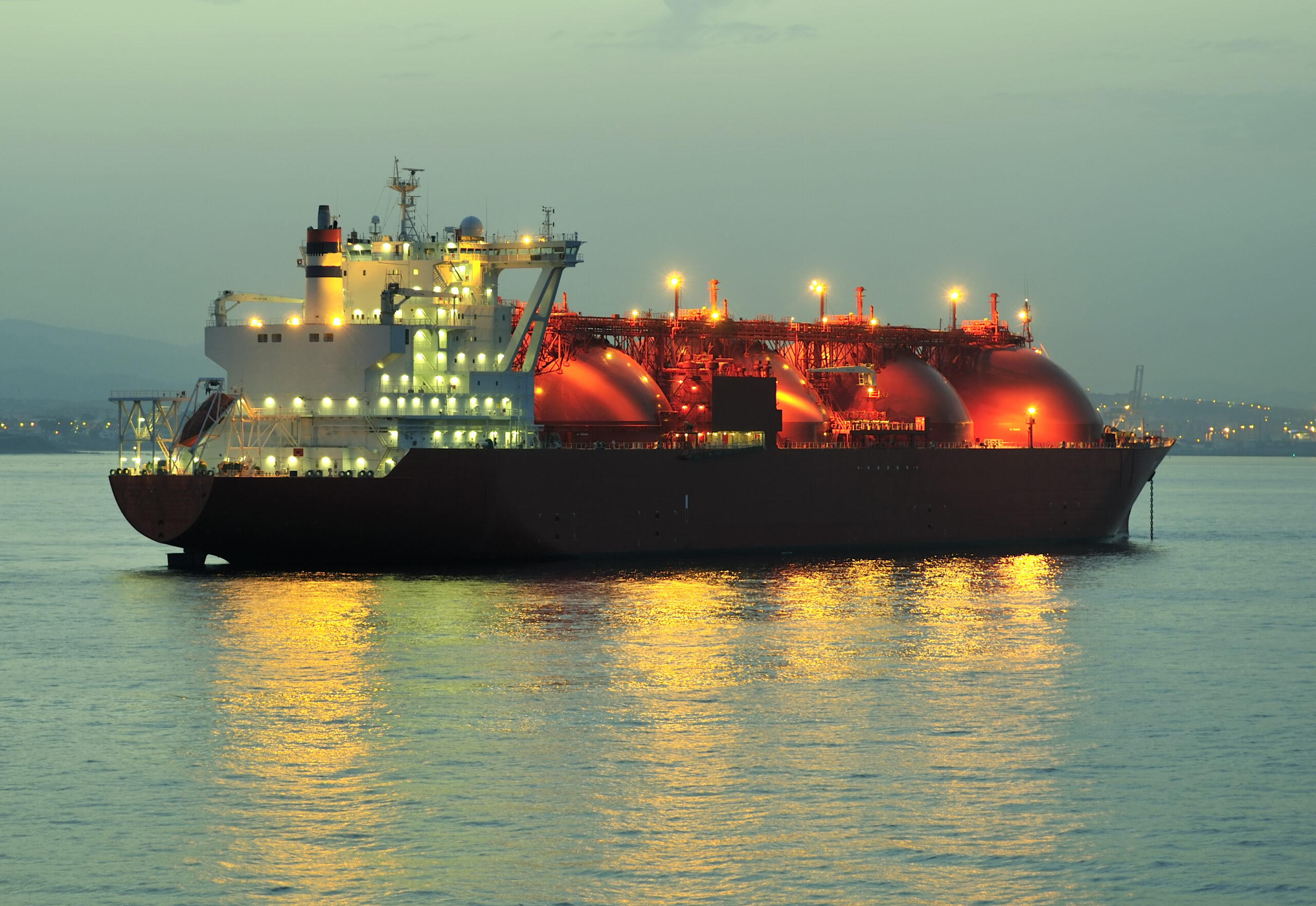
The initial investment for a nuclear-powered LNG carrier would be approximately 2.5 times that of a conventional LNG carrier. However, the design would substantially reduce fuel costs over the vessel’s operating life, according to a joint study involving the class society American Bureau of Shipping (ABS), the Japanese deep-tech company Blossom Energy and a global shipping company.
Presented at Gastech 2026, the study examined a 174,000-cbm LNG carrier equipped with a 20-25 MWe high-temperature gas-cooled reactor (HTGR) under development by Tokyo-headquartered Blossom Energy.
The study assessed vessel arrangement, propulsion systems and operating conditions against a conventional LNG-fueled newbuild. Economics were evaluated across a range of potential regulatory penalty scenarios.
“Nuclear energy has the potential to fundamentally change the economics of commercial shipping, from vessel design to long-term operating costs,” said Patrick Ryan, ABS senior vice president and chief technology officer. “ABS is proud to support studies like this one that move the industry beyond theory and toward a clearer picture of what nuclear propulsion could mean in practice.”
“This study provides a quantitative basis for discussing nuclear propulsion in commercial shipping. Blossom Energy contributed its HTGR reference design to the study, and we will continue to work with ABS and industry partners to build the technical and regulatory foundation needed for practical application,” added Shimpei Hamamoto, chief executive officer of Blossom Energy.
The team also assessed a business model treating the reactor as a long-term energy asset that could be reinstalled on a second vessel after the first reaches the end of its service life, factoring that possibility into the vessel’s residual value.