Law enforcement authorities across Europe and South America continue to put sustained pressure on the criminal networks responsible for moving cocaine into Europe.
One recent action coordinated by Europol to disrupt a Greek at-sea transfer criminal operation highlights the ongoing efforts to counter the criminal groups driving cocaine trafficking into Europe.
The operation targeted a Greek criminal network involved in large-scale cocaine trafficking using the at-sea transfer method.
The group deployed a fishing vessel that departed from Greece to pick up a large shipment from Latin America, travelling via West Africa before crossing the Atlantic Ocean. The vessel did not transmit its position since departure, making it very difficult to monitor.
In total, 10 suspects were arrested on December 14: five crew members at sea and five suspects in Greece, including one High Value Target.
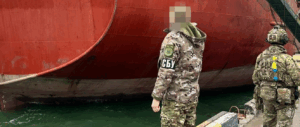
The vessel was intercepted and is being transported by the French navy to Martinique for further searches.
This operation was carried out through close cooperation between international partners. At the request of the Greek authorities, Europol supported the investigation by facilitating information exchange on the suspects operating across borders, providing analytical support and coordinating operational meetings.
Europol worked in close cooperation with Frontex, which provided monitoring services for the vessel, and MAOC-(N), which supported the monitoring and coordination of the intervention at sea.
Brazilian organisers used fishing vessels to ship multi-tonne loads
In another investigation, authorities in Brazil, Portugal, Spain and several other European countries worked together to disrupt a Brazilian organised crime group responsible for moving multi-tonne loads of cocaine to Europe by sea. Two high-value Brazilian targets are believed to have coordinated the operation with the support of associates based across Europe.
The group operated from the southern region of Bahia, Brazil, where it sourced vessels, trained crews and modified fishing boats for concealment. Coastal hubs in Alcobaça, Prado and Porto Seguro served as departure points, while West Africa was used as a staging area for onward movement to Europe.
The network maintained links with criminal groups positioned to receive the shipments upon entry into European waters.
In November 2024, the Portuguese authorities, in close collaboration with the Brazilian federal police and the Cape Verdean authorities, intercepted a Brazilian-flagged fishing vessel west of Cape Verde. Officers seized 1.6 tonnes of cocaine on board and arrested six crew members as part of this phase of the investigation.
In September 2025, investigators dismantled the branch of the network responsible for receiving these cocaine shipments in Europe. Action in Spain led to the arrest of 37 suspects, including the key figure managing the group’s logistical infrastructure.
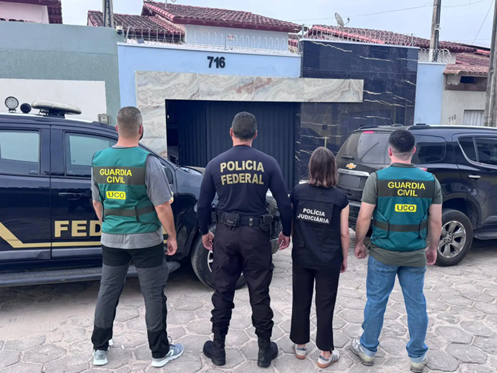
On December 11, 2025, a coordinated operation in Brazil resulted in eight additional arrests, including two high-value targets linked to the organisation of the maritime shipments. Four locations were searched in Portugal, and assets worth more than €1.5m were seized in Brazil.
Taken together, these three actions disrupted the network’s entire chain: from the organisers in Brazil to the logistics of maritime transport and the receivers operating in Europe.