Seven nations voice readiness to contribute to appropriate efforts to ensure the safe passage through the Strait of Hormuz.
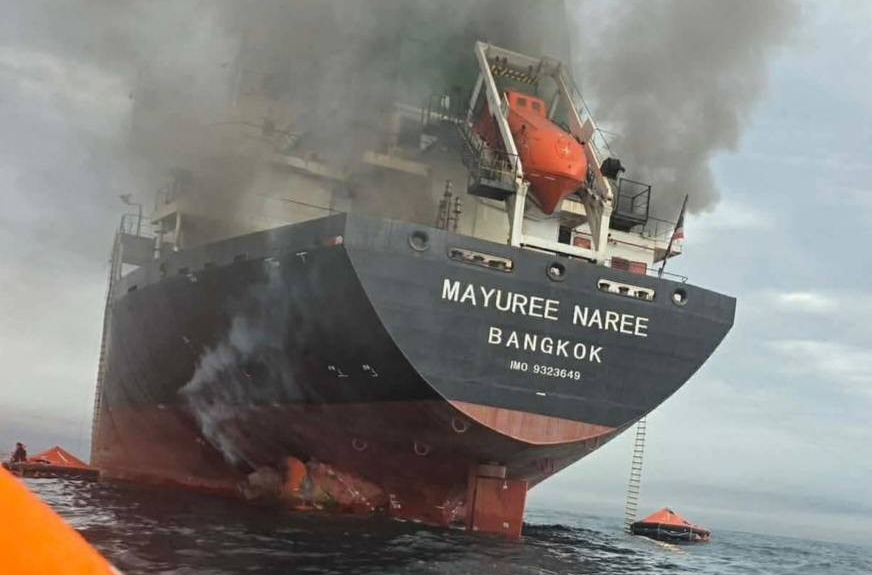
Leaders from the UK, France, Germany, Italy, the Netherlands, Japan and Canada have signalled their readiness to support efforts to ensure the safe passage of vessels through the Strait of Hormuz, following recent attacks by Iran to commercial vessels.
They further emphasised the need for an immediate comprehensive moratorium on attacks on civilian infrastructure, including oil and gas installations.
“We express our readiness to contribute to appropriate efforts to ensure safe passage through the Strait. We welcome the commitment of nations who are engaging in preparatory planning,” the leaders said in a joint statement.
The latter part of the statement is the first signal from several of the US’s biggest allies that they would be willing to contribute to unblock the strait.
Despite the change in rhetoric, the statement was sparse on details. The seven nations have so far left the details of their support unspecified, and it remains uncertain how much they would be willing to contribute.
At present, around 20,000 seafarers remain stranded inside the Persian Gulf, on board vessels, facing high risk and considerable mental strain.
The Council of the International Maritime Organization (IMO) called upon member states to ensure the continuous provision of water, food, fuel and other essential supplies to ships currently unable to leave the region.
States were encouraged to facilitate crew change and crew renewal operations in accordance with international standards, to safeguard the health, safety and well-being of the seafarers affected.
The Council urged states to ensure that seafarers’ communication with their families and friends can be maintained and that stores and provisions remain adequate for their needs.
The Council called for a coordinated international approach to the safety of navigation, taking into account the fatigue and pressure of those on board, the master’s overriding authority, as well as the risks associated with transiting the area while Global Navigation Satellite Systems (GNSS) suffer extensive jamming and spoofing.
The Council also called for the establishment of a safe maritime framework, as a provisional and urgent measure, to facilitate the safe evacuation of merchant ships currently confined within the Gulf region.
The Council directed IMO secretary-general Arsenio Dominguez to take the necessary immediate actions to initiate the establishment of the framework, in collaboration with the relevant parties.
“I am ready to start working immediately in negotiations to establish a humanitarian framework to evacuate all vessels and seafarers trapped. However, for this to materialize, I will need the understanding, commitment and, above all, the concrete actions from all relevant countries and stakeholders,” said Dominguez.