The American Maritime Partnership (AMP) has launched a national campaign urging US president Donald Trump to end the administration’s ongoing 150-day Jones Act waiver, arguing the measure is harming American maritime jobs and investment while foreign countries and workers profit.
The waiver, introduced as the White House sought to ease soaring oil prices and combat disruptions to the oil market amid the US-Israeli war against Iran, temporarily loosened restrictions requiring vessels moving cargo from point to point in the United States to be American-built, owned, and American-crewed.
The goal, White House press secretary Karoline Leavitt said, is to strengthen critical supply chains and to mitigate the short-term disruptions to the oil market amid the Middle East conflict, temporarily allowing vital resources like oil, natural gas, fertilizer, and coal to flow freely to U.S. ports.
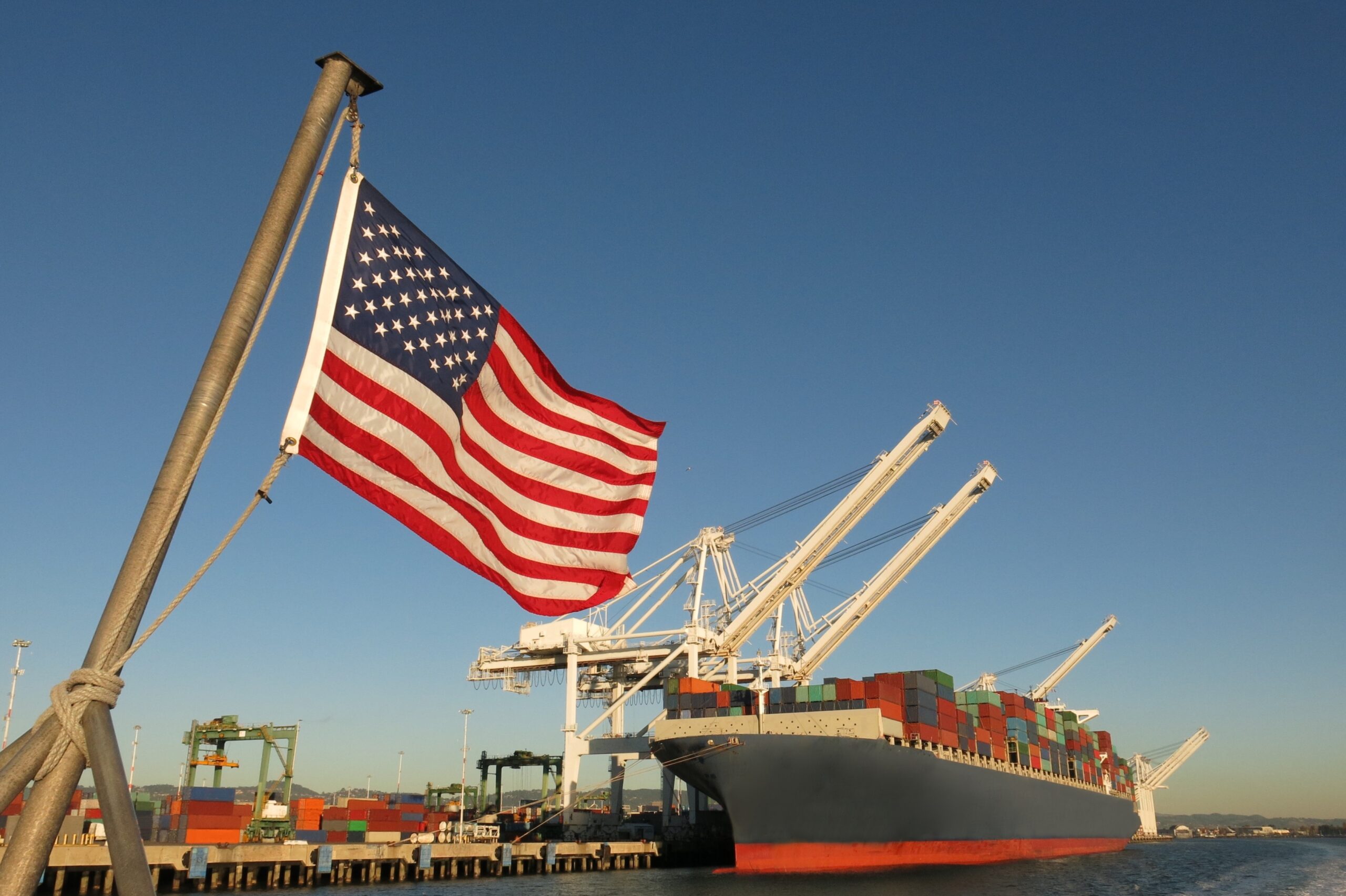
The Jones Act applies to merchandise being transported by water between U.S. points. The law requires that this cargo is to be shipped solely aboard vessels that are U.S.-built, U.S.-citizen owned, and, registered in the U.S., which means crewed by Americans.
An often-asked question is “can the U.S.-owned, -built, -crewed, – registered requirements of the Jones Act be waived to allow foreign-flag vessels in some circumstances?” The answer is yes, the U.S. Maritime Administration notes, however, Jones Act exemptions are rare as the only basis for an exemption is “interest of national defense.”
The AMP cited independent analysis that puts the waiver’s price impact at just $0.000157 per gallon. The group claimed, citing the analysis, that the total fuel moved under the waiver over the first 60 days amounts to roughly 11 hours of national consumption.
AMP also said that those immaterial benefits are a result of foreign carriers being able to operate free from compliance with U.S. immigration, minimum wage and taxation laws, among other regulations.
“Clearly, President Trump has been led to believe that waiving the Jones Act is an effective way to lower gas prices, when we all see that prices have not gone down with the waiver. What the waiver does is put America last by allowing foreign operators and mariners to take American business and jobs,” said Jennifer Carpenter, president of the American Maritime Partnership.
“The President should trust his instincts, follow his outlined policies and put America and our national security first,” she added.
AMP said broker data showed American vessels were available for about 90% of those routes. It added that at least one investment platform halted a planned $1bn capital raise for the maritime industry, placing more than $2.6bn in active U.S. shipyard contracts at risk along with additional planned expansion projects.
The AMP campaign will air across major maritime states, including Louisiana, Mississippi, Florida, Virginia, Alabama, Georgia, South Carolina and Tennessee, among others. The campaign will feature television, connected TV, radio, digital advertising, and voices from the 650,000 men and women of American maritime.
The campaign’s first ad, ‘End the Waiver,’ features a captain of a Jones Act vessel reminding the audience that American maritime is the quintessential ‘America First’ industry. The ad ends with a call to President Trump to end the waiver and ‘Put Americans back to work.’
In addition to television, CTV and digital advertising, the campaign will give voice to local mariners and operators by connecting them to media to discuss the impact of the waiver on jobs, investment and national security.