United States plans to use an oil “quarantine” as a key economic and maritime pressure tool centred on the country’s oil industry following the removal of Venezuelan leader Nicolás Maduro.
The approach is aimed at reshaping Venezuela’s political and economic trajectory and putting pressure on the country’s acting leadership until clear changes are observed.
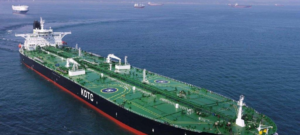
U.S. forces will continue to prevent oil tankers on a U.S. sanctions list from entering and leaving the country and continue targeting drug boats if they try to run towards the United States.
With questions swirling about how the US will deal with Venezuela’s post-Maduro leadership, secretary of state Marco Rubio said on Sunday that the American military would continue to enforce a “quarantine” around Venezuela to block oil tankers subject to US sanctions from entering or leaving the country.
The move, he said, is intended to apply what the Trump administration calls “leverage” on Venezuela’s current leadership following the capture of Maduro.
Speaking in a series of interviews, secretary of state Marco Rubio said the US has imposed what he called an oil “quarantine,” enforced by sanctions and naval power.
Rubio described the policy as “a tremendous amount of leverage” to press for reforms in Caracas.
He also outlined specific expectations Washington has for Venezuela’s post-Maduro leadership. According to him, the country must halt drug trafficking activities and make changes of all kinds – long term and short term.
On Sunday, Rubio expanded on the administration’s strategy of relying on the “oil quarantine” pressure tool to bring about change in Venezuela, backed by a large US naval deployment.
Mr. Rubio said on CBS that the U.S. naval force that Trump deployed over recent months – “one of the largest naval deployments in modern history, certainly in the Western Hemisphere, is capable of stopping not just drug boats but stopping any of these sanctioned boats that come in and out, and paralyzing that portion of how the regime generates revenue.”
“There’s a quarantine right now,” he stated. “Sanctioned oil shipments – there’s a boat, and that boat is under US sanctions – we go get a court order, we will seize it.” He said the pressure would remain in place until Washington sees concrete changes. “That remains in place, and that’s a tremendous amount of leverage that will continue to be in place until we see changes that not just further the national interest of the United States, which is number one, but also that lead to a better future for the people of Venezuela,” Rubio told Margaret Brennan of CBS’s ‘Face the Nation.’
Despite outlining Washington’s leverage, the US secretary of state offered few details about the immediate political roadmap for Venezuela.
His comments signal a cautious approach, with the US appearing unwilling to commit to clear milestones until it sees tangible shifts within Venezuela’s political system.
Rubio repeatedly identified Venezuela’s oil industry as the linchpin of any economic recovery.
“None of the money from the oil gets to the people,” he told CBS.
As Venezuela navigates the uncertain aftermath of Maduro’s removal, Rubio’s comments highlight the central role oil will play in shaping the country’s economic recovery.
For now, the oil quarantine stands as Washington’s primary lever, signaling that Venezuela’s path back into global energy markets will depend less on rhetoric and more on demonstrable change.
On Sunday, Rubio appeared on ABC’s ‘This Week’ alongside host George Stephanopoulos to discuss the latest developments following the capture of Maduro.
During the interview, Rubio revealed that a “quarantine” has been placed until the conditions that are in the national interest of the US and Venezuelan people are met.
“If you are a sanctioned boat and you are headed towards Venezuela, you will be seized either on the way in or on the way out with a court order that we get from judges in the United States,” he said.