As one of the world’s busiest maritime hubs, Shanghai offers unique insight into how Asia’s shipping markets have evolved in recent years. From energy imports to offshore recovery, the past three years have seen China’s maritime markets undergo significant shifts. Clarksons’ Shanghai office team offers an insight into Asia’s changing shipping landscape.
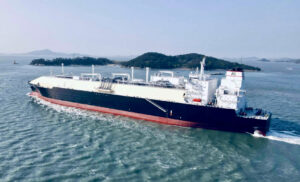
The transformation of China’s gas sector over the last three years has been particularly striking. “LPG is a vital product that people rely on every day,” explains Kenneth Song, head of Asia product gas, Clarksons Shanghai. “In 2024, China imported 35.6 million tonnes of LPG – a figure that has continued to rise over the past three years.”
China has now grown to become the largest LPG importer in the East – and has held this title for several consecutive years, with most cargoes sourced from the United States. However, recent tariff actions have disrupted this balance.
“Due to the latest trade measures, the market has been under pressure as importers seek to secure non-U.S. LPG to avoid high tariffs,” notes Kenneth. “Despite the market instability we have experienced, demand remains consistent and once trade conditions stabilise, we expect to see further market opportunities.”
The offshore segment tells a more cautious story. While there has been renewed confidence and the market is improving – as evidenced by speculative newbuilding activity in the subsea and OSV sectors – uncertainty still looms. Jack Qiu, divisional director, Clarksons Shanghai, explains: “Due to the uncertainty in the market, vessels on short – or long-term contracts has reduced. While orders for offshore wind SOVs are still coming through, the pace has moderated over the years.”
Meanwhile, in the sale and purchase (S&P) market, most Chinese resale units from shipyards have now been absorbed and more second-hand OSVs are being withdrawn from the Chinese market and sold to international buyers.
The tanker market, meanwhile, continues to feel the effects of geopolitical volatility and shifting trade flows. As Ella Bai, tanker operator, Clarksons Shanghai, explains, “Compared to three years ago, today’s tanker segment in China is more unpredictable due to global conflict, sanctions, and changing routes. Ensuring the security of loading areas and transit routes is increasingly important. Looking ahead, evolving international conditions may lead to changes in port and canal operations, which in turn could have a significant impact on freight rates.”
“Together, these developments paint a picture of a region in flux but full of potential,” the tanker operator says.
From container flows to tankers and gas, the message remains consistent: volatility is inevitable, but insight makes it manageable.