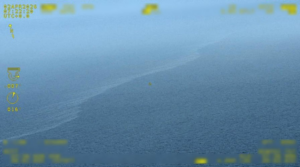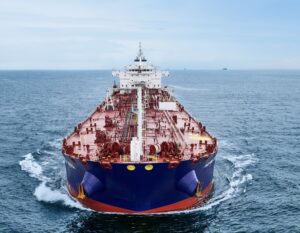
The fate of the damaged LNG tanker Arctic Metagaz remains uncertain as a Libyan-led towing operation which is currently ongoing remains technically challenging.
In recent days, the towing operation has faced a number of difficulties due to adverse weather conditions.
Libyan authorities reported last week that towing efforts broke down in worsening weather conditions.
The last attempt on March 2 to tow the 2003-built vessel failed due to severe weather conditions amid strong winds and high seas.
“The tugboat is unable to return to re-tie it under these hazardous weather conditions,” the authorities said in a navigational warning letter on Thursday.
It requested all ships and marine units to avoid the area and advised them to stay at least 10 nautical miles away from the location.
It also advised vessels that spot the tanker to report any updates regarding the tanker’s condition by contacting the Libyan Search and Rescue Center.
The towing operation was halted at 4am on April 2 due to severe weather caused by a deep low-pressure system. During this time, wave heights rose up to 5 metres and wind speeds reached approximately 40 knots.
The path of the tanker and the tugs is being monitored around the clock through the operations rooms of the Ports and Maritime Transport Authority and the joint operations room at the Search and Rescue Center to ensure maritime safety and confront any emergencies, Libya’s National Oil Corporation said in a statement on March 26.
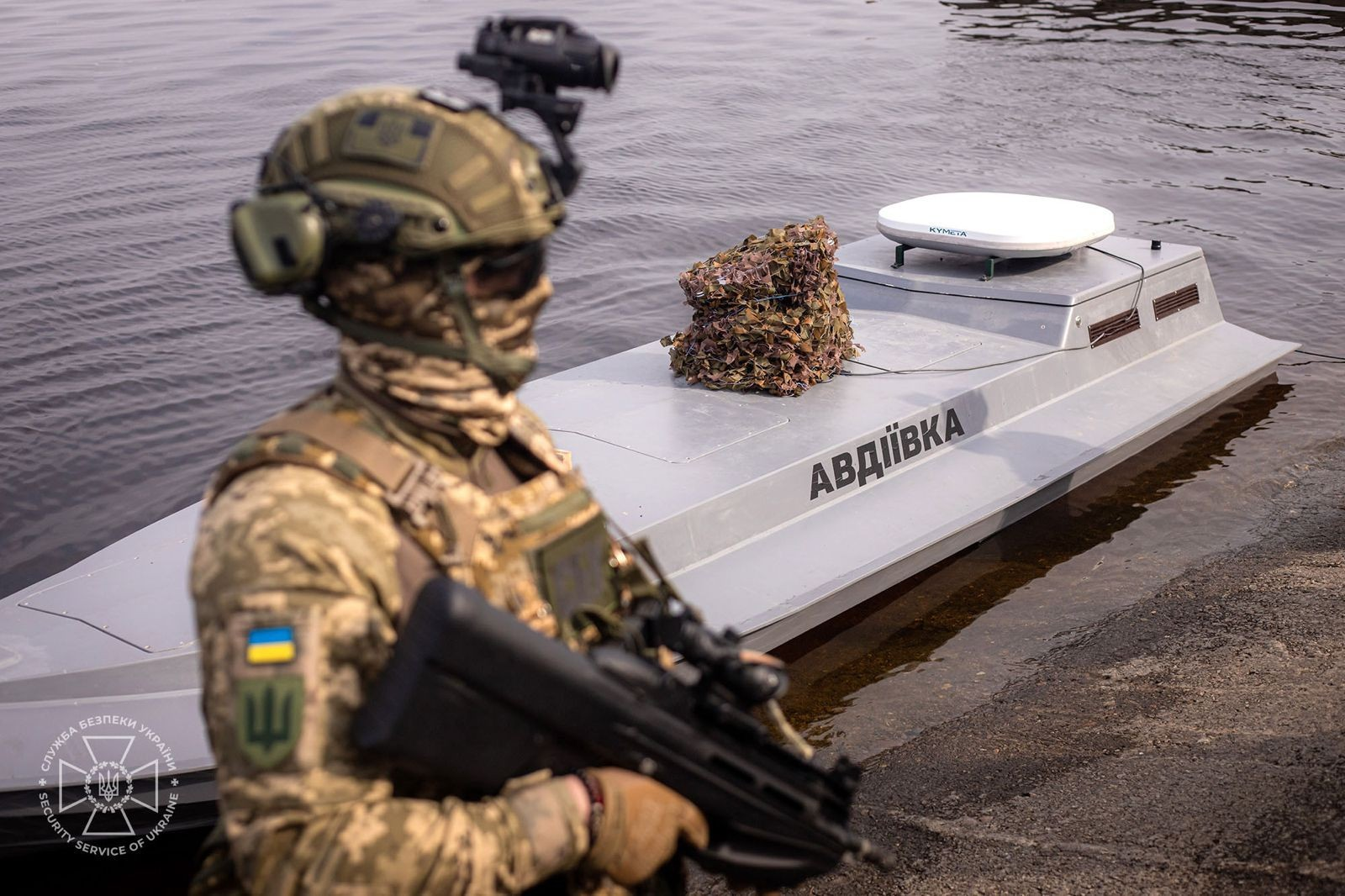
Earlier this month, the Russian ministry of transport reported that the Arctic Metagaz gas carrier had been attacked in the Mediterranean Sea by Ukrainian unmanned boats. Russian ministry of transport asserted that an attack by Ukrainian unmanned boats was to blame – although this has not been confirmed. The Ukrainian government has not commented on the Russian claim that Ukraine is behind it.
According to Russian foreign ministry spokeswoman Maria Zakharova, the gas carrier, had been adrift in the Mediterranean Sea after an attack on March 3 involving unmanned boats and drones near the shores of Malta.
All 30 crew members managed to leave the vessel; however, two individuals who sustained burns received medical assistance in cooperation with the coastal state.
Comment by Russian Foreign Ministry Spokeswoman:
“At 4:25 a.m. local time on March 3, the Russian-flagged liquefied natural gas carrier Arctic Metagaz, which was carrying 100,000 cubic metres of LNG and a crew of 30 Russian sailors, was attacked by maritime and aerial drones in neutral waters in the central Mediterranean Sea, 168 nautical miles southeast of the coast of Malta.
“The vessel lost propulsion and power, resulting in a fire and gas explosion. All the sailors managed to evacuate the burning ship aboard a lifeboat. Thanks to the crew’s skilled and coordinated actions, any loss of life was avoided.
“Ships with Russian crews operating in the region joined the search-and-rescue operation, with one locating the drifting lifeboat. By 8:30 p.m. local time that evening, all crew members had been rescued by an assisting tanker, which was to transport them to the nearest Russian port.
“During the fire aboard the vessel, two crew members sustained severe burns. Consequently, a decision was made to evacuate them as a matter of urgency.
“With the active assistance of the Russian Embassy in Libya, the sailors received professional medical care and treatment for four days. After their condition stabilised and medical professionals deemed them fit for travel to Russia, the two injured crew members of the vessel were flown to the Russian Federation on a special flight on March 10 and admitted to hospital,” the statement of the spokeswoman reads.
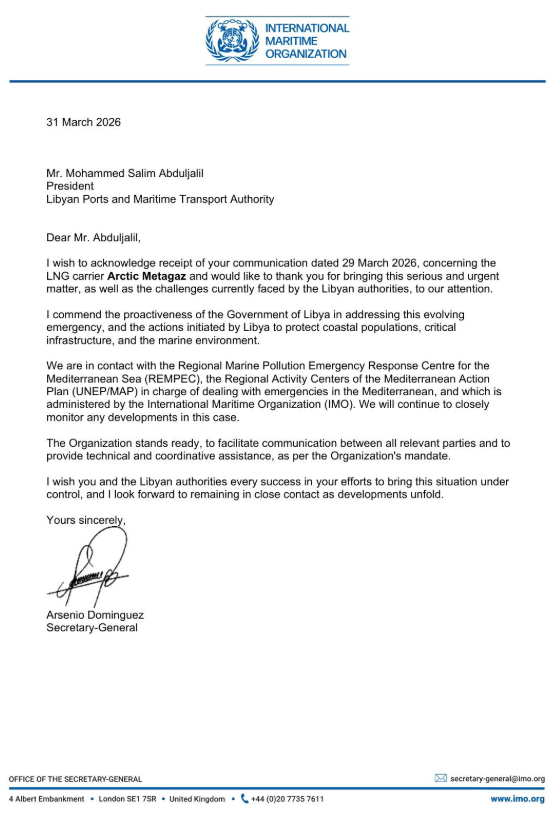
Source: The Libyan Ports and Maritime Transport Authority posted on social media the letter by IMO Secretary-General Arsenio Dominguez.