UN Trade and Development (UNCTAD) has released a rapid analysis – Strait of Hormuz disruptions: Implications for global trade and development – examining the implications of recent disruptions to maritime traffic in the Strait, one of the world’s most critical trade corridors.
The Strait carries around one quarter of global seaborne oil trade, as well as significant volumes of liquefied natural gas and fertilizers.
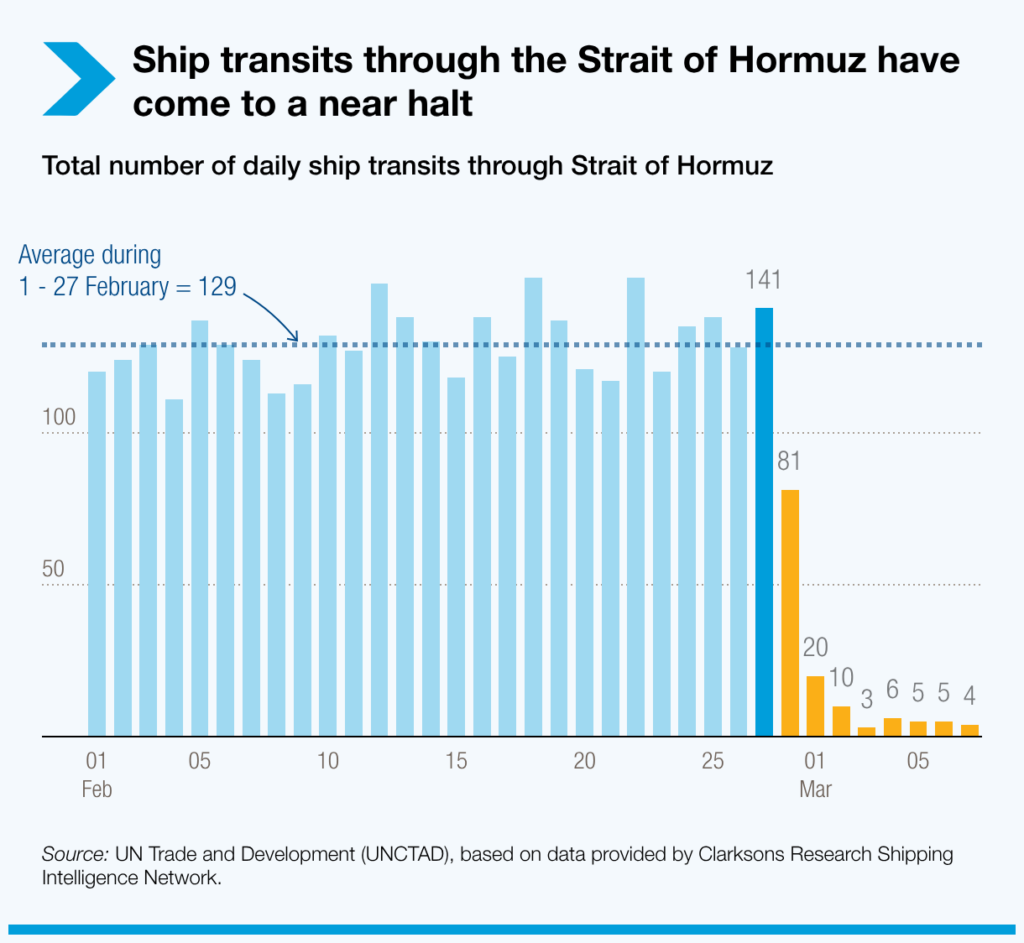
Military escalation in the region has disrupted shipping flows through this narrow passage, raising concerns about ripple effects across energy markets, maritime transport and global supply chains.
Key Findings
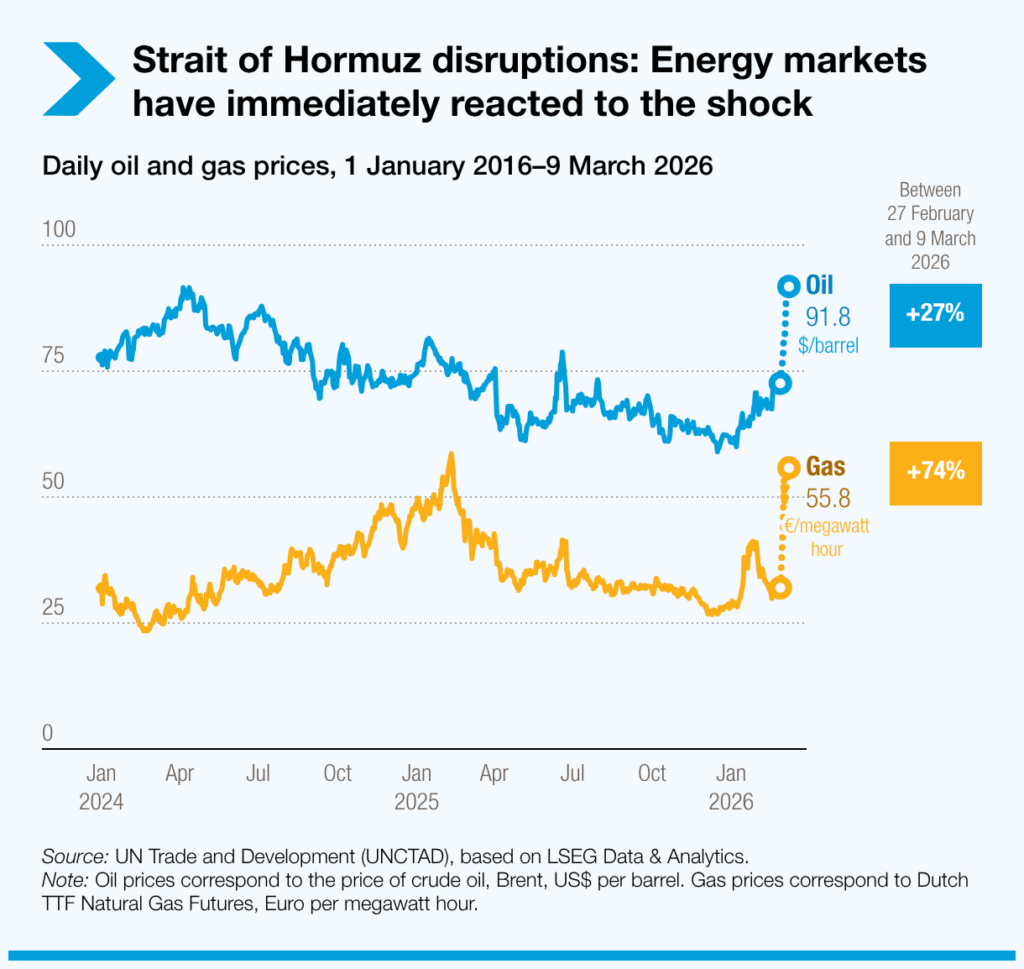
Energy markets reacted immediately, with Brent crude rising above $90 per barrel.
Freight rates for oil tankers and war risk insurance premiums are surging, while marine fuel costs are also rising, increasing shipping costs across supply chains.
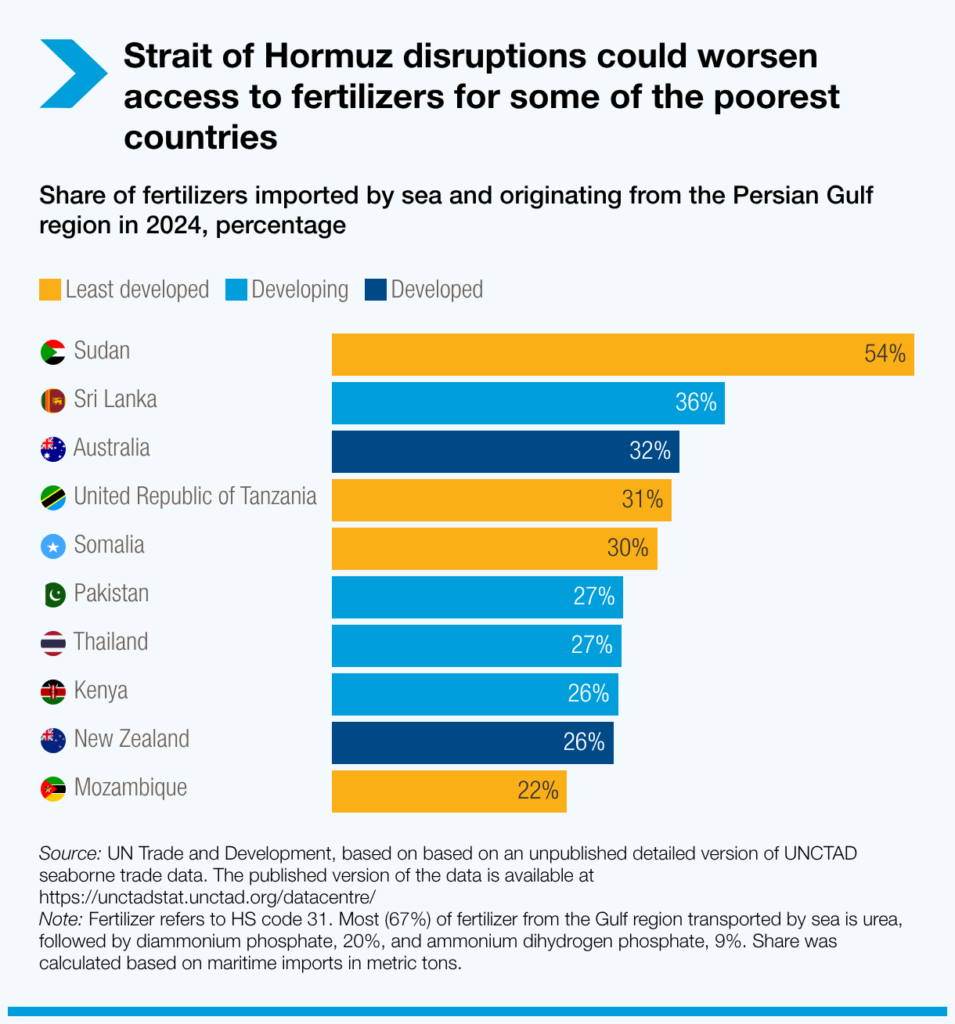
Around one third of global seaborne fertilizer trade (about 16 million tonnes) passes through the Strait, raising concerns about fertilizer access for some of the poorest countries.
Developing economies may be particularly exposed, as high debt burdens and rising borrowing costs limit their ability to absorb new price shocks.
Past crises – including COVID-19 and the war in Ukraine – showed how disruptions to energy, transport and agricultural inputs can quickly spread across interconnected markets.
IMO calls Extraordinary Council meeting to discuss situation in Middle East
The Council will focus on the impact on shipping and seafarers in the Arabian Sea, the Sea of Oman and the Gulf region, particularly in and around the Strait of Hormuz.
The International Maritime Organization (IMO) will hold an Extraordinary Session of its Council to address the impacts on shipping and seafarers of the situation in the Arabian Sea, the Sea of Oman and the Gulf region, particularly in and around the Strait of Hormuz.
The session will be held on 18 to 19 March 2026 at IMO headquarters in London, United Kingdom, to be chaired by Mr. Victor Jiménez of Spain.
The Extraordinary Session (C/ES.36) is convened following requests from several Council Members.
IMO Secretary-General Arsenio Dominguez held briefings with industry organizations (11 March) and Member States (12 March) to share information and discuss recent developments.
The Council is the Executive Organ of IMO, consisting of 40 Member States, elected by the IMO Assembly.