The U.S. Central Command will begin a blockade of all maritime traffic entering and exiting Iranian ports on April 13 at 10 a.m. ET. The blockade will be enforced impartially against vessels of all nations entering or departing Iranian ports and coastal areas, including all Iranian ports on the Arabian Gulf and Gulf of Oman.
US forces will not impede freedom of navigation for vessels transiting the Strait of Hormuz to and from non-Iranian ports, and additional information will be provided to commercial mariners through a formal notice prior to the start of the blockade, a Centcom statement said.
All mariners are advised to monitor Notice to Mariners broadcasts and contact U.S. naval forces on bridge-to-bridge channel 16 when operating in the Gulf of Oman and Strait of Hormuz approaches.
US president Donald Trump said on Sunday the U.S. Navy would start blockading the Strait of Hormuz, raising the stakes after marathon talks with Iran during the weekend – that lasted close to 20 hours – failed to reach a deal to end the war, jeopardizing a fragile two-week ceasefire.
In a post on Truth Social, Trump said, “Effective immediately, the United States Navy, the finest in the world, will begin the process of blockading any and all ships trying to enter, or leave, the Strait of Hormuz. At some point, we will reach an “all being allowed to go in, all being allowed to go out” basis, but Iran has not allowed that to happen by merely saying, ‘there may be a mine out there somewhere,’ that nobody knows about but them.”
Trump cited Iran’s unwillingness to give up its nuclear ambitions during the meeting that took place in Islamabad.
He also warned that vessels paying what he described as “illegal tolls” to Iran would not be allowed safe passage and said US forces would begin clearing mines from the area.
The posts do not make it clear how “safe passage” will be denied, but it is worth remembering that the US has, in just the last few months, boarded sanctioned oil tankers en route to or from Venezuela.
Trump said on his Truth Social platform that he instructed the Navy “to seek and interdict every vessel in international waters that has paid a toll to Iran. No one who pays an illegal toll will have safe passage on the high seas.”
He said other nations would be involved with this blockade but did not name them.
The US will also begin destroying the sea mines in the Strait of Hormuz to rebuild confidence among oil vessels seeking to traverse the strategically crucial waterway in the future.
Across two lengthy social media posts, he warned the “blockade will begin shortly” and that the US Navy is going to start “destroying the mines the Iranians laid in the Straits.”
Trump also accused Iran of going back on its assurance to keep the key international waterway open. He claimed the situation had caused disruption and uncertainty for global shipping, adding that reports of mines in the waters had further raised fears among ship owners.
The US president said he had been briefed by senior officials, including Vice President JD Vance, Special Envoy Steve Witkoff, and Jared Kushner, following discussions with Iranian representatives in Islamabad. He noted that while the talks lasted nearly 20 hours and “most points were agreed to,” the central issue – Nuclear – remained unresolved.
The announcement of the blockade comes a day after U.S. Central Command (Centcom) confirmed that two US navy guided-missile destroyers had sailed through the Strait of Hormuz as part of an operation to begin clearing sea mines from the international shipping route, but various media sources reported that Iran has “firmly denied” this.
U.S. says its forces began setting conditions for clearing mines in the Strait
U.S. Central Command said that its forces began setting conditions for clearing mines in the Strait, April 11, as two U.S. navy guided-missile destroyers conducted operations.
Informing about the development, Centcom posted a message on X saying that USS Frank E. Peterson (DDG 121) and USS Michael Murphy (DDG 112) transited the Strait and operated in the Arabian Gulf as part of a broader mission to ensure the strait is fully clear of sea mines previously laid by Iran’s Islamic Revolutionary Guards Corps.
“Today, we began the process of establishing a new passage and we will share this safe pathway with the maritime industry soon to encourage the free flow of commerce,” said Adm. Brad Cooper, commander of Centcom.
Acknowledging that the Strait of Hormuz is an international sea passage and an essential trade corridor that supports regional and global economic prosperity, additional U.S. forces, including underwater drones, will join the clearance effort in the coming days.
The Centcom statement didn’t mention any Iranian attempt to turn the vessels back.
In one of his reports on Truth Social platform, Trump wrote that “the only thing they have going is the threat that a ship may “bunk” into one of their sea mines which, by the way, all 28 of their mine dropper boats are also lying at the bottom of the sea.”
Ships heading to US to load up with oil: Trump
Trump has also declared that ships across the globe are heading to the United States to load up with oil.
Trump has welcomed reports that a large number of empty oil tankers are heading toward the United States to load American oil and gas. The US president shared the news on his social media platform Truth Social and said, “Great!!!” while resharing a report about the movement of tankers.
“We have more oil than the next two largest oil economies combined – and higher quality. We are waiting for you,” he wrote in a post.
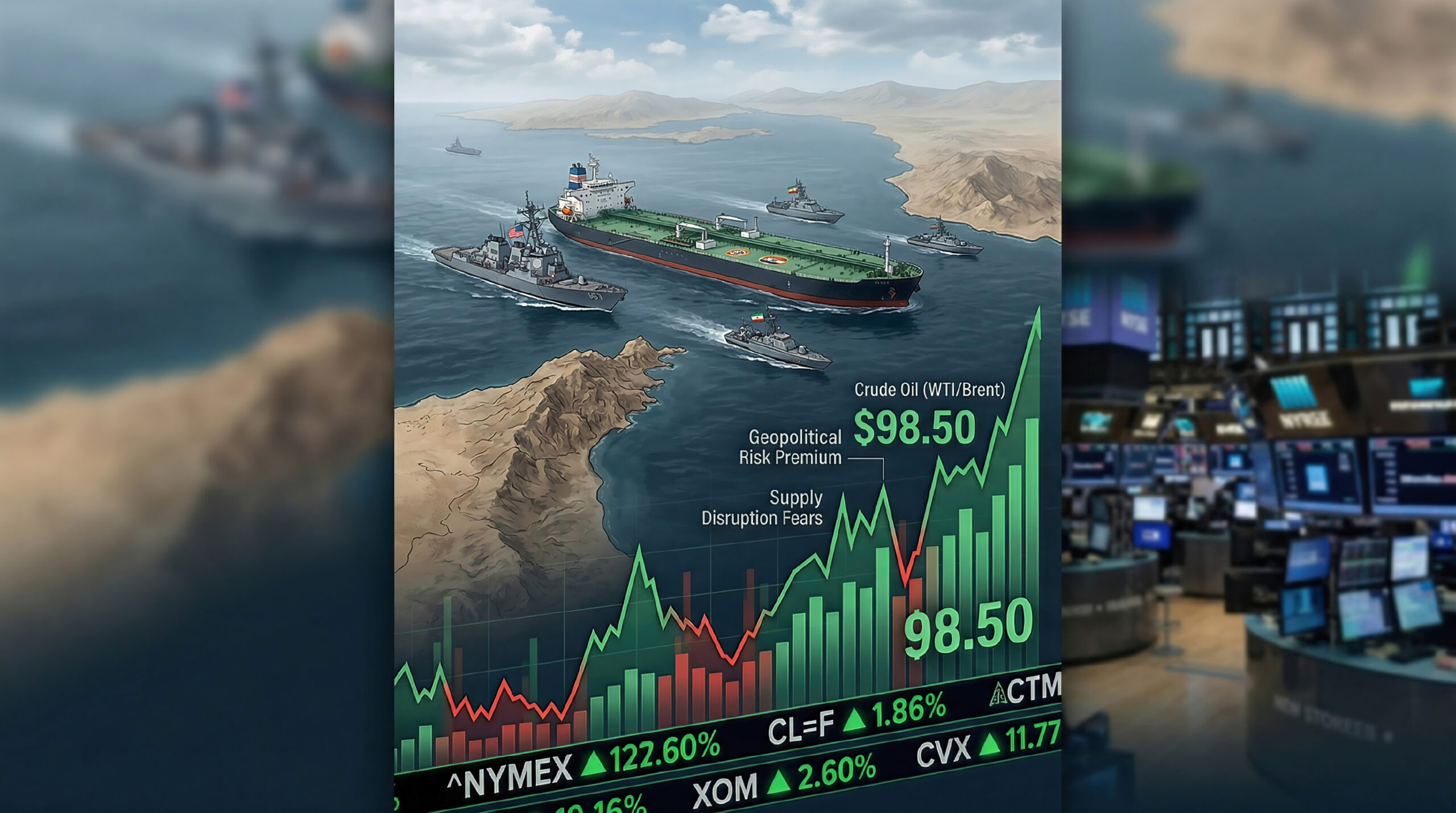
The development comes at a time when global oil markets are facing uncertainty due to rising tensions around the Strait of Hormuz.
Trump’s economic adviser says oil supplies could return to normal once the Strait is open
The Strait of Hormuz could be open, and the supply of oil can return to usual, according to White House National Economic Council Director Kevin Hassett.
Donald Trump’s economic adviser, Hassett, has said that oil supplies could return to normal once the Strait is open.
“Get those Straits to open and then things will return to normal very soon,” Hassett told Fox Business Network on Thursday. “Once the Straits are open, those gas prices will go back to normal relatively quickly,” he told ‘Mornings with Maria,’ in an interview regarding Trump’s ceasefire agreement with Iran.