India and Russia signed key maritime and transport MoUs to strengthen the International North-South Transport corridor, Vladivostok-Chennai (Eastern Maritime) corridor and the Northern Sea route, including training of specialists for ships operating in polar waters. In a substantial move towards maritime cooperation, the two parties have also talked about enhancing relations in the shipbuilding sector.
The agreements took center stage amid Russian president Vladimir Putin’s official visit to India on December 4 for the 23rd India-Russia annual summit, during which he participated in high-level discussions with Indian prime minister Narendra Modi.
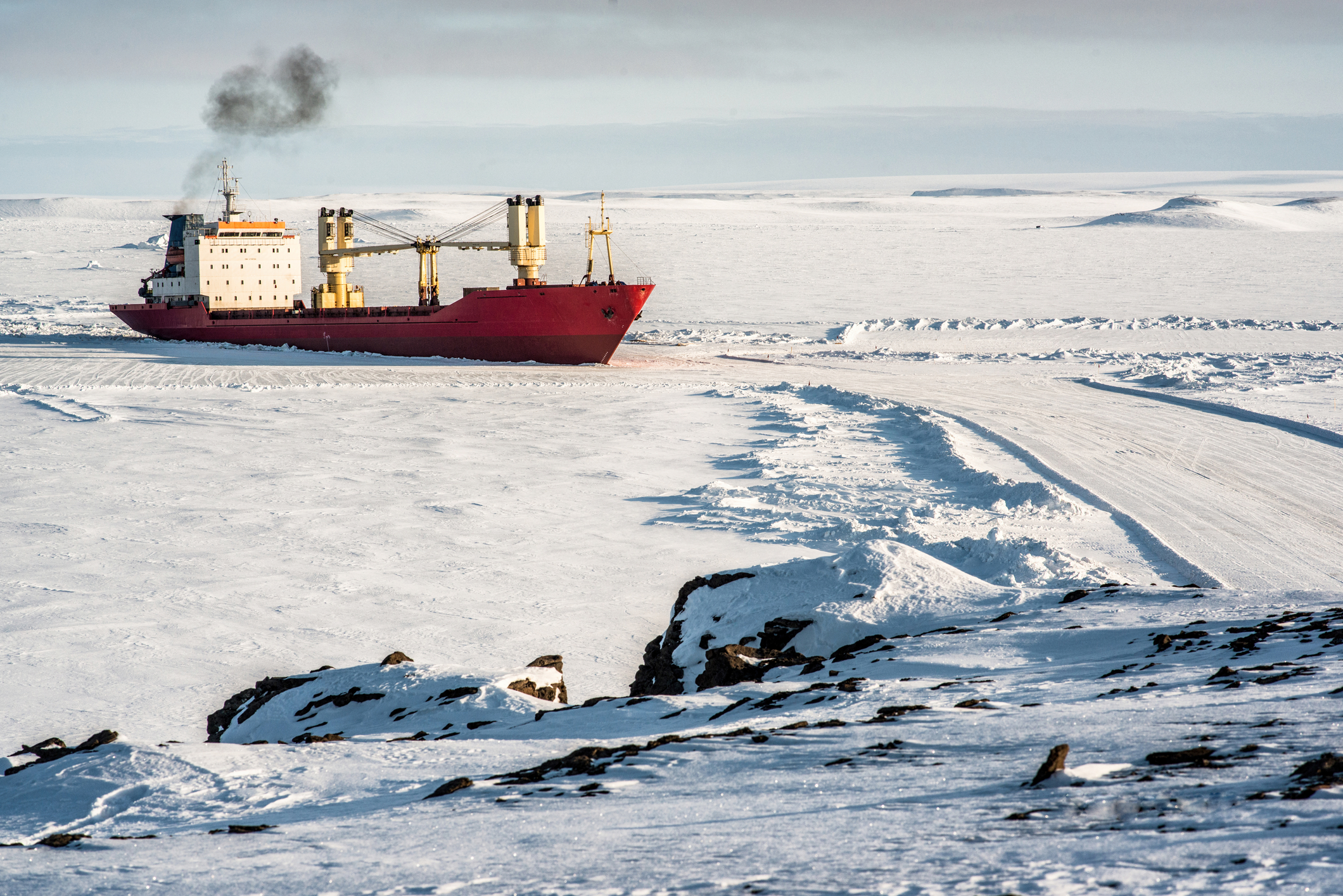
According to a joint statement following the 23rd India-Russia annual summit, the MoU aims to enhance expertise in polar shipping, an increasingly strategic area in global navigation and trade.
The two sides welcomed the signing of a new collaboration enabling Indian seafarers to receive specialised training for navigating polar waters.
The initiative seeks to empower Indian seafarers for polar operations and establish a strong framework for maritime policy and security cooperation between the two countries.
“The India-Russia partnership in shipbuilding and new trade routes, from INSTC to the Chennai-Vladivostok corridor, stands as a model of Win-Win collaboration,” the two sides emphasized.
As part of Vladimir Putin’s visit to India, the two nations on Friday inked multiple agreements in the transport and connectivity sectors, with Russia aiming to tap into India’s large maritime ambitions and capacity-building initiatives.
The two sides agreed to deepen cooperation in building stable and efficient transport corridors, with the focus on expanding logistics links for improving connectivity and enhancing infrastructure capacity to support the International North-South Transport Corridor, Vladivostok-Chennai (Eastern Maritime) Corridor and the Northern Sea Route.
In this context, the two countries signed two key memoranda of understanding (MoUs) to extend cooperation in maritime.
India’s ministry of ports, shipping and waterways and the ministry of transport of the Russian Federation signed an MoU on the training of specialists for ships operating in polar waters.
The ministry also signed another agreement with the Russian Federation’s maritime board, which entails cooperation in various sectors of the maritime domain.
The two sides also discussed and commended their wide-ranging cooperation in the energy sector as a significant pillar of the strategic partnership. The sides noted the current and potential cooperation between Russian and Indian companies in fields such as oil and oil products, oil refining and petrochemical technologies, oilfield services and upstream technologies and related infrastructure, LNG and LPG related infrastructure, various existing projects in their countries, underground coal gasification technology, nuclear projects, etc.
The 23rd Russia-India summit comes at a pivotal moment as the US pushes for a Ukraine peace deal while seeking global co-operation.
It will test New Delhi’s efforts to balance relations with Moscow and Washington as the nearly four-year war in Ukraine grinds on.
After the talks, Putin said to reporters that trade in petroleum products and crude oil, as well as the production of petroleum products for consumers of oil, Russian oil, is running smoothly in India. “I know the sentiment of Russian partners, of Russian companies: they believe their Indian counterparts are reliable and very serious people,” the Russian president commented.
Strengthening India's maritime frontiers! Led by PM Modi's vision, #IndiaRussiaPartnership reaches new heights. 🇮🇳🤝🇷🇺
— Sarbananda Sonowal (@sarbanandsonwal) December 5, 2025
Honoured to exchange MoUs with the Russian Transport Minister HE Andrey Nikitin in the presence of Hon'ble PM Shri @narendramodi ji and President HE Vladimir… pic.twitter.com/5iJlZDnuLJ