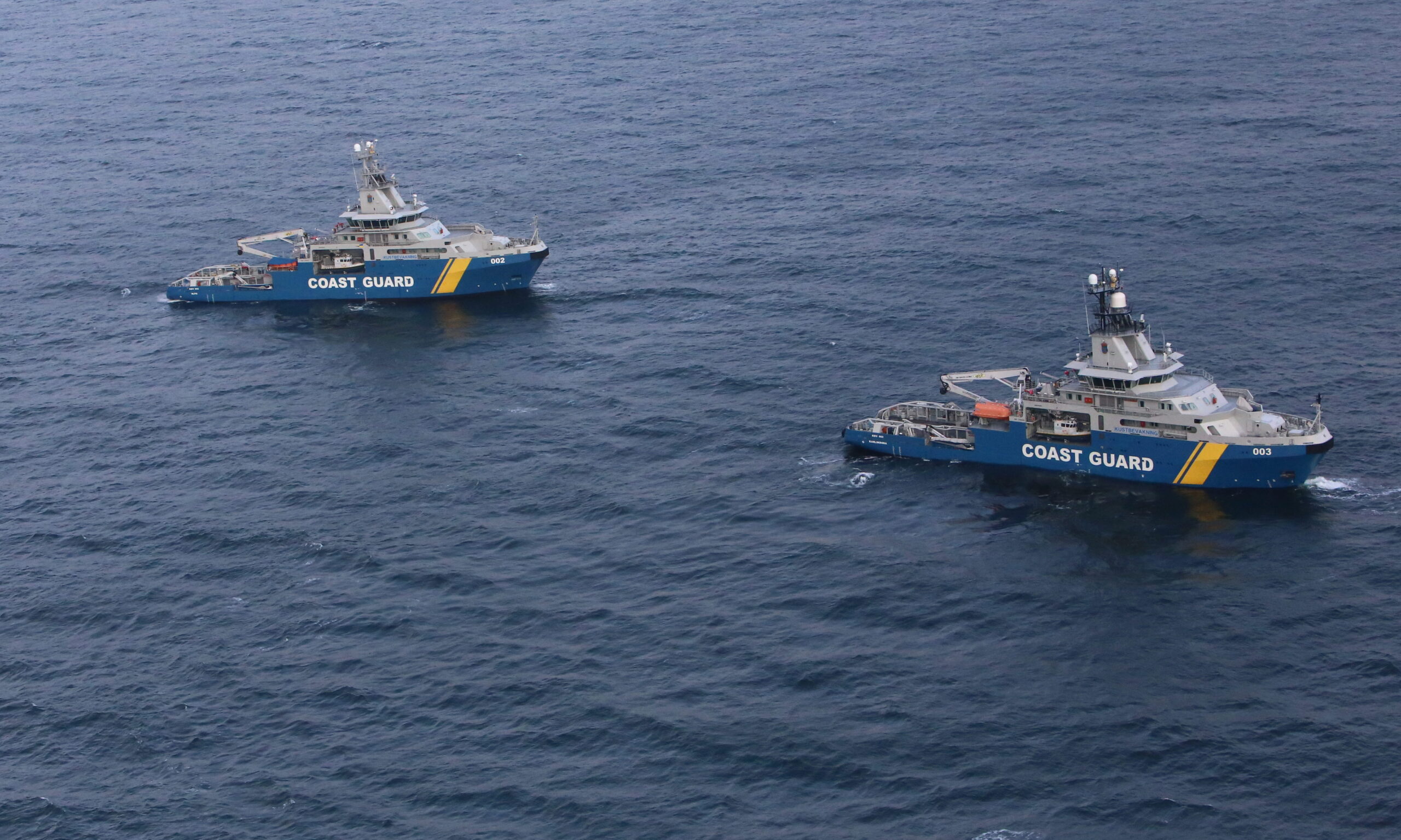
The European Commission presented a new cable security toolbox comprising risk mitigation measures and a list of cable projects of European interest (CPEI). At the same time, it amended the Connecting Europe Facility (CEF) – Digital Work Programme to allocate €347m to strategic submarine cable projects, including a €20m call to enhance Europe’s repair capacities.
The toolbox outlines six strategic and four technical and support measures to improve the security of submarine cable infrastructure. On the other hand, the list of 13 CPEI areas for public funding specifies three five-year stages, up to 2040, to fund projects aimed at strengthening the resilience of submarine cables.
The Commission has also amended the CEF Digital Work Programme, allocating €347m to fund strategic submarine cable projects. These calls will support the CPEIs, enhance the EU’s cable repair capacity and equip submarine cables with smart capabilities.
In 2026, two funding calls worth €60m will support cable repair modules, alongside a separate €20m call for SMART cable system equipment. These are sensors and monitoring components integrated into submarine telecommunications infrastructure to gather real-time ocean and seismic data. Additionally, there will be two calls for CPEI funding in 2026 and 2027, totalling €267m.
Submarine data cables, carrying 99% of intercontinental internet traffic, are essential for modern life and the European economy. As the EU faces increasing risks to this critical infrastructure, the European Commission is intensifying efforts to enhance its security with a package of immediate financial measures and new strategic guidelines.
Approximately 97-98% of the global Internet traffic transits through submarine cables. Submarine cables usually have a design life of 25 years, but it may potentially be extended if it proves economically viable.
“Even the conversation you and I are having right now is carried through these cables,” an expert said.
“People know the visible access points, such as mobile networks, satellites, and fixed internet, but the underlying infrastructure that supports them is the vast network of submarine cables – our digital highways.”
These invisible highways, consisting of fiber-optic wires connecting landing points, are placed hundreds of metres below the surface of the ocean by cable-laying ships.
Outages in cable connectivity may result from earthquakes, underwater landslides, and volcanic eruptions. However, statistics show that around 80% of incidents are caused by human activity, from ship anchors or fishing trawlers damaging cables.
While submarine cables may get damaged unintentionally, the pattern observed in recent years particularly in the Baltic Sea, suggests that this critical infrastructure is increasingly the target of deliberate hostile acts.
Various sources mention an average of 200 failures per year globally across the 600 cable systems spanning up to 1.5 million km on the seabed.