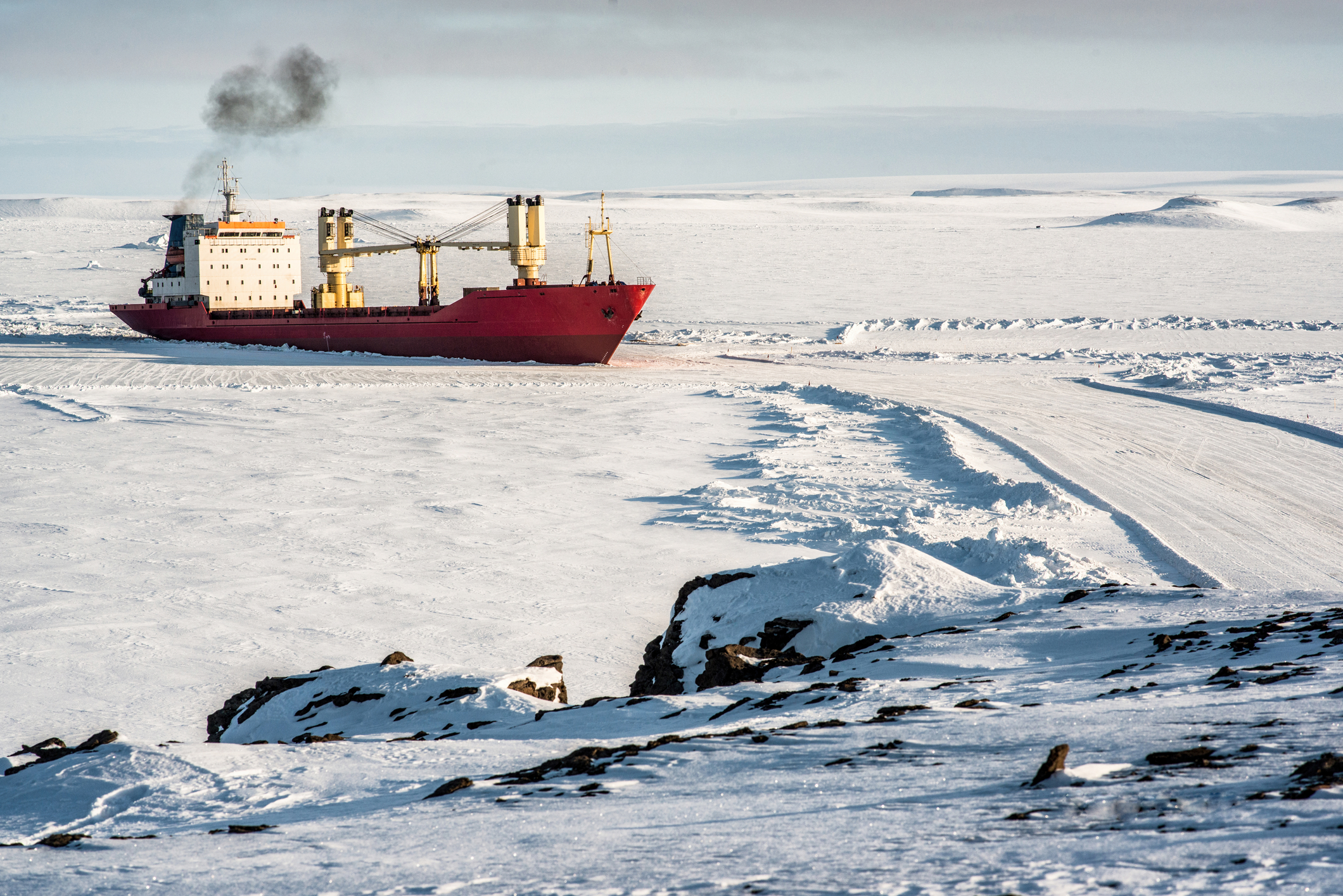
NATO on Wednesday launched a new military effort aimed at improving security in the Arctic and High North, a month after U.S. president Donald Trump ramped up tensions within the alliance over his threats to acquire Greenland.
The new mission, Arctic Sentry, will coordinate the increasing presence of NATO allies in the region, including exercises such as Denmark’s “Arctic Endurance,” the North Atlantic Treaty Organization (NATO) said in a statement.
NATO’s role in this series of military activities is aimed at countering Russian and Chinese influence in the region.
Details are sketchy, but other NATO activities will be added to Arctic Sentry. These activities include, among others, Denmark’s Arctic Endurance, a series of multi-domain exercises designed to enhance allied ability to operate in the region, and Norway’s upcoming exercise Cold Response, where troops from across the alliance have already begun to arrive.
Arctic Sentry will provide NATO planners with full visibility of allied nations’ activities in the Arctic and High North and integrate them into a coordinated operational approach.
NATO began planning for the mission after Trump and NATO secretary general Mark Rutte held talks in Davos last month at the height of the Greenland crisis, sparked by Trump’s insistence that the U.S. had to own the territory.
The two leaders agreed that NATO should collectively take more responsibility for the defence of the region considering Russia’s military activity and China’s growing interest there.
“Arctic Sentry underscores the Alliance’s commitment to safeguard its members and maintain stability in one of the world’s most strategically significant and environmentally challenging areas,” said U.S. Air Force Gen. Alexus G. Grynkewich, Supreme Allied Commander Europe.
“It will leverage NATO’s strength to protect our territory and ensure the Arctic and High North remains secure,” he added.
The Arctic is a gateway to the North Atlantic, hosting vital trade, transport and communication links between North America and Europe.
The availability of new Arctic routes, while presenting potential commercial opportunities, could also lead to competition between nations and jeopardise the security of the entire region. With Russia stating its intention to be a primary force in the Arctic region and China declaring itself as a ‘near-Arctic’ power, Arctic security has become a priority for the NATO alliance and its allies.
The U.S. Coast Guard has completed the award of contracts for 11 Arctic security cutters, fulfilling Trump’s directive to rapidly expand America’s icebreaker fleet. The latest award is for construction of up to five Arctic security cutters.
The contract awarded on Feb. 11 builds on previous awards announced on December 29, and delivers the 11 Arctic security cutters directed by the president Trump.
“America has been an Arctic nation for over 150 years, and we’re finally acting like it under President Trump. Our adversaries continue to look to grow their presence in the Arctic, equipping the Coast Guard with Arctic Security Cutters will help reassert American maritime dominance there,” said US secretary Kristi Noem. “Revitalizing the U.S. Coast Guard’s icebreaking capabilities is crucial for our security and prosperity, and today’s announcement is an important step in that direction.”
Davie Defense, Inc. will construct two Arctic security cutters at Helsinki Shipyard in Finland and three domestically.
“Awarding these contracts ensures the United States maintains its leadership as a maritime power in the Arctic,” said Adm. Kevin E. Lunday, commandant of the Coast Guard. “Accelerating construction of these cutters will enable the Coast Guard to defend our northern border and approaches, while strengthening domestic shipbuilding and reinforcing the nation’s industrial base.”
The delivery of the first Arctic security cutter is expected in early 2028.
The Arctic is a gateway to the North Atlantic, hosting vital trade, transport and communication links between North America and Europe.
— NATO (@NATO) February 10, 2026
Watch to learn why the Arctic is increasingly important for our collective security ↓ pic.twitter.com/c8sZoRfQO5
Video credit: NATO