As oil and gas prices soar amid Iran’s stranglehold on the Strait of Hormuz, US president Donald Trump warned Iran that the nation would face devastating consequences for not reopening the Strait.
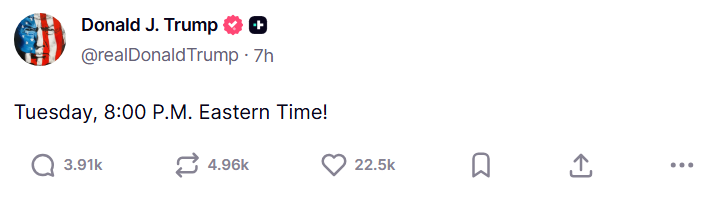
Trump posted on Truth Social a fiery message Sunday aimed at Iran, warning of major consequences if it failed to meet his Tuesday deadline to reopen the Strait of Hormuz to all shipping.
The president threatened to bomb Iran’s power plants and bridges in a post on Truth Social. The post included a threat that “Tuesday will be Power Plant Day, and Bridge Day, all wrapped up in one, in Iran” and that “There will be nothing like it.”
The message escalates ongoing U.S. military actions against Iran, tying them directly to the closure of the critical Strait of Hormuz.
This latest post comes amid weeks of intensified U.S.-Israeli operations against Iranian targets. Trump has repeatedly threatened to target power plants, if Iran does not reopen the strategic waterway.
As Tuesday approaches, international observers are watching closely for developments in U.S.-Iran tensions. Markets, diplomats, and energy analysts are bracing for potential volatility depending on Iran’s response and U.S. actions.
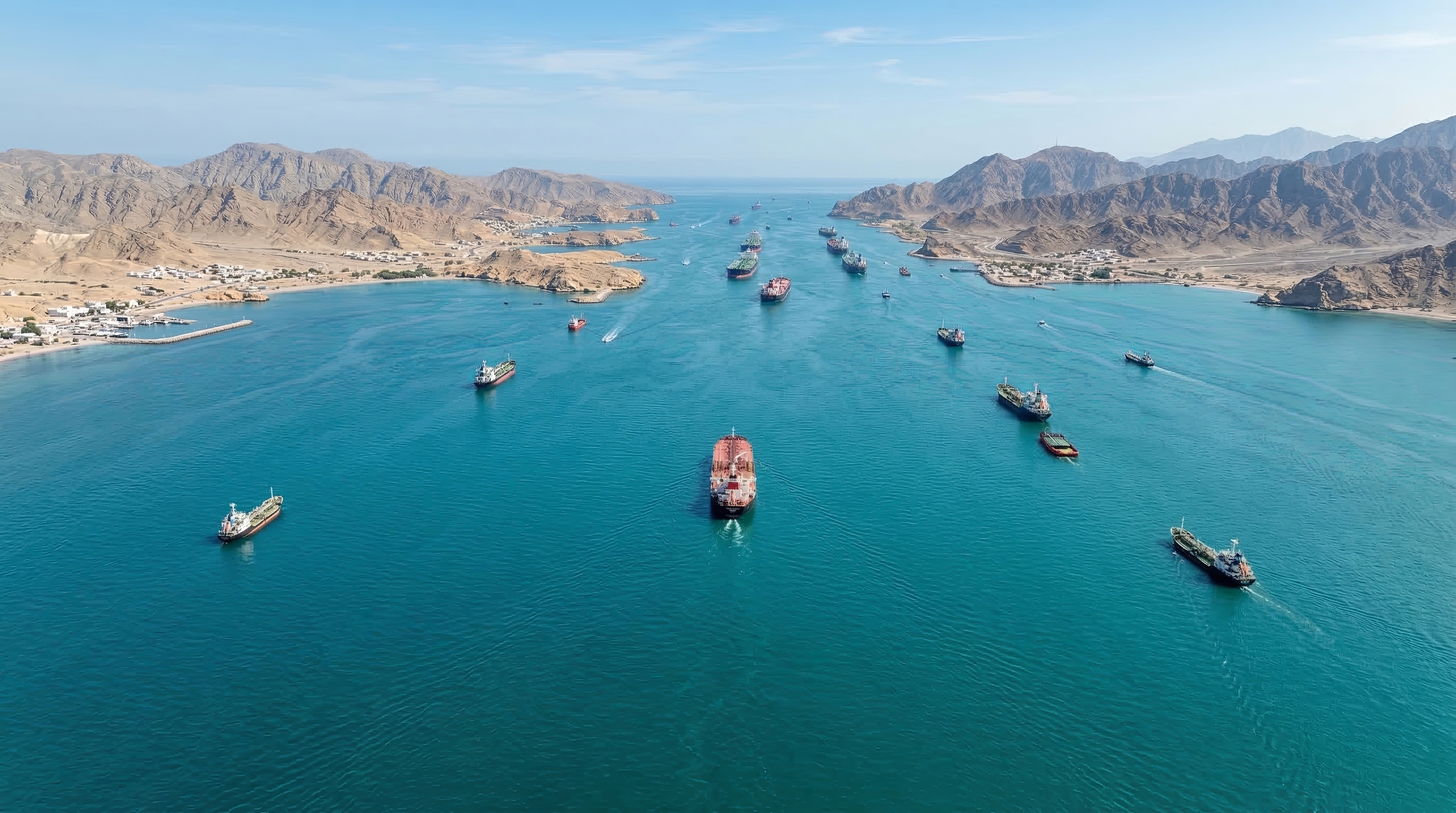
The Strait of Hormuz, a vital route for global oil and liquefied natural gas shipments, has been largely restricted since the conflict escalated in February, with only limited commercial traffic allowed through Iranian-controlled channels.
Oman and Iran have held high-level talks on Saturday to explore options for maintaining the flow of maritime traffic through the Strait of Hormuz, as the key global shipping route remains effectively restricted due to the ongoing conflict in the region.
The meeting involved members of the foreign ministries of both countries, who presented possible “options” for reopening the passage.
Oman’s foreign ministry confirmed the meeting, stating, “On Saturday, April 4, the Sultanate of Oman and the Islamic Republic of Iran held a meeting at the level of undersecretaries in the foreign ministries of the two countries, attended by specialists from both countries.”
The meeting discussed possible options for ensuring smooth passage through the Strait of Hormuz during the circumstances witnessed in the region.
During the meeting, experts from both countries presented a number of perspectives and proposals that will be studied.
Iranian crude cargo diverted from India to China over ‘payment issues’ incorrect, says India
India on Saturday refuted reports claiming that an Iranian crude cargo bound for India had been diverted to China over payment issues, calling such assertions “factually incorrect.” It clarified that there was no payment hurdle for Iranian crude imports, and that cargoes can change destinations mid-voyage based on trade optimisation and operational flexibility.
Dismissing these claims, the petroleum and natural gas ministry said reports and social media posts suggesting a diversion due to payment hurdles were inaccurate. It stated that India imports crude oil from 40+ countries, with companies having full flexibility to source oil from different sources and geographies based on commercial considerations.
“The news reports and social media posts of an Iranian crude cargo being diverted from Vadinar, India to China due to “payment issues” are factually incorrect. Amid Middle East supply disruptions, Indian refiners have secured their crude oil requirements, including from Iran; and there is no payment hurdle for Iranian crude imports, contrary to the rumours being circulated,” the ministry wrote on X.
The petroleum ministry said that claims about the vessel’s diversion overlook how the global oil trade functions.
“Claims on vessel diversion ignore how oil trade works. Bills of Lading often carry indicative discharge ports destinations and on-sea cargoes can change destinations mid-voyage based on trade optimisation and operational flexibility,” it added.
It reiterated that India’s crude oil requirements remain fully secured for the coming months.
“Fragmented responses are no longer sufficient”: IMO Secretary-General says
The secretary-general of the International Maritime Organization (IMO) Arsenio Dominguez urged last week states to support diplomatic efforts to secure the evacuation of around 20,000 seafarers still stranded in the Persian Gulf, and enable humanitarian corridors for urgent assistance.
During a virtual meeting for foreign ministers from more than 40 countries hosted by the United Kingdom’s Foreign, Commonwealth and Development Office (FCDO) to discuss the situation in the Strait of Hormuz, Dominguez called on all parties to respect the rights and freedoms of navigation and stressed the paramount importance of the safety and wellbeing of seafarers.
He emphasized the need for de-escalation and operational maritime solutions rather than purely military approaches.
“Fragmented responses are no longer sufficient to resolve this crisis. What is urgently required is diplomatic engagement, practical and neutral solutions, and coordinated international action,” he said following the meeting.
“IMO is advancing a maritime evacuation framework built on coastal State cooperation, security guarantees and operational coordination, with the clear objective of releasing stranded vessels, enabling safe crew rotations and preventing an environmental disaster.”
Ongoing discussions are being held by the IMO secretary-general and representatives from the relevant states on the development of a safe passage framework to evacuate seafarers currently stranded in the Persian Gulf.
IMO is engaging states in the region that have stepped forward to secure supply lines to ships and facilitate humanitarian access for seafarers.