Criminal networks make use of different maritime cocaine trafficking methods, using smaller, and often non-commercial, vessels. In this way, they avoid commercial ports and the risks associated with law enforcement presence and controls, according to a new Europol report.
Large so-called mother vessels carry the drugs from Latin America to smaller daughter vessels, which either take the cocaine onboard directly (at-sea transfers) or collect it at prearranged drop-offs and bring them ashore (at sea drop-offs). These techniques are used in diverse geographical areas, and involve varied types of mother and daughter vessels, from container vessels, tankers, bulk vessels, tug boats, fishing vessels and leisure vessels to speed boats.
At-sea transfers typically involve a mother vessel from Latin America transferring cocaine to a daughter vessel off the coast of West Africa. The cocaine is then either brought ashore in West Africa for further shipment to mainland EU or sent to the Canary Islands. Using rigid-hulled inflatable boats, criminal networks also transport cocaine directly to mainland Spain. Upon reaching the Andalusian coast, criminal networks utilise the Guadalquivir River to transport cocaine inland for further distribution.
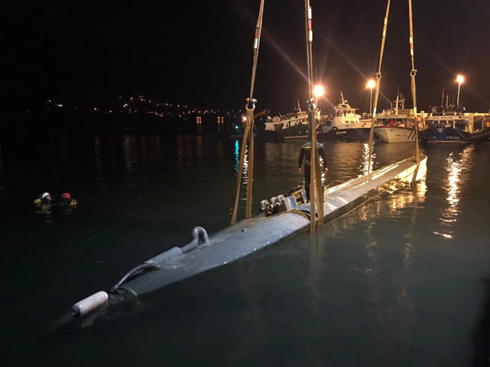
The new report, Diversification in Maritime Cocaine Trafficking Modi Operandi, also highlights the use of semi-submersibles and other non-commercial vessels, as well as the incorporation of cocaine into various carrier materials before shipment to Europe.
Semi-submersibles built specifically for cocaine trafficking are becoming increasingly sophisticated, and capable of travelling larger distances. Historically, different types of semi-submersibles have typically been used for shorter trips in Latin and Central America. However, improvements in the vessels have facilitated the crossing of the Atlantic.
While cocaine is most commonly trafficked in one kilo bricks, hidden among legal goods in containers, various alternative concealment methods are used which may make detection, including by scanners or sniffer dogs, challenging. Using this method, cocaine is incorporated, or chemically bonded, with solid or liquid legitimate carrier materials such as food, plastics, and textiles.
These methods make detection by scanners, sniffer dogs, and forensic tests extremely difficult.
Criminal networks are leveraging advanced technologies, including encrypted communication systems, autonomous vessels, and drones, to enhance their operations and evade detection.
One notable example of these evolving tactics is illustrated by a recent operation codenamed Sombra Negra, which exposed a significant shift in drug trafficking methods. Led by Spanish authorities and supported by Europol, this operation resulted in the arrest of 101 suspects and the seizure of over 10 tonnes of cocaine in the Iberian Peninsula. The investigation involved two main phases: the most recent phase, on 19 November 2025, resulted in more than 50 arrests and 20 searches in Spain and Portugal. The first phase in June 2025 had similar outcomes.
The operation highlighted a shift in drug trafficking methods, as the criminal network relied on advanced maritime infrastructure to transport large quantities of cocaine from South America into Europe through the Iberian Peninsula. The suspects employed high-speed vessels capable of exceeding 70 km/h and complex encrypted communication systems to evade law enforcement. The operation dealt a decisive blow to one of Europe’s largest cocaine trafficking organisations and underscored a regional shift from cannabis to cocaine trafficking.
The report also highlights the need for enhanced maritime monitoring, financial investigations, and forensic expertise to expose hidden compartments, chemically incorporated drugs, and extraction laboratories.
Partnerships between law enforcement, customs, port authorities, and the private sector are essential for securing supply chains and sharing actionable data in real time.
“We know that these groups are increasingly diversifying their methods, using smaller vessels, at-sea transfers, and clever concealment techniques to evade detection. Our response must be equally dynamic and coordinated. By leveraging our analytical capabilities, international partnerships, and strategic initiatives such as the European Ports Alliance, we can turn these challenges into opportunities for intelligence and action,” Catherine De Bolle, Europol executive director said.
Video credit: Europol