There has been no internationally recognised legal closure of the Strait of Hormuz. However, Iranian radio warnings, heightened military risk, and company‑level directives have resulted in a sharp reduction in commercial traffic, with most vessels temporarily avoiding transit despite a limited number continuing to pass through. Port operations across the Middle East remain mixed. Several ports continue to operate normally, while others are subject to temporary suspensions or partial closures. Airspace is closed in most Gulf countries, which continues to restrict crew change activity.
At the time of writing this article, there is no official confirmation of any closure of the Strait of Hormuz at this time; however, vessels are being advised on VHF not to transit the Strait of Hormuz.
The United States and Israel attacked Iran on Saturday that threatened a broader regional conflict, with President Trump vowing to eliminate its nuclear program and bring about a change in its government. U.S. President Donald Trump said in an 8-minute video posted on his Truth Social that the U.S. has begun “major combat operations in Iran.” He claimed Iran attempted to rebuild its nuclear program and plans to develop missiles to reach U.S. and appealed to the Iranian people to “take over your government.”
Houthis vows to resume attacks
Amidst these developments, a fresh wave of Houthi vows to “resume and escalate” attacks on commercial ships in the Red Sea has flared widespread concerns.
The EU’s Red Sea naval mission warned of heightened risks to ships in the region. In a statement on Saturday, Aspides warned shipping to stay vigilant and be aware that attacks against all shipping can’t be excluded.
“Following today’s US-Israel military operations against Iran, according to sources, the Houthis threatened to launch new attacks against Israel and US ships interest and shipping in the Red Sea and the Gulf of Aden. We call the shipping industry to stay vigilant and be aware that attacks against all shipping can’t be excluded,” the statement of EUNAFOR Operation Aspides reads.
Shipping majors halt Hormuz transit
German container-shipping group Hapag-Lloyd is suspending all vessel transits through the waterway until further notice.
The firm cited “the official closure of the Strait of Hormuz by relevant authorities amid the evolving security situation in the region.”
“The safety and security of our crews, vessels, and your cargo remain our highest priority,” Hapag-Lloyd said.
“This measure is therefore not discretionary but a necessary response to the current conditions and regulatory restrictions.
“We are closely monitoring developments, which are very fluid, and remain in continuous contact with authorities and security partners.
“As a result, services calling ports in the Arabian Gulf may experience delays, rerouting, or schedule adjustments.”
French shipping group CMA CGM said it had told its vessels inside Gulf, and bound to Gulf, to proceed to shelter. In addition, passage through the Suez Canal has been suspended until further notice, and vessels will be rerouted via the Cape of Good Hope.
As a precautionary measure, MSC Mediterranean Shipping Company has instructed all vessels currently operating in the Gulf region, as well as those en route to the area, to proceed to designated safe shelter areas until further notice.
Tankers attacked – Many drop anchor outside Hormuz
Sources say that an oil/chemical tanker was targeted five nautical miles north of Khasab Port. All 20 crew members – 15 of Indian nationality and 5 of Iranian nationality – have been evacuated. Preliminary information also indicates that four crew members were injured and have been transferred to receive medical treatment.
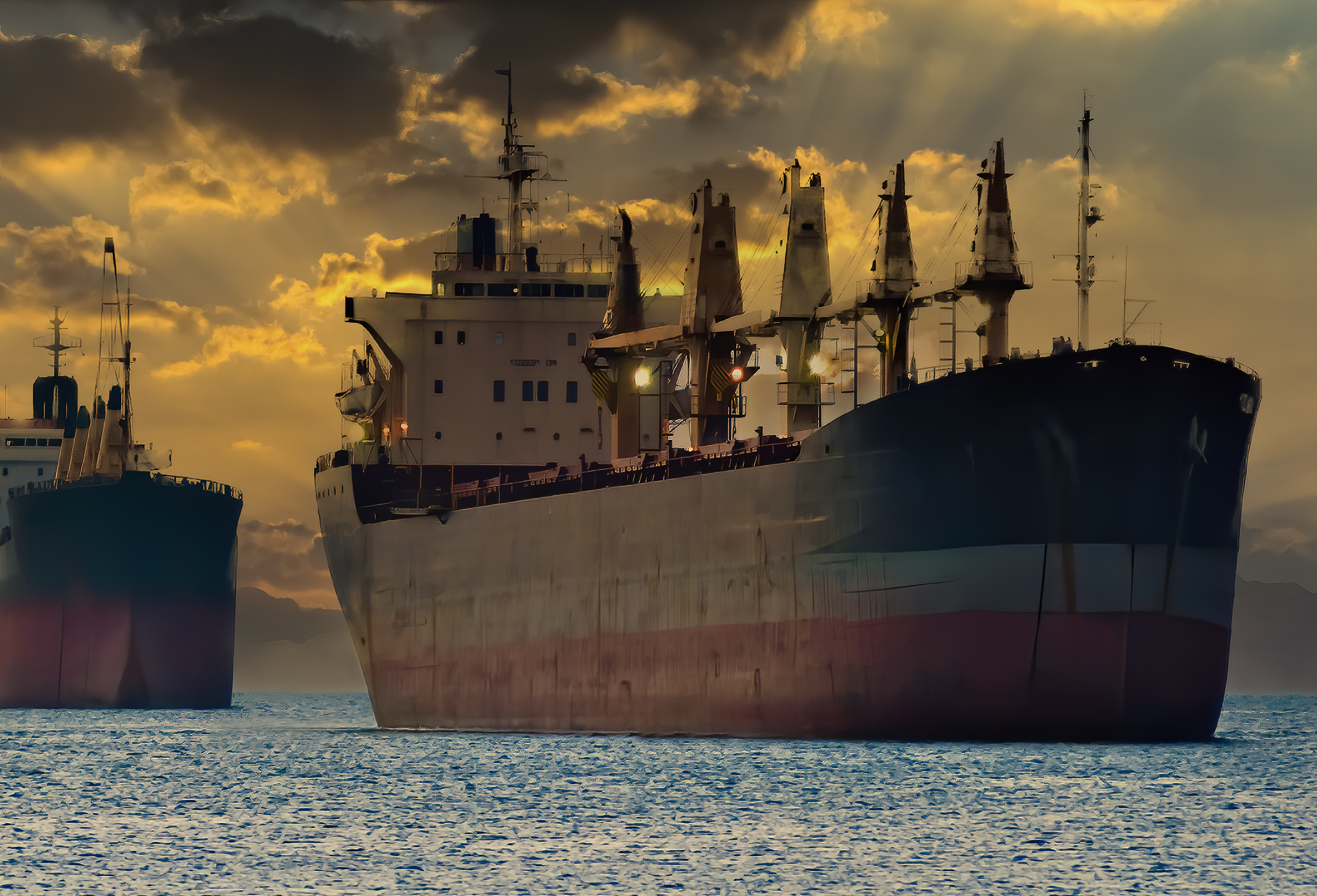
Shipping data indicates many tankers have dropped anchor outside the Hormuz, reflecting a standstill in transit after U.S. and Israeli strikes on Iran.
French President Emmanuel Macron has issued a statement that includes a pledge that the country “stands ready to deploy the necessary resources to protect its closest partners, should they request it,” but also says “the ongoing escalation is dangerous for all. It must stop.”
United Kingdom Maritime Trade Operations (UKMTO) issued a warning on Sunday after receiving a report of an incident 50 nautical miles north of Muscat, Oman.
It has been reported over VHF Channel 16 that the vessel has been struck by an unknown projectile above the waterline. Although the engine room was originally reported as on fire it has now been reported that the fire is under control.
It also received a report of an incident 17 nautical miles northwest of Mina Saqr, United Arab Emirates. The company security officer reported that the vessel been struck by an unknown projectile causing a fire. The fire has been extinguished, and the vessel intends to continue on its voyage.
An incident two nautical miles north of Oman with the crew been evacuated and another one 35 nautical miles west of Sharjah, United Arab Emirates with an unknown projectile been exploded in very close proximity to a vessel, were also reported.
Security services specialists in maritime issue warnings about transit
In another advisory UKMTO warned of significant GNSS and electronic interference across the Arabian Gulf, with potential impacts to positioning, navigation, and communications systems, including AIS and VHF.
Regarding the closure of the Strait of Hormuz, reports continue to circulate via open-source reporting and VHF communications. No official closure of the Strait of Hormuz has been formally communicated to the maritime industry through recognised maritime safety channels, UKMTO said, including NAVAREA warnings or IMO recognised Maritime Safety Information broadcasts. VHF communications indicating transit restrictions do not constitute a legally recognised suspension of transit passage under international maritime law, including UNCLOS.
Fears have resurfaced that the Iran could target one of the world’s most vital oil arteries, the Strait of Hormuz. This sea passage, situated between Oman and Iran, serves as a vital conduit connecting crude oil exporters in the Middle East to global markets.
Western-owned and flagged ships are turning around mid-voyage in the Gulf of Oman to avoid a Strait of Hormuz transit – the first signs of disruption from Operation Epic Fury to energy commodity flows, Windward Maritime AI™ data shows.
Maritime AI™ company Windward monitoring the region tracked the safety measures of the tankers and cargo vessels in the area.
“At least a dozen tankers or cargo vessels sailing for Arabian Gulf ports were tracked pausing voyages in the past 12 hours, amid reports that Iran has sent messages via VHF to deter ships from transiting the Strait. Oil majors are reportedly avoiding sending vessels to the Gulf,” Windward wrote Saturday in a post on social media.
Windward said Saturday tracking data reveals some ships are still sailing eastbound through the waterway to leave the Arabian Gulf. But those owned or flagged by Western countries – including Greece and the UK – have paused voyages or executed U-turns in the Gulf of Oman to avoid entering the Strait.
Security services specialists issue advisories
Security services specialist in maritime Ambrey assesses that Houthis in Yemen will highly likely resume attacks on Israeli- and US-affiliated shipping through ownership and flag. There is a realistic possibility the Houthis may resume targeting of companies trading with Israel too. There is also a heightened risk to shipping calling Israeli ports, according to Ambrey, and ports co-located with American bases in the region.
An extended period of hostilities is assessed as likely, Ambrey warned, significantly elevating risks to US and Israeli affiliated merchant shipping across the wider region.
US and Israel affiliated vessels are assessed to be at a high risk of direct engagement, while maritime infrastructure connected to US energy interests is also exposed to potential targeting.
In an urgent advisory, Ambrey noted that Israeli port facilities are assessed to be at high risk of direct attack, creating additional danger for nearby commercial vessels through blast effects, debris, or secondary incidents.
“Iran commences retaliation against early morning joint US-Iran strikes. Targets presently limited to military assets. Strongly affiliated shipping assessed to be at heightened risk is advised to shelter in territorial seas and avoid transits through the Persian/Arabian Gulf, Strait of Hormuz, southern Red Sea, and Gulf of Aden,” the statement of Ambrey reads.
Commission: Aspides on high alert in Red Sea and ready to help keep maritime corridor open
US president Donald Trump claimed Iran attempted to rebuild their nuclear program that could target “our very good friends and allies in Europe” and US troops overseas as he confirmed US involvement in strikes on Iran.
Vowing a total military response, he pledged to “annihilate” Iran’s navy and “obliterate” its missile industry to ensure they never obtain a nuclear weapon.
“We’re going to destroy their missiles and raze their missile industry to the ground. It will be totally again obliterated. We’re going to annihilate their navy,” Trum wrote on Truth Social, adding that “We will ensure that Iran does not obtain a nuclear weapon. It’s a very simple message. They will never have a nuclear weapon.”
The EU high representative for foreign affairs and security policy Kaja Kallas described the situation in the Middle East as “perilous” and said that Aspides naval mission remains on high alert in the Red Sea and stands ready to help keep the maritime corridor open.
The developments in Iran are “greatly concerning,” European Commission president Ursula von der Leyen said in a statement. She urged “maximum restraint” and said that “ensuring nuclear safety and preventing any actions that could further escalate tensions or undermine the global non-proliferation regime is of critical importance.”
The story is under development and more information will be provided as comes available.