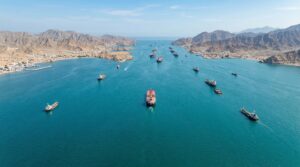
Singapore will not engage in negotiations with Iran for the safe passage of ships or negotiate on toll rates on the Strait of Hormuz, in line with its principle of not taking sides, said foreign minister Dr. Vivian Balakrishnan.
Responding to a parliamentary question on whether Singapore would engage Iran or consider paying a toll for its vessels, Dr. Balakrishnan stressed that transit through such waterways is a right – not a privilege.
“There is a right of transit passage. It is not a privilege to be granted by the bordering state, it is not a license to be supplicated for, it is not a toll be paid. It is a right of ships to traverse,” he said.
This right was enshrined in the United Nations Convention on the Law of the Sea (UNCLOS), of which Singapore is a signatory and has ratified.
He was responding to a question whether the Singapore government is engaging Iranian authorities in order to secure transit through the Strait of Hormuz for Singapore-flagged vessels and whether Singapore will be open to paying a toll to pass through the Strait of Hormuz.
Balakrishnan confirmed that Singapore engaged the Iranian foreign minister before the war and he will engage him in the near future – but as a matter of principle, and not because the country is taking sides.
The foreign minister began his answer by saying Singapore’s position on straits used for international navigation is “long standing and consistent”.
Citing article 44 of UNCLOS, the minister said, “states bordering straits shall not hamper transit passage” and that transit of passage shall not be suspended.
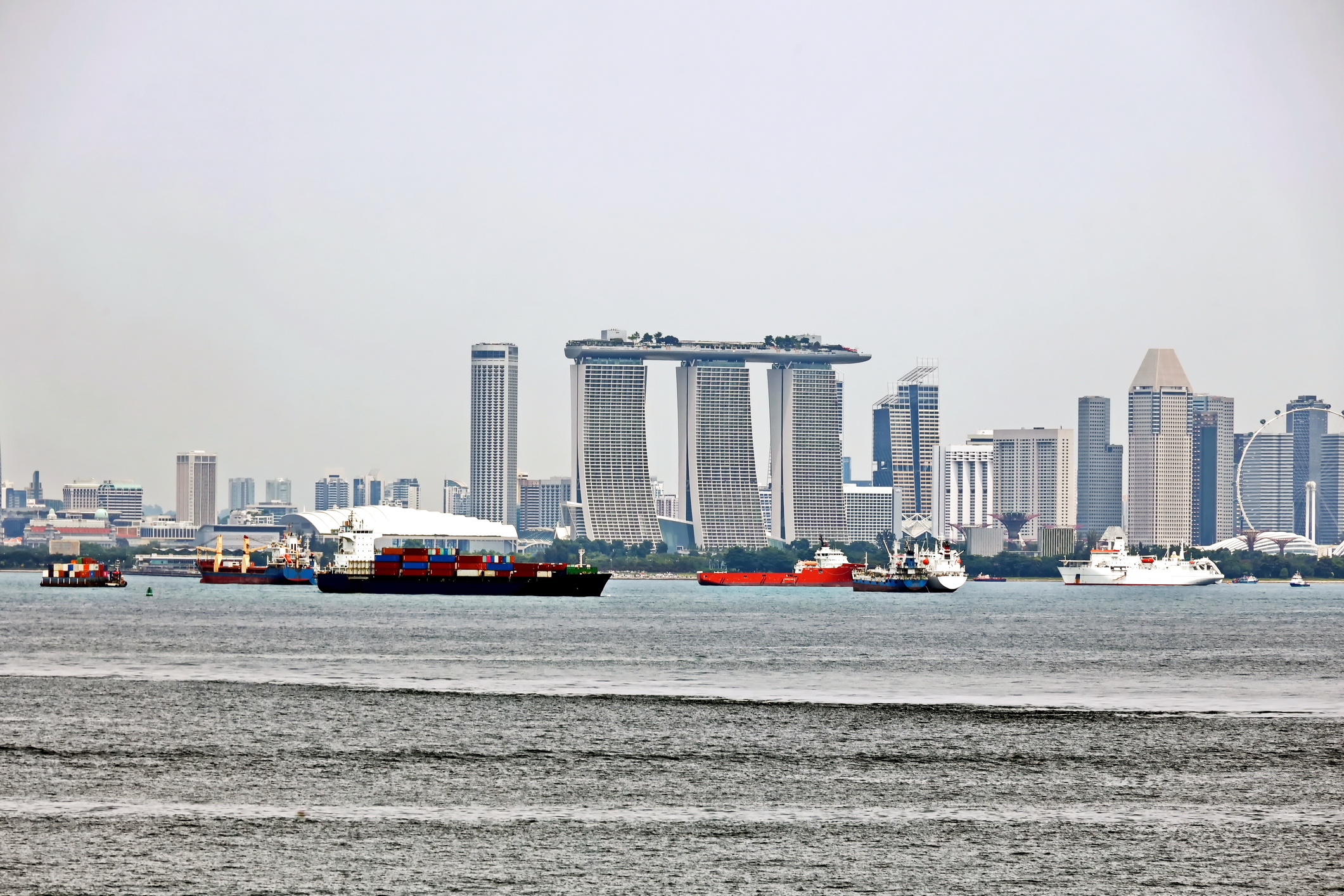
He emphasised that the Strait of Hormuz, like the Straits of Malacca and Singapore, are examples of Straits used for international navigation.
He pointed out that more maritime oil – crude and refined – flows through the Straits of Malacca and Singapore than even the Strait of Hormuz. “If you think about global trade, container trade, there is far more flowing through this place,” he said.
Balakrishnan said transit passage is a right and not a privilege for ships and planes, and this is of profound importance to Singapore.
Providing an update, he said that the government has been closely monitoring the situation in the Strait of Hormuz, adding that the Maritime and Port Authority of Singapore remains in close contact with the ship owners, as well as the operators of Singapore-flagged or Singapore-registered ships in the Persian Gulf.
Agencies are also engaging with stakeholders to explore potential opportunities to facilitate safe transit of the ships.
The minister highlighted the humanitarian issue for the workers, for the seafarers on board these ships.
Efforts include engaging the International Maritime Organization (IMO) and other member states on the potential establishment of a safe maritime corridor following the 36th Extraordinary Session of the IMO Council.
In addition, Singapore is also engaging regional counterparts on other possible arrangements that may be explored.
At the same time, he warned of a more volatile global environment and its consequences.
“First, whether we realise it or not, the world has become more violent and more volatile, and there is a price to be paid for that. Second, what the Strait of Hormuz has shown, is that even in this digital age, chokepoints and physical delivery still matter. And the third point which we need to register in Singapore is that it is not enough to be an oasis of safety, security, cohesion, wealth, and even having the military ability to protect ourselves. Because if our region is aflame, and with war and missiles flying, no oasis can be safe,” he noted.