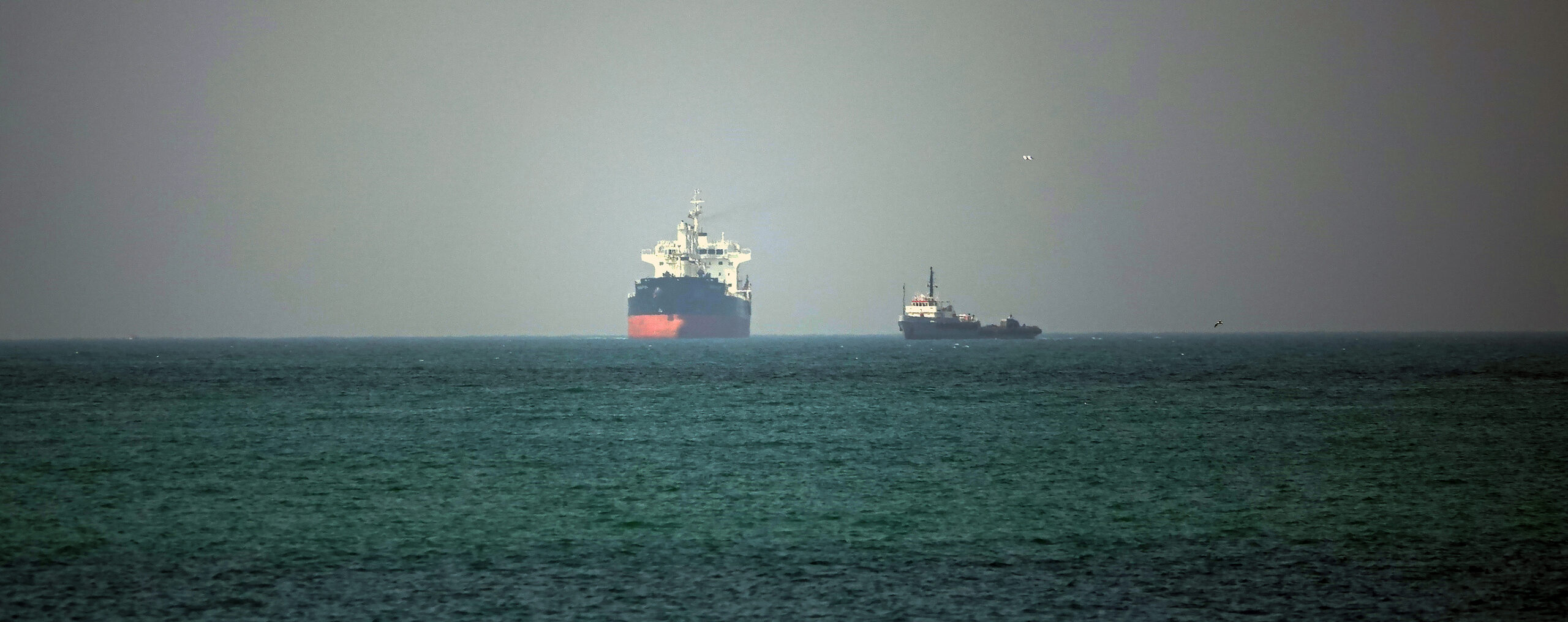
Traffic through the Strait of Hormuz has fallen steeply after a series of tit-for-tat strikes by the US and Iran following an attack on three ships last week. Trump has said both sides have agreed to continue talks despite the fighting over the strait, which the White House saw as a violation of the ceasefire, but clarified that the ceasefire is “over.”
The number of transits has clearly fallen, with traffic data showing it was down for a second consecutive day on July 9. Vessel transits through the Strait of Hormuz fell to just 22 on Thursday, down from 30 on Wednesday.
Activity remained largely low-risk, with commercial movements only slightly exceeding non-commercial traffic. Operators continued to favour the Iranian route, while the Omani route recorded just one crossing.
Trump said early Friday said that the United States and Iran have agreed to continue peace talks, even though the ceasefire established by last month’s preliminary deal has been scrapped.
Iranian foreign minister Abbas Araghchi insisted his country had “kept its word” on the ceasefire, saying on X the US had violated the deal.
In a Truth Social post, Trump claimed that the Islamic Republic of Iran “has asked us to continue ‘talks’” and that “we have agreed to do so.”
“But the United States has stated to them, in no uncertain terms, that the Cease Fire is OVER!” Trump wrote.
Iran’s state media channels did not immediately confirm or deny that it had asked to continue negotiations.
Following the recent military escalation between the US and Iran, which has jeopardised the transition through the Strait of Hormuz, the UK Maritime Trade Operations (UKMTO) on Friday maintained the maritime security threat level for the strategic waterway at “severe”, urging ship owners, operators and mariners to remain vigilant.
In an advisory, the Joint Maritime Information Center (JMIC) said mariners should expect VHF hailing from naval forces and warned of the mine danger area in the traditional traffic separation scheme.
The shipping companies and governments are monitoring the Strait of Hormuz following attacks last week on commercial vessels and US retaliatory strikes on Iran.
The safety of stranded seafarers in the Persian Gulf has been a source of concern among Asian nations – like India and the Philippines – whose citizens make up a significant portion of ship crews.
The US Central Command (CENTCOM) has publicly rejected Iranian claims over the strategic Strait of Hormuz.
The US military stated that Iran does not control shipping traffic through this vital global trade route.
The statement was issued as a “fact check” on social media on July 9, countering claims made by Iranian state media.
CENTCOM stated on social media X: “CLAIM: Iranian state media claims that transit through the Strait of Hormuz is only permitted through routes designated by Iran. TRUTH: Iran does not control the Strait of Hormuz. Since early May, U.S. forces have helped facilitate the successful transit of more than 800 commercial vessels and 380 million barrels of crude oil through the vital international trade corridor.”
Last week, foreign minister Abbas Araghchi held a series of high-level telephone consultations with regional counterparts, emphasizing diplomacy while warning against further military escalation.
In separate calls with Omani foreign minister Sayyid Badr Albusaidi and Turkish foreign minister Hakan Fidan, Araghchi discussed developments in the Strait of Hormuz.
During the talks, the ministers reviewed the latest regional developments, particularly recent events in the strait, along with other issues of mutual interest.
They underscored the importance of making full use of diplomatic channels, maintaining close contacts and coordination to address regional issues, and preventing further escalation of tensions.
In a statement issued Saturday, Araghchi accused Washington of violating paragraph 9 of the Memorandum of Understanding on the termination of the war.
Strait of Hormuz crossings fall as operators remain cautious
— MarineTraffic (@MarineTraffic) July 10, 2026
Confirmed vessel crossings through the Strait of Hormuz fell for a second consecutive day on 9 July, dropping to 22 crossings from 30 the previous day, according to #MarineTraffic data. Activity remained largely… pic.twitter.com/q500l6bpjq