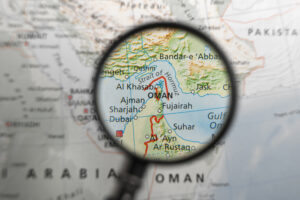
The United States will not attack Iran before the November 3 midterm elections, as US president Donald Trump touted record oil flows through the Strait of Hormuz and ‘productive discussions’ with Iran.
Trump said the blockade on Iran would remain in “full force and effect” and reiterated that Iran would not be allowed to have a nuclear weapon.
President Trump claimed that his administration is “having productive discussions” and vowed to hold off on resuming attacks against the Islamic Republic of Iran before the midterm elections.
“We are having productive discussions with the Islamic Republic of Iran,” the president wrote on Truth Social Thursday.
In his post, Trump claimed that 22 million barrels of oil had flowed through the Strait of Hormuz the previous night, adding that none of it came from or was going to Iran.
In the same post, Trump further touted continued naval blockade against Iran and record oil flows through the Strait of Hormuz.
The US president then wrote that “while Iran is in very bad condition, both economically and militarily, and while the blockade will remain in full force and effect, with oil flowing in record numbers of barrels through the Hormuz Strait (22 million barrels, last night alone, with not one barrel coming from, or going to, Iran), we will not be attacking Iran at any time prior to the midterm elections to be held in the United States on November 3rd.”
Talks between Tehran and Washington ongoing – Iranian FM
Trump’s announcement comes as the Iranian foreign minister Abbas Araghchi confirmed that Tehran is reviewing a US response to an Iranian “seven-day plan” proposal.
Indirect dialogue between Iranian and US representatives is continuing, with the sides exchanging messages, Araghchi said.
“The negotiating process is continuing, with the sides exchanging messages through intermediaries.” He added that Tehran had “put forward its proposal, the so-called seven-day plan, and Iranian representatives listened to the US side’s views on it.”
“We are currently studying the US position, and I believe we will respond within the next few days,” Iran’s foreign minister stressed.
The development comes as diplomatic efforts to end the conflict continue alongside deterioration in maritime security around Hormuz.
Maritime security is now at its most perilous in the region since the early days of the conflict, lifting freight costs to unprecedented levels and driving steep discounts on oil prices offered by national oil companies in order to secure sales.
US sanctions 17 Iran “shadow fleet” vessels
Meanwhile, the Trump administration on Thursday imposed fresh sanctions on 17 shadow fleet vessels responsible for transporting millions of barrels of Iranian crude oil and petroleum and petrochemical products to a variety of markets in South and East Asia, the US Treasury Department said.
Specifically, the Department of State is sanctioning 17 ‘shadow fleet’ vessels and their entities.
Treasury warned that any entity facilitating money laundering or sanctions evasion on behalf of Iran risks being cut off from the U.S. financial system.