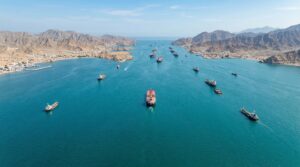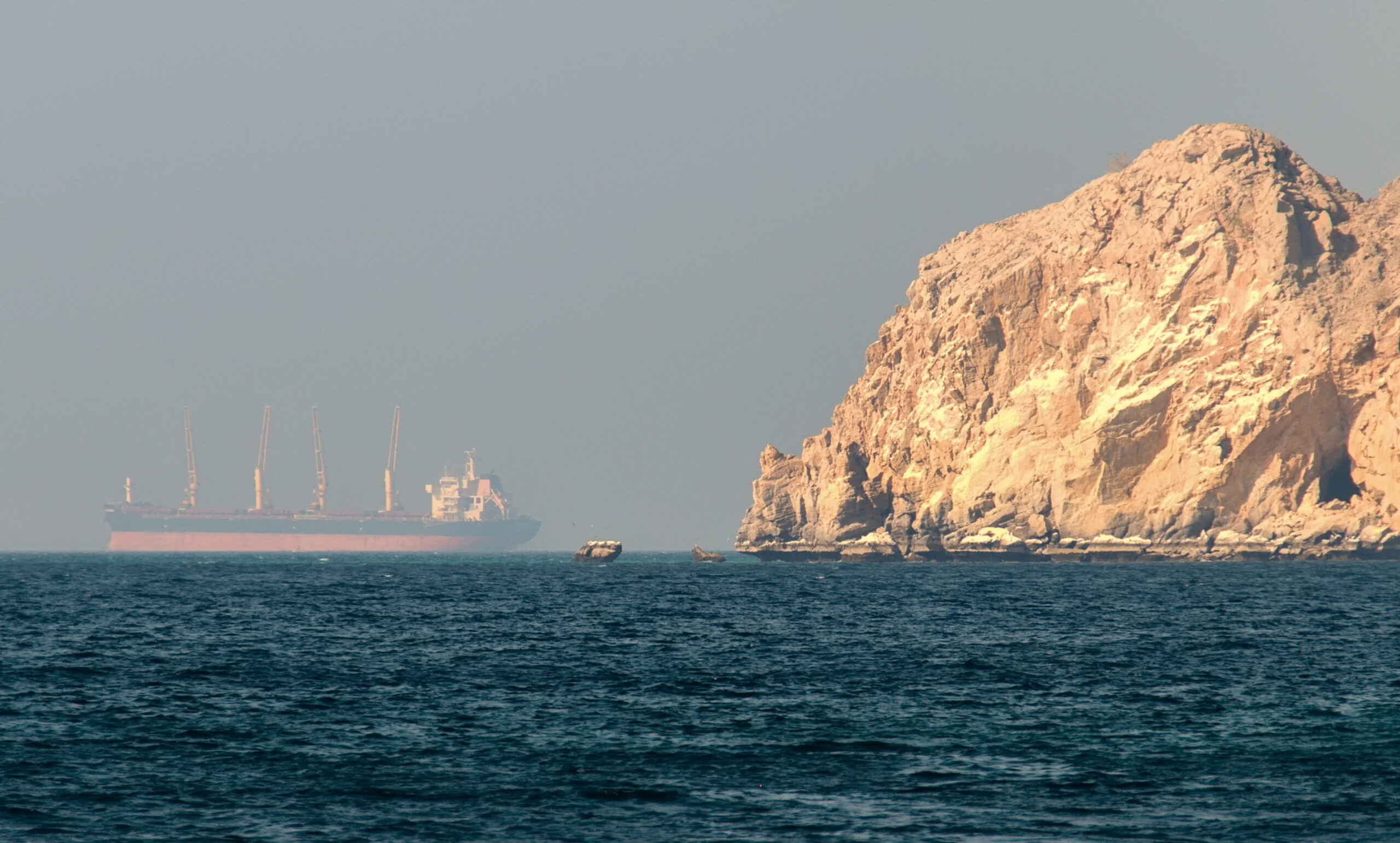
US president Donald Trump said on Wednesday that the United States will help with traffic buildup in the Strait of Hormuz, hours after Washington and Tehran agreed to a truce.
The countries agreed to a two-week ceasefire before Trump’s Wednesday deadline to obliterate Iran’s power plants and bridges was set to expire.
Tehran later said it had agreed to safe passage in the Strait of Hormuz “via coordination with Iran’s Armed Forces and with due consideration of technical limitations.”
“The United States of America will be helping with the traffic buildup in the Strait of Hormuz,” Trump wrote on his Truth Social platform.
“There will be lots of positive action! Big money will be made. Iran can start the reconstruction process,” he added.
Trump said the US will be “loading up with supplies of all kinds, and just “hangin around” to make sure that everything goes well. I feel confident that it will.”
European Union leaders have welcomed a two-week ceasefire agreed between Iran and the United States and have urged for a more lasting deal to be reached.
“The goal must now be to negotiate a swift and lasting end to the war within the coming days. This can only be achieved through diplomatic means,” the statement reads.
“I welcome the two-week ceasefire the US and Iran agreed last night. It brings much needed de-escalation,” European Commission president Ursula von der Leyen said on X on Wednesday.
EU high representative for foreign affairs and security policy, Kaja Kallas, said the cessation in hostilities was necessary as a “step back from the brink after weeks of escalation.”
“It creates a much-needed chance to tone down threats, stop missiles, restart shipping, and create space for diplomacy towards a lasting agreement. The Strait of Hormuz must be open for passage again,” she said.
European Council president António Costa urged “all parties to uphold its terms in order to achieve sustainable peace in the region.”
Qatar welcomed the announcement of a ceasefire agreement between the United States of America and the Islamic Republic of Iran, considering it an initial step towards de-escalation, and stressing the need to build on it urgently to prevent the spread of tension in the region.
The ministry of foreign affairs also stressed the importance of ensuring the security of maritime routes and the freedom of navigation and international trade in accordance with the rules of international law.
The International Transport Workers’ Federation (ITF) welcomed the announcement of a ceasefire in the Middle East and the agreement to allow safe passage through the Strait of Hormuz over the coming two weeks.
“For the hundreds of seafarers of all nationalities caught in the middle of this crisis, this announcement will bring real and immediate relief, that must now be translated into safe, orderly and guaranteed transit through the Strait. That has to be the priority,” said Stephen Cotton, ITF general secretary. “Civilian seafarers should never have been exposed to the risks of warfare, nor should commercial vessels ever be considered targets.”
To guarantee the safety of seafarers and the integrity of global supply chains, the ITF calls for an absolute commitment from all parties that civilian vessels will not be targeted and a coordinated management of vessel movements through the Strait with phased transits to ensure safe and orderly transit.
“The ITF will continue to work closely with shipowners, industry partners and governments in the Gulf, alongside key labour-supplying nations, to ensure seafarers’ concerns and needs are heard – and their safety, dignity and basic needs are delivered. We will prioritise working with our industry partners to ensure that seafarers who have been stranded in the Gulf are repatriated and reunited with their loved ones without delay,” said Cotton.