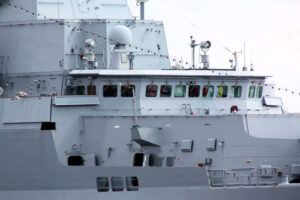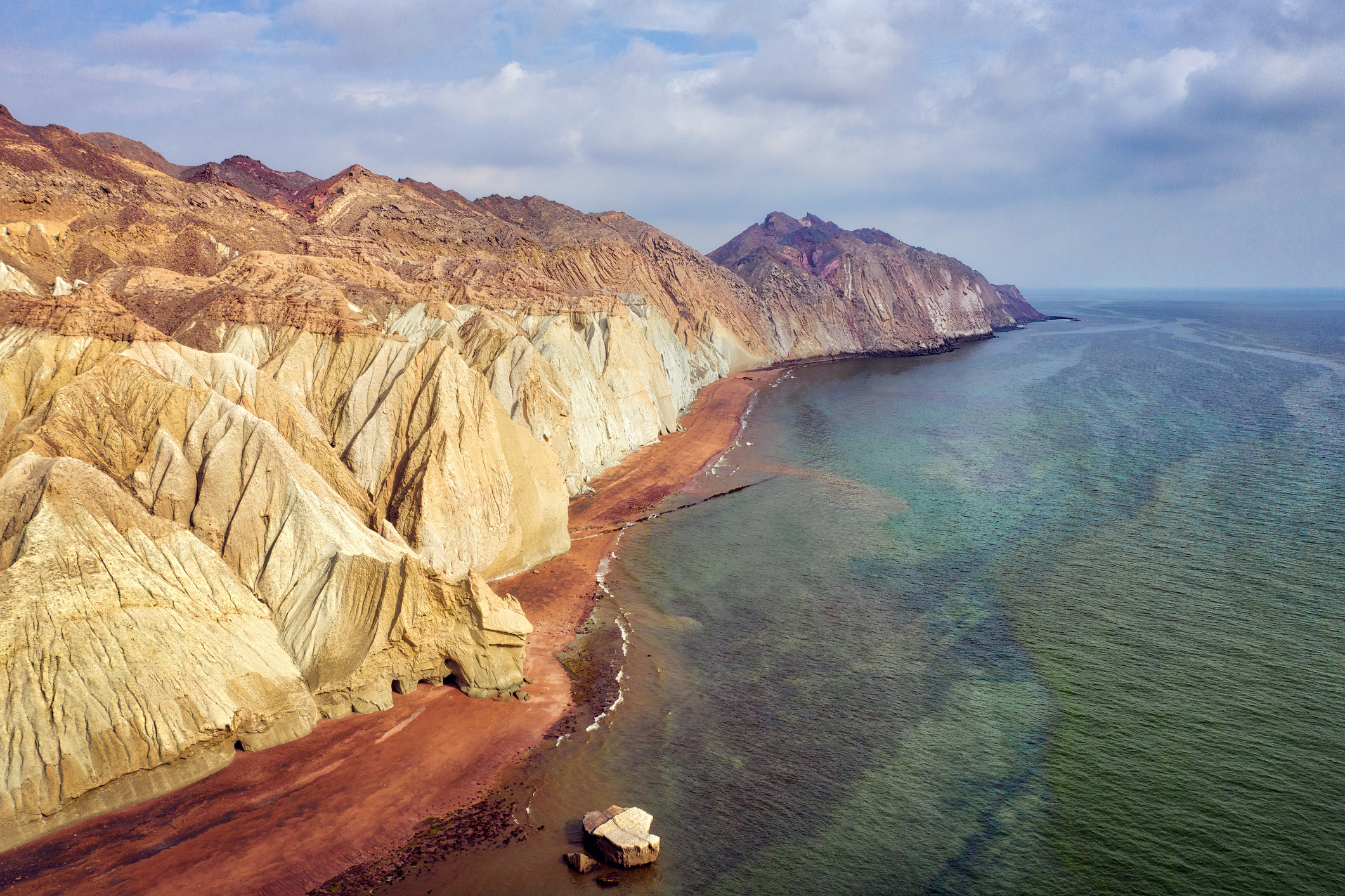
A merchant vessel transiting the Strait of Hormuz was hailed on VHF by numerous small armed vessels, according to a maritime security advisory from United Kingdom Maritime Trade Operations (UKMTO).
The incident occurred at approximately 0900 UTC on February 3 within the inbound traffic separation scheme of the strategic waterway, about 16 nautical miles north of Oman. UKMTO said the vessel ignored the request to stop and continued its planned route.
Authorities are currently investigating the incident with UKMTO advising the vessels transiting the area to proceed with caution and report any suspicious activity.
The Strait of Hormuz is an international sea passage and an essential trade corridor that supports regional economic prosperity. On any given day, roughly 100 of the world’s merchant vessels transit the narrow strait.
The incident comes amid a tense standoff between the U.S. and Iran, and just days ahead of expected negotiations. The US and Iran are expected to engage in talks over a nuclear deal. The US president Donald Trump has been trying to bring Iran to the table to negotiate a deal.
“Well, we could make a negotiated deal that would be satisfactory with no nuclear weapons that said they should do that, but I don’t know that they will. But they are talking to us,” US president Donald Trump told reporters on Air Force One en route to Palm Beach, Florida on Saturday.
Meanwhile, the US forces shot down an Iranian drone that had approached the US aircraft carrier USS Abraham Lincoln that has been deployed to the Middle East amid rising tensions in the region.
US press secretary Karoline Leavitt said the drone was acting “aggressively” towards the carrier.
“CENTCOM did make the decision to shoot down that Iranian drone. It was unmanned, it was acting aggressively towards our USS Lincoln … As for @POTUS, he remains committed to always pursuing diplomacy first – but in order for diplomacy to work, of course, it takes two to tango,” Leavitt said earlier this week.
Donald Trump has said that an “armada” was heading to the Middle East amid continuing tension with Iran.
Iran’s foreign minister Seyed Abbas Araghchi told CNN Sunday that “a fair and equitable deal can be achieved” with the United States on Tehran’s nuclear program.
Earlier this week, the U.S. Central Command (CENTCOM) issued a strongly worded warning to Iran and the Islamic Revolutionary Guard Corps (IRGC) over a two-day live-fire naval exercise in the Strait of Hormuz.
While acknowledging “Iran’s right to operate professionally in international airspace and waters,” it warned against interfering or threatening American warships or passing commercial vessels.
The command said it “will not tolerate unsafe IRGC actions,” and “will ensure the safety of U.S. personnel, ships, and aircraft operating in the Middle East.”
The command added that “the U.S. military has the most highly trained and lethal force in the world.”