Maritime emergency unfolded as the tanker Stolt Magnesium was engulfed in flames on Tuesday off the coast of Oman. According to Stolt-Nielsen, the fire was triggered by the explosion of an unidentified external device.
Norwegian shipping company Stolt Tankers, an operator of deep-sea and regional chemical tankers, identified the vessel as the Stolt Magnesium and said it suffered from an explosion of an unidentified external device while off the coast of Oman.
As a result of the impact, the 26,000-dwt chemical tanker (built 2017) experienced a fire in the engine room.
Despite the incident, all crew members aboard the tanker were reported to be safe and accounted for, with no injuries sustained, according to updates from Stolt-Nielsen.
The families of the crew members have been contacted, the company confirmed, adding that all relevant authorities and parties have been informed.
Stolt Tankers said it is currently engaging with authorities and experts to make arrangement for the safeguarding and securing of the vessel and its cargo.
As of now, the company has not provided further comments or details regarding the incident.
Stolt-Nielsen’s portfolio consists of its three global bulk-liquid and chemicals logistics businesses – Stolt Tankers, Stolthaven Terminals and Stolt Tank Containers – Stolt Sea Farm and various investments.
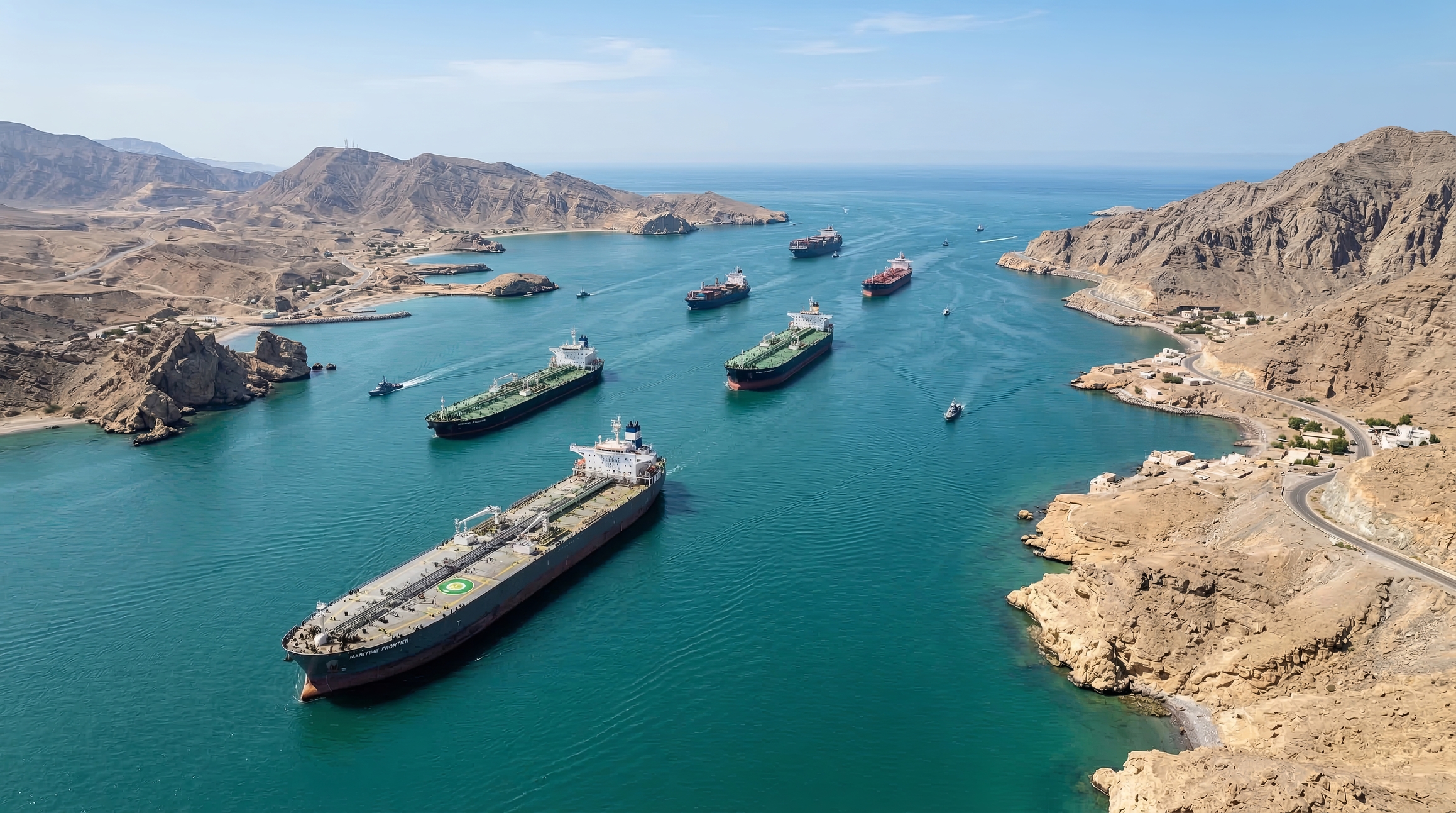
The incident occurred amid heightened security risks around the Strait of Hormuz, a key route for global oil and gas shipments, following renewed military escalation and attacks on commercial vessels in the region.
In a separate attack, two crude oil tankers Al Bahyah and Mombasa B were struck by projectiles in the early hours of Tuesday, July 14 while transiting the Strait of Hormuz. Abu Dhabi-based ADNOC Logistics and Services (ADNOC L&S) confirmed one seafarer lost his life and several others were injured as a result of these attacks.
According to the company, Al Bahyah, an ADNOC L&S-owned very large crude carrier (VLCC), and Mombasa B, a VLCC operated by ADNOC L&S under a time-charter arrangement, sustained significant damage in the attacks.
Shipping traffic through the strategic waterway has slowed sharply as vessel operators delay crossings because of the security threat.
Trump drops 20% charge for Hormuz Strait but Iranian blockade remains
U.S. president Donald Trump on Tuesday dropped the idea of charging a 20% fee on all cargo shipped through the Strait of Hormuz, and said he would instead replace it with trade and investment deals that the various Gulf States will be making into the United States.
The change of plan comes a day after Trump proposed charging a 20% fee to guard the waterway. However, the full blockade on ships coming to and from Iranian ports, or carrying Iranian cargo remains in place.
Trump on Monday said the U.S. is “going to get paid for guarding” the Strait of Hormuz, the major oil-shipping route and epicenter of the re-escalating war with Iran. Trump said US will be reimbursed “at the rate of 20% on all cargo shipped” to cover the costs of providing security in the volatile maritime corridor. Meanwhile, the United States has officially reinstated its maritime blockade on Iran, with US Central Command (CENTCOM) announcing that American forces will resume enforcing restrictions on vessels entering and leaving Iranian ports from July 14 at 4 p.m. ET.
“Based on highly productive conversations with Middle East leadership, I have decided to replace the 20% United States Reimbursement Fee with Trade and Investment Deals that the various Gulf States will be making into the United States,” he said Tuesday in a post on Truth Social.
Trump did not mention any commitments by Gulf states, saying “Investments will be MASSIVE but, at the same time, extraordinarily good for them, and their future.”
In his post, Trump declared the Strait of Hormuz was open to all ship traffic except for Iran.
“We will therefore have a FULL Blockade, but only on Ships coming to and from Iranian ports, or carrying anything have to do with Iranian cargo,” he said.
Stop killing transport workers: ITF says
The International Transport Workers’ Federation (ITF) has condemned another sharp escalation in attacks on merchant shipping and transport workers on two fronts, the US-Iran war and the Russia-Ukraine war, warning that civilian seafarers and other transport workers are being killed and injured in wars they have no part in.
The dangers faced by workers caught up in the US-Iran war is again spreading well beyond seafarers, with airport, road transport, fishing and port workers across both warzones at grave risk as the conflict intensifies.
Stephen Cotton, ITF general secretary, said: “The escalation in conflict that we are now sadly seeing take place near the Strait of Hormuz is once again costing the lives of innocent seafarers, and it must end now. And as attacks increase across countries in the region, transport workers are once again being pulled into this conflict that is not of their making – workers at airports, workers driving trucks, fishers, port workers and many more are all at grave risk.
“Many merchant ships in the Sea of Azov and the Black Sea have also been struck in the past week, leading to a suspension of all shipping in the Sea of Azov, while the Port of Odesa is also under severe attack. Here too, as in recent months, we fear the loss of innocent civilian seafarers’ lives.”
The ITF is calling on all parties in the Middle East and in the Russia-Ukraine war alike to guarantee safe passage for civilian shipping and to bring an immediate end to attacks on transport workers.
“Whatever the conflict, wherever it is, civilian transport workers must be protected,” said Cotton. “We see great concern for the cost of fuel, for how these conflicts affect inflation and our economies – but let’s remember that it is transport workers who join the economic dots and keep our world moving forward. Without them, it all falls apart.
“We call on all sides in all these conflicts to immediately stop attacks on transport workers, to deescalate and return to diplomacy immediately.”
U.S. forces resumed the naval blockade against vessels transiting to and from Iranian ports and coastal areas today at 4 p.m. ET.
— U.S. Central Command (@CENTCOM) July 14, 2026
There are currently more than 20 U.S. Navy warships and hundreds of military aircraft operating across the Middle East. American forces remain… pic.twitter.com/ATRJHlLQNo