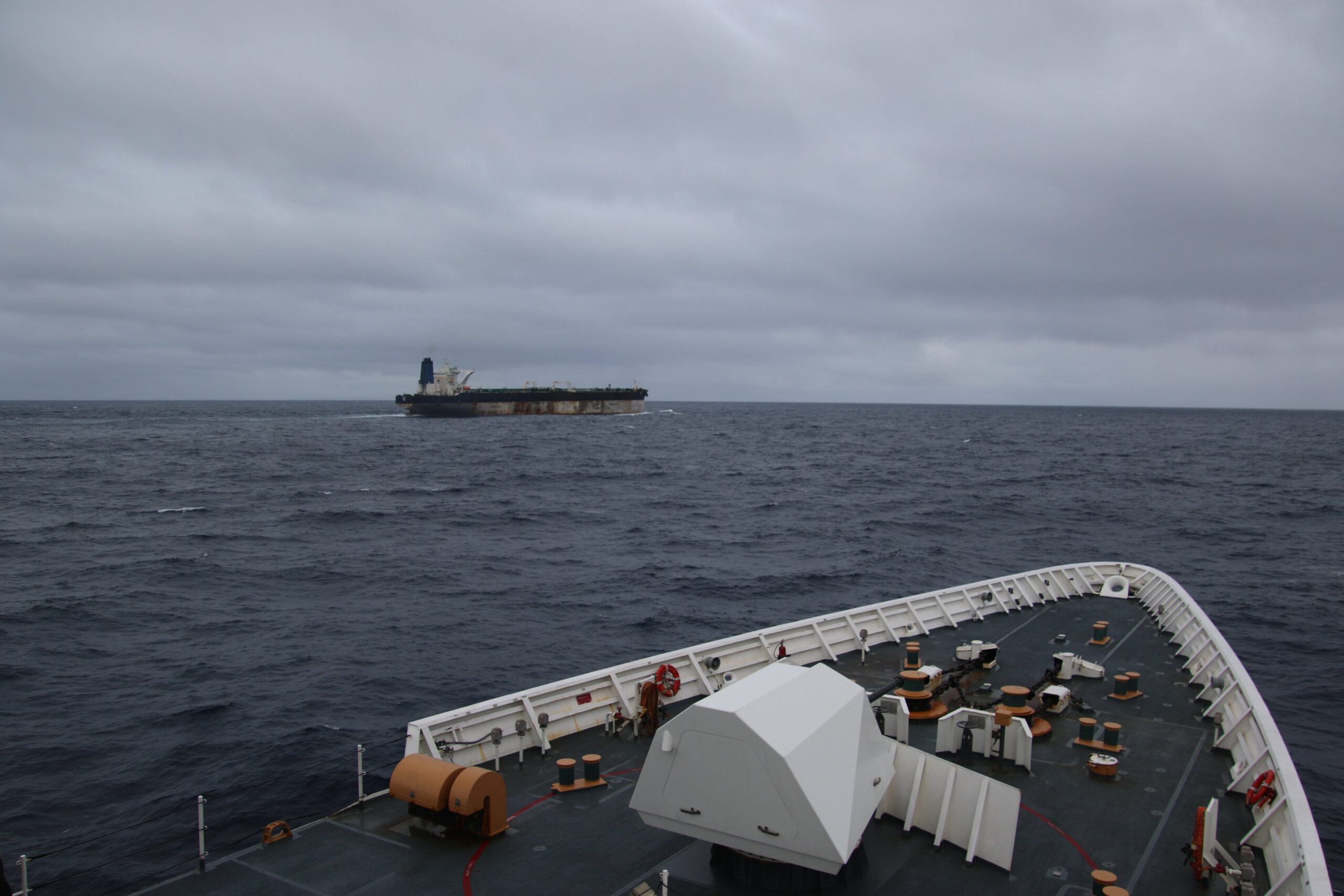
US president Donald Trump has agreed to release two Russian nationals from the Marinera, the Russian-flagged oil tanker that was seized by the U.S. forces in the North Atlantic on January 7, the Russian foreign ministry announced on Friday.
In a diplomatic gesture, Russia welcomed the approval of the United States’ choice to release two Russian nationals from the crew of the oil tanker Marinera, which was previously detained during the operation in the North Atlantic. The tanker was seized on Wednesday by the US Coast Guard in the North Atlantic Sea.
“We welcome this decision and express our gratitude to the US leadership. We are beginning immediate action on all issues related to ensuring the prompt return of our fellow citizens to their homeland,” Russian foreign ministry spokeswoman Maria Zakharova said in a statement on Friday.
The announcement came a day after Moscow asked Washington to adhere strictly to international maritime norms and has criticized perceived ‘neo-colonial ambitions’ regarding Venezuelan oil resources.
While the release relieves Russian concerns, the future of the remaining crew is still uncertain. It’s unclear how many crew members were on board, where they come from or whether they will be freed.
Russia’s foreign ministry said the “lives and health of the Marinera’s crew, which includes citizens of several countries, are now at risk,” adding that Moscow considers “the threats of legal action against them on absurd grounds by US authorities to be utterly unacceptable. Moreover, by conducting an unsafe pursuit and armed seizure of an oil tanker in severe weather conditions, US forces demonstrably disregarded the danger of causing significant environmental damage to the North Atlantic.”
Soon after the seizure of the oil tanker, Moscow said the tanker received a temporarily authorisation to fly the Russian flag on December 24, in accordance with international and Russian law.
It added that Russia had repeatedly informed US authorities of the ship’s status and had formally protested against the continued pursuit of the tanker by the US Coast Guard.
“US authorities, including through official communications with the Russian Ministry of Foreign Affairs, were repeatedly provided with reliable information confirming the vessel’s Russian registration and its civilian, non-military status. There could have been no doubt regarding this fact, nor any basis for alleging that the tanker was sailing “without a flag” or “under a false flag,” the ministry’s statement reads.
Secretary of the U.S. Department of Homeland Security Kristi Noem said the “motor tanker Bella I, has been trying to evade the Coast Guard for weeks, even changing its flag and painting a new name on the hull while being pursued.” The “heroic crew,” as she said, “of the USCGC Munro pursued this vessel across the high seas and through treacherous storms.”
Moscow condemned the US action as an illegal seizure, accusing Washington of escalating tensions and threatening international shipping.
Russia’s foreign ministry warned that such actions would only exacerbate political and military tensions in the Euro-Atlantic region, criticizing the US for its approach to international crises.
White House press secretary Karoline Leavitt argued that US president Donald Trump maintains a good relationship with Putin.
“I believe those personal relationships are going to continue,” but “the president is going to enforce our policy that’s best for the United States of America,” Leavitt said during a press briefing.
The remarks come in the backdrop of the United States’ seizure of the tanker for alleged sanctions violations, an action that Russia has strongly criticised. During a press briefing of the media on January 7 press secretary Leavitt said the tanker was seized for violating US sanctions.
Responding to the claims of Washington, the Russian Foreign Ministry said “references by the United States to its domestic “sanctions legislation” are without legal foundation. The unilateral restrictive measures imposed by the US and other Western countries are illegitimate and cannot justify attempts to assert jurisdiction, let alone the seizure of vessels, on the high seas. Suggestions from certain US officials that the seizure of the Marinera is part of a broader strategy to establish Washington’s unlimited control over Venezuela’s natural resources are profoundly cynical. We categorically reject such neo-colonial ambitions.”
China also condemned the seizure on Thursday, calling it a “serious violation of international law.”
“China stands against unilateral illicit sanctions that lack basis in international law or authorization of the UN Security Council, and against any move that violates the purposes and principles of the UN Charter and infringes upon other countries’ sovereignty and security,” foreign ministry spokesperson Mao Ning told reporters at a regular briefing.
The U.K.’s defence ministry said in a statement that Britain had “provided enabling support” to the United States at their request to interdict the vessel, including “pre-planned operational support” (basing, to U.S. military assets interdicting the vessel between the UK and Iceland following a U.S. request for assistance) and “surveillance support from the air.”