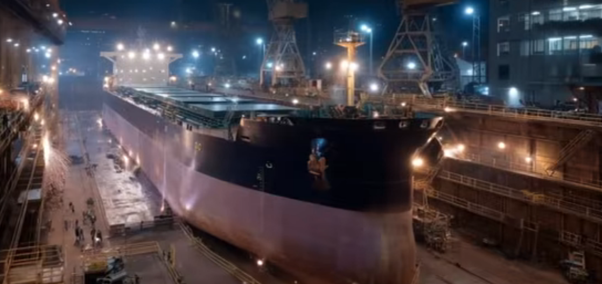
Shipowners face practical challenges when it comes to retrofit their existing vessels with energy-saving technologies and alternative fuels.
New guidance from classification society Lloyd’s Register (LR) highlights that the challenge is no longer simply selecting a single fuel or technology, but understanding how those technologies can be safely, practically and economically integrated into existing ships while meeting increasingly demanding regulatory requirements.
Retrofit projects have become increasingly complex, requiring careful consideration of fuel storage, engine compatibility, safety systems, crew training, statutory approvals, vessel design and long-term operational impacts.
LR’s new guidance provides industry with a practical framework for navigating those challenges.
It covers the practical considerations associated with converting vessels to LNG, methanol, ethanol, ammonia, hydrogen and LPG, alongside the installation of wind-assisted propulsion systems and air lubrication systems.
A central theme is that many retrofit decisions must be made much earlier in the process than owners may expect. Factors such as engine conversion capability, available onboard space, tank location, fuel-system integration and project execution can have a major influence on project costs, timelines and operational outcomes.
The guidance emphasizes the importance of early collaboration between owners, shipyards, equipment manufacturers, flag administrations and classification societies to avoid delays and reduce project risk.
The publication also highlights growing opportunities for energy-saving technologies. Wind-assisted propulsion systems, for example, can benefit from incentives under FuelEU Maritime through a reward factor designed to recognize their contribution to lowering greenhouse gas intensity.
At the same time, the guidance notes reflect growing industry recognition that retrofit projects must address both technical and human factors. Extensive crew training, revised operating procedures, updated safety management systems and new risk assessments are identified as essential elements of successful deployment, particularly for fuels such as ammonia and hydrogen, which introduce new safety considerations.
Paul Herbert, principal technology specialist at Lloyd’s Register, said: “With much of the global fleet expected to remain in service well into the next decade, retrofit projects will play a critical role in shipping’s decarbonization journey.
“As the industry evaluates a wider range of fuel and efficiency solutions, retrofit projects are becoming more complex. By bringing alternative fuels and energy-saving technologies together in a single document, we are helping owners take a more informed and structured approach to retrofit decision-making and project delivery.”
Video credit: Lloyd’s Register (LR)