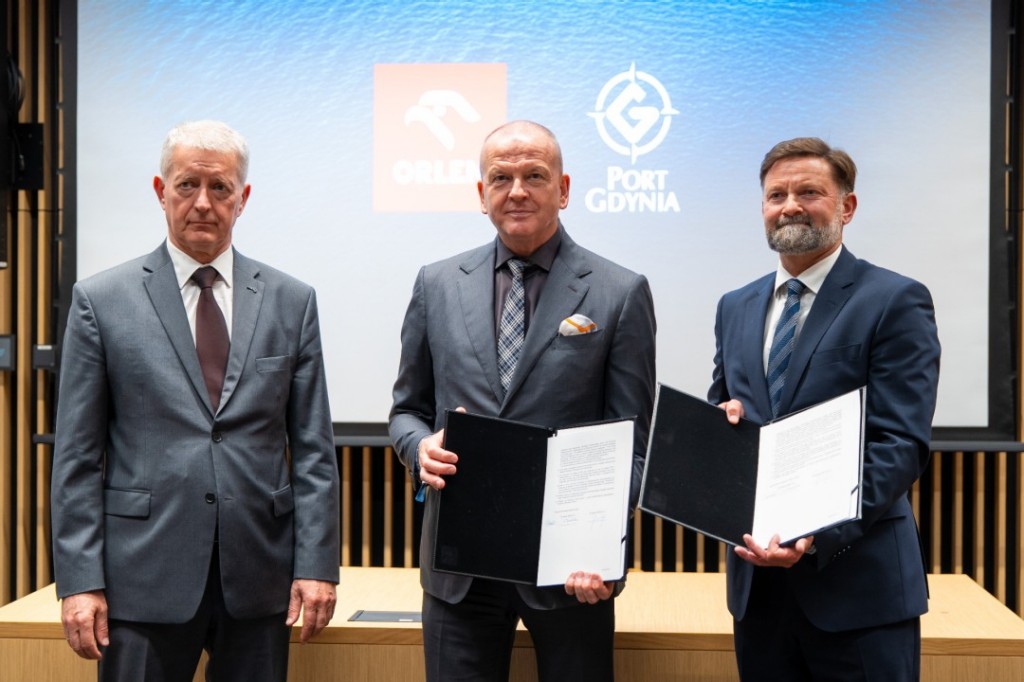
The Polish energy company ORLEN and the Port of Gdynia Authority have signed an agreement to explore the use of LNG and bioLNG as marine vessel fuels.
ORLEN’s cooperation with the Port of Gdynia will cover an assessment of market demand, the potential for LNG and bioLNG bunkering, as well as the necessary infrastructure, operational conditions and regulatory requirements needed to develop such services. One of the key areas under review will be the feasibility of waterside bunkering, including ship-to-ship operations, where fuel is transferred directly from a bunker vessel to a ship in port.
Robert Soszyński, Vice President of the ORLEN Management Board, Operations, say that ‘Our expanded cooperation with the Port of Gdynia marks an important step in developing the LNG and bioLNG market in the Tricity area and forms part of a wider transformation of ORLEN’s fuel portfolio through 2035. Under the ORLEN Group’s strategy, gas, including LNG, will play a strategic role as a transitional fuel supporting energy security and the decarbonization of transport. Our ambition is to build competitive strengths across the entire value chain – from supply and logistics through to end use. In parallel, we are developing capabilities in renewable fuels, including bioLNG, which could become one of the key pathways to lower emissions in heavy-duty road and maritime transport over the coming years. We want ORLEN to be more than a fuel supplier to ports. We aim to be a partner in their transition, making a genuine contribution to the development of infrastructure and market conditions needed for alternative marine fuels to grow in Poland and the wider region.’
Piotr Gorzeński, CEO of the Port of Gdynia Authority, says that ‘Energy transition in the shipping industry is already under way. Shipowners are looking for solutions that could reduce emissions, while ports need to be ready to accommodate vessels using a range of fuels and technologies. We want the Port of Gdynia to be prepared for what the future may bring, because no one can say with certainty which solutions will matter most 10 or 20 years from now. This is why we’re developing the port to respond to the changing needs of vessels and support reductions in emissions from maritime transport. Our cooperation with ORLEN on LNG and bioLNG bunkering is one of the steps in that direction.’