“Let’s be reasonable, let’s understand what is at stake and let’s work toward that goal. This will allow us to gain time, to discuss, and gradually reach a real decision at the IMO on the important and serious issues. First and foremost, safety. First and foremost, safety in the shipping world.”
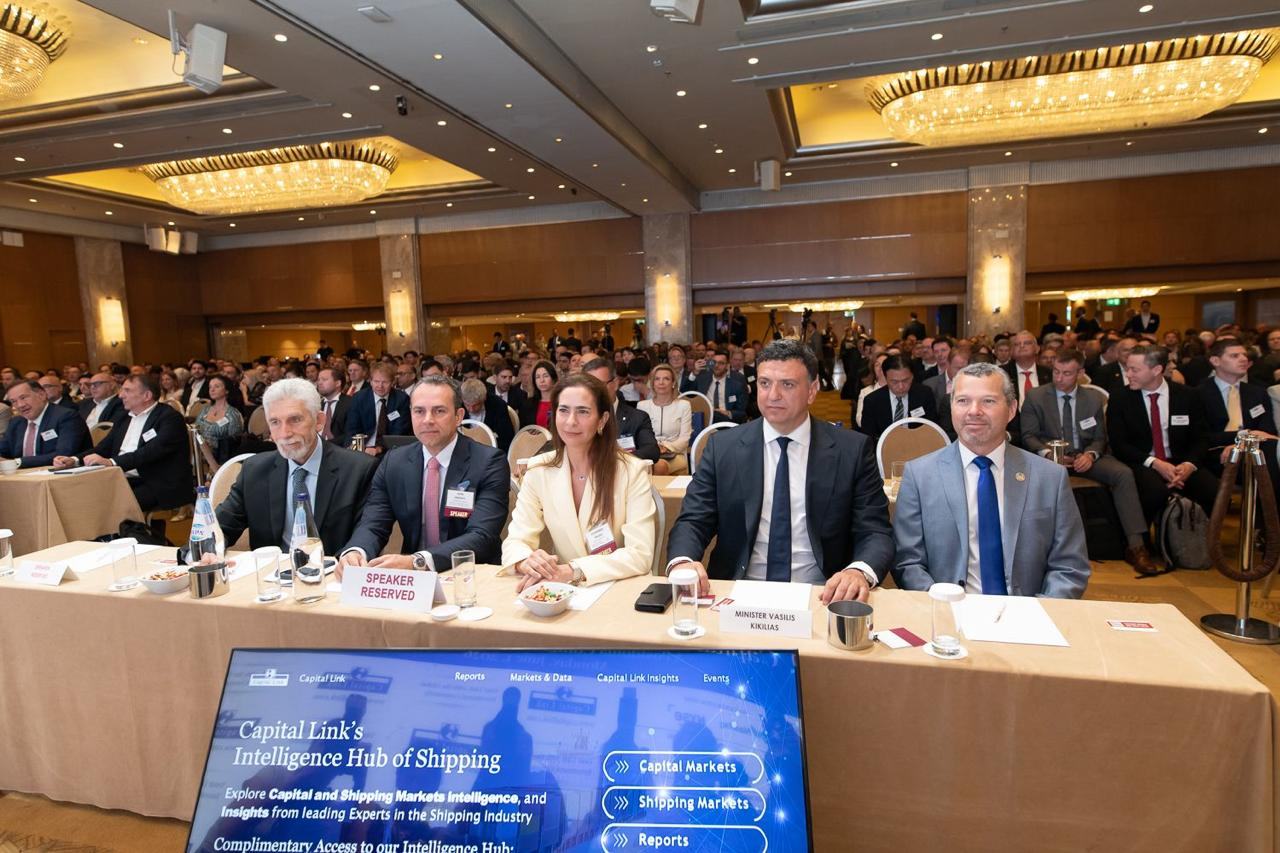
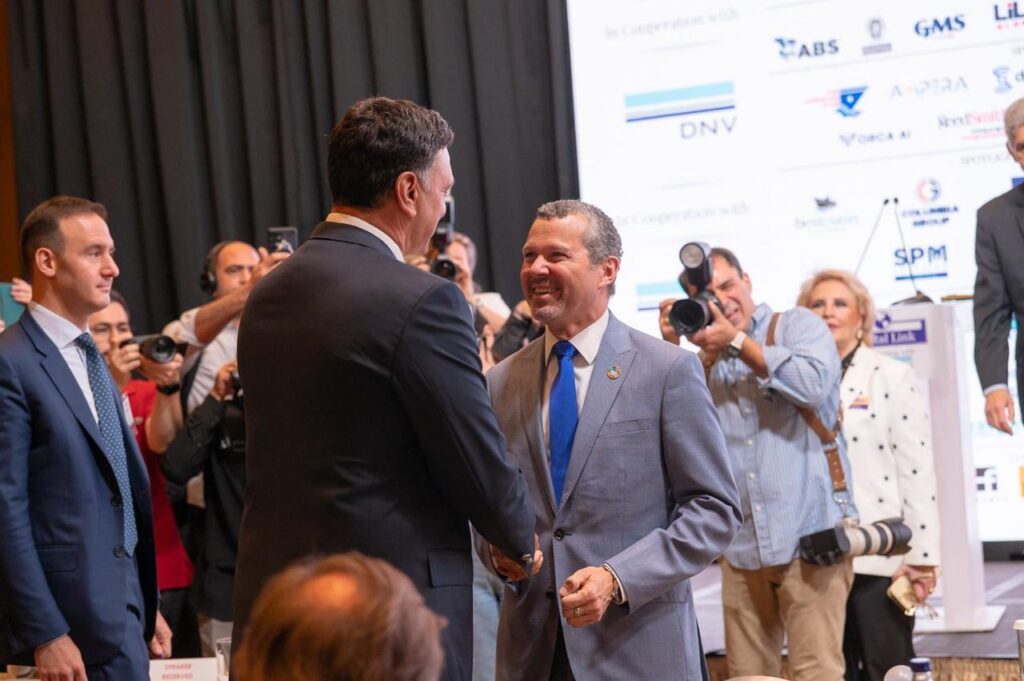
This was emphasized by Greek minister of maritime affairs and insular policy, Vasilis Kikilias, during his opening speech at the 10th Capital Link Maritime Leaders Summit, as part of the Posidonia 2026 event in Athens, Greece, from 1-5 of June.
Speaking in the presence of IMO secretary-general Arsenio Dominguez, Kikilias urged the regulator to take realistic steps, that won’t force the shipping sector to make decisions that it cannot implement.
“Once again, to state clearly and honestly where we stand, we definitely want to move forward with everything related to technologies in the sector, digitalization, to leave a better planet for our children, to work toward that goal. I was very honest and straightforward with the Secretary-General, since the previous IMO session, saying that for us today, LNG is the fuel of the present, and we will see what the fuel of the future will be. Because as far as alternative fuels are concerned, they are currently produced at 0.5% of the global need,” the minister stressed.
Geopolitical developments and impact on shipping
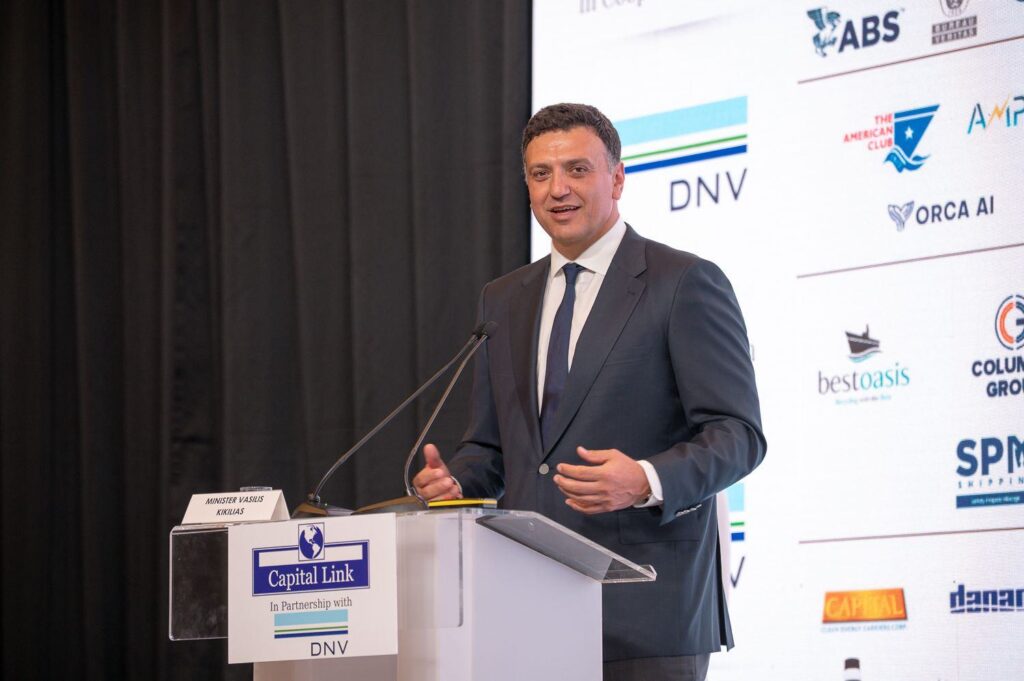
Referring to geopolitical developments and their impact on shipping and global trade, Mr. Kikilias pointed out: “Unfortunately, we continue to live under a state of crisis. After the pandemic, after a war in the heart of Europe, after an energy crisis, we have a war in the Middle East, with incalculable consequences. Given that 80%-90% of global trade is conducted by sea, maintaining the safety, resilience and free operation of international maritime transport is not merely a shipping priority. It is a strategic necessity for the global economy and international stability.”
He placed particular emphasis on the need for political decisions to be taken in cooperation with the shipping community and with full awareness of the real market conditions.
“The first lesson we’ve learned in recent months is that you can’t take the industry for granted. You have to ask the industry, you have to discuss with the industry. Unfortunately, when it comes to the sea, whether we politicians like it or not, they know best. So, it is wise to talk to people who have the know-how. So what happened? We were discussing, of course under the IMO, for many, many years, trying to create a new framework for shipping regarding fuels. And then, a geostrategic crisis erupted in the Strait of Hormuz and completely changed the picture. Because now we’re not just talking about transitioning from one transitional fuel to another potential fuel. Now we’re talking about the survival of society.
“Therefore, we call on everyone to keep global shipping and global trade out of the equation of any conflict and any war. First and foremost, for the sake of our seafarers and their safety, which is the most important thing for us today. And secondly, also very important, so that we can continue to work together as a planet and provide for those who need us.”
Captains, engineers decided to defly their fate, board a ship, and travel
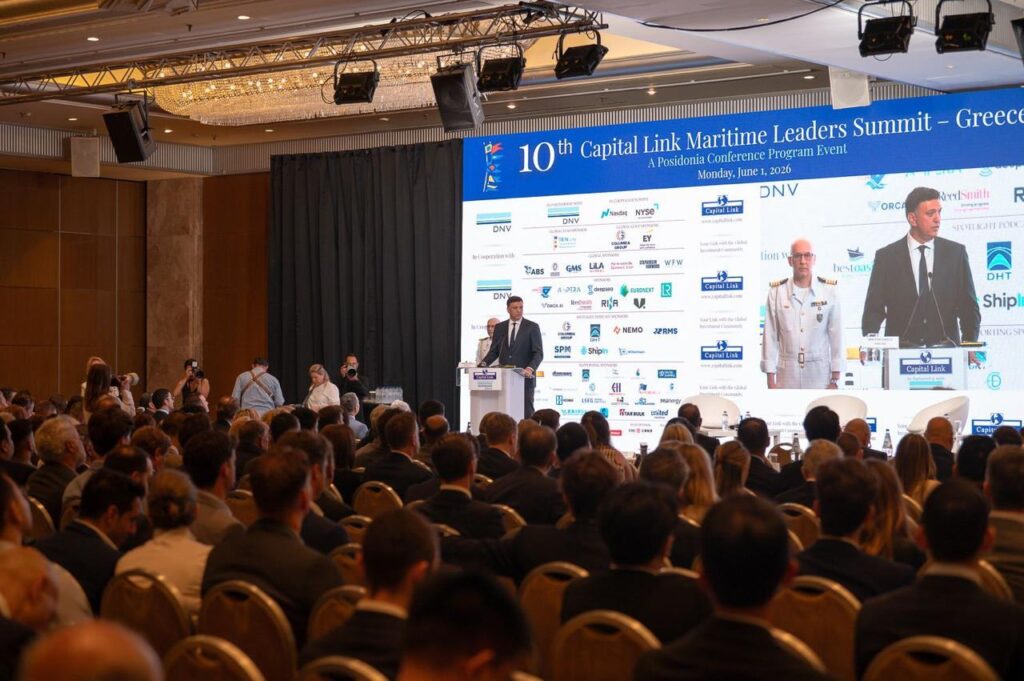
Greek shipping minister emphasized that Greece, as a leading power in global shipping, must actively participate in shaping international decisions regarding the future of the sector and not merely follow developments.
Mr. Kikilias highlighted the size and international influence of Greek shipping, noting: “Our country accounts for approximately 2% of the European Union’s GDP and yet, we have 5,800 Greek-owned ships, which represents 19%-20% of the global fleet and 61% of the European fleet, operating in more than 171,000 ports and port calls. This is a success story, of which we are proud, and it goes back many, many years, to our tradition, to our relationship with the sea.
“Back then, during the years of poverty in Greece, we have been pioneers at sea. Captains, engineers – from the islands but also from mainland Greece – decided to defly their fate, board a ship and travel across the globe. The voyages were not like today, 4-5 months, with excellent technological conditions, Wi-Fi, phones, large facilities on board ships and the ability for a seafarer to take a plane and return quickly to his family.
“It wasn’t like that. Those were difficult voyages. But they did it. They believed in it. They turned it into a real success story. And Greece spread its wings to the North, the South, the East and the West. And we are very proud of that.”
Greece’s role in international shipping
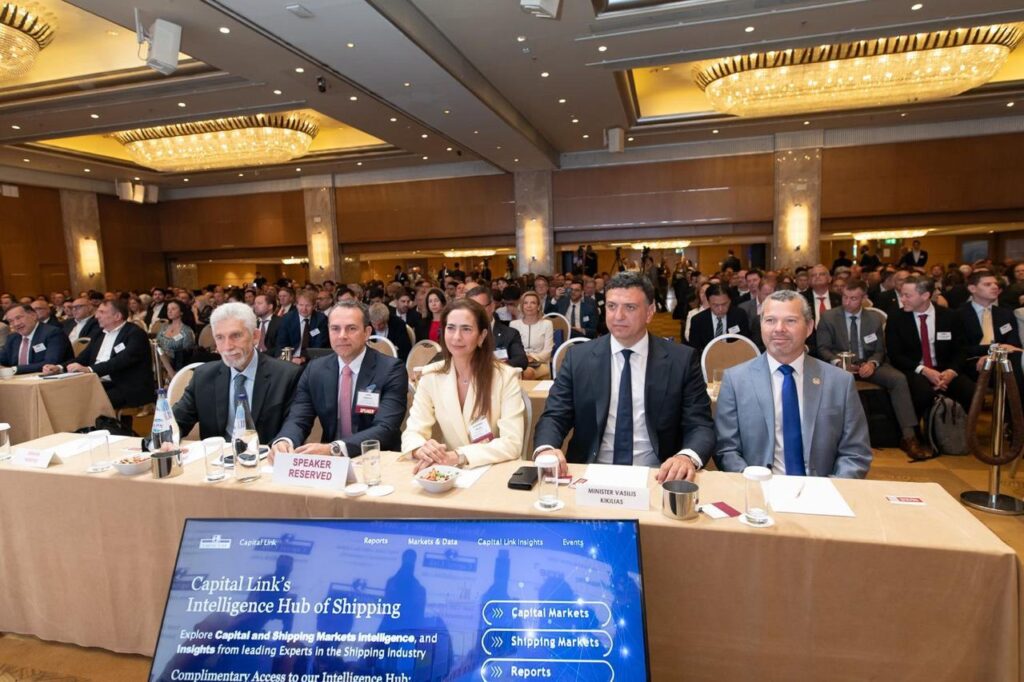
The minister then underlined that the strength of Greek shipping also entails increased responsibility in the international decision-making process.
“So, we are very happy, but also obliged, to start discussing as a country, within the European family, within the International Maritime Organization (IMO) and worldwide, as partners in this effort, and not simply to follow. We respect every point of view. We comply with every law. We believe in the IMO. We truly want a global framework. We truly want to cooperate and work with everyone. But we are present with our own policies.”
Closing remarks
In closing, Mr. Kikilias underlined that shipping remains the determining factor in international economic and geopolitical developments and that countries that will maintain a strong presence at sea will have a decisive role in global developments in the coming decades.
“I urge you, this week, to speak frankly with one another and see just how important this sector really is. Port infrastructure, FSRUs, drilling, new technologies, lower carbon emissions, tourism related to infrastructure, larger ships. Where will they travel? How will they be able to travel around the globe without problems?
“Where are our problems? Let’s identify them. Let’s try to solve them. Let’s be visionaries when it comes to the future. Because at the end of the day, the Straits have proven that it is impossible to bypass shipping, ships, and the sea. And those who will dominate the sea over the next 25 years are the ones who will shape the planet geostrategically and geopolitically,” he concluded.