HGK Shipping is urging Berlin for the creation of a state-supported initiative to channel as much as EUR12.5bn for the fleet renewal of commercial inland waterway shipping by 2035.
In the light of the low water levels in the river Rhine, Germany’s inland waterway shipping company HGK Shipping is calling for a long-term fleet renewal programme with up to 1,000 modern inland waterway vessels capable of operating in shallow waters in Europe by 2035.
The company has asked Berlin to play a leading role in this process and trigger private investments in the fleet renewal programme with a reliable long-term funding framework.
“If an average investment volume of EUR 12.5 million for each new vessel is taken as the basis for classification purposes, the target figure corresponds to investment potential of as much as EUR 12.5 billion,” it says.
HGK is suggesting a long-term “Fleet Renewal Programme for Commercial Inland Waterway Shipping 2035”. The goal should be to mobilise investments in as many as 1,000 modern, commercial inland waterway vessels in Europe by 2035.
The firm is calling on the German government to continue developing the existing funding tools to form a long-term investment framework up to 2035, which enables small and medium-sized companies and self-employed vessel owners and operators to invest in new modern ships.
The current government programme for green inland waterway shipping, which initially provides EUR125m, forms an important basis for this, but HGK says it neglects the necessary adjustments for long-term shallow water phases.
According to HGK, funding rates of as much as 40% should be examined and fully exploited as part of the opportunities provided by state aid rules.
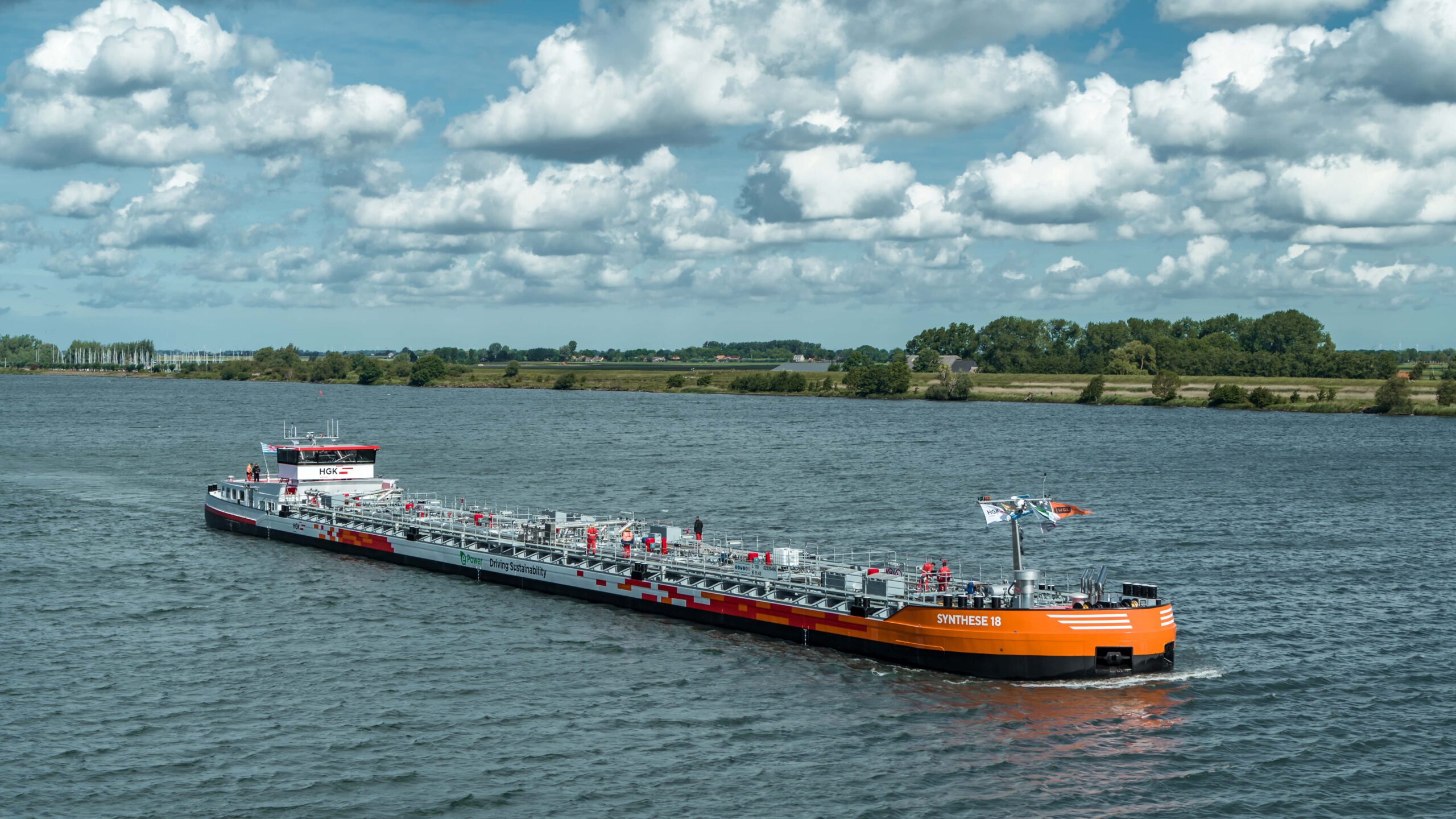
HGK cited its Synthese 18 vessel, which is still transporting a load weighing 485 tonnes, despite the severe conditions, as a model for the kind of ships required.
“We’re seeing right now what a modern fleet can achieve: our “Synthese 18” is still transporting a load weighing 485 tonnes, even at the current extreme conditions at Kaub water measurement point,” says Steffen Bauer, the chief executive officer of the HGK Group. “Let’s just imagine that we didn’t have this kind of capability, not just on individual vessels, but in relevant parts of our European fleet. That’s exactly what’s at stake with our demand for as many as 1,000 modern vessels: keeping industrial supply chains moving for longer, even if water levels are extremely low.”
The company also stresses that fleet renewal must accompany continued investment in Germany’s inland waterway infrastructure, particularly on the Middle and Lower Rhine.
The small and medium-sized structure of the sector is an additional factor. A significant proportion of the fleet is operated by small and medium-sized companies as well as self-employed vessel owners and operators alongside larger shipping companies. The high investment sums and long amortisation periods for new modern vessels represent a significant hurdle, particularly for these companies.
“We cannot prevent low water levels. But we can build vessels that are still capable of operating for longer in difficult conditions. If we want to modernise the fleet, we must also enable small and medium-sized companies and self-employed vessel owners and operators to invest in the next generation of vessels,” Bauer continues.
Bauer says modern vessels and resilient waterways are essential to safeguarding industrial supply chains and Germany’s long‑term competitiveness.
“This kind of programme would be a strong geographical signal for German industry. The companies along the river Rhine in particular must be able to rely on the fact that their supply chains function properly, even in difficult conditions. Those who invest in a resilient waterway and a modern fleet are therefore investing directly in the future viability of Germany as an industrial centre,” he adds.