The latest round of indirect technical talks between the United States and Iran have concluded with “positive” progress, according to a statement posted on Thursday by the Pakistani foreign ministry.
Qatar and Pakistan mediated the talks in Doha, Qatar.
Qatari and Pakistani mediators concluded separate meetings with the US and Iranian negotiators in Doha on Thursday, with positive progress made on issues related to the aspects of the Islamabad MoU, building on the Lake Lucerne Summit.
“Parties have agreed to continue discussions over the coming period,” the mediators said.
Another round of talks was expected to be scheduled “at the earliest possible time,” following the funeral processions of the former Iranian Supreme Leader, according to the statement.
US president Donald Trump said Monday (June 29) that Iran had requested a meeting with U.S. counterparts.
Qatari foreign ministry, however, clarified that no high-level meetings between the Iranian and American sides took place under the agreed negotiation mechanism.
Regarding the recent escalation in the Strait of Hormuz, the advisor to the prime minister and official spokesperson for the ministry Dr. Al Ansari said that Qatar had worked diligently to contain the situation, emphasizing that the technical negotiations are still ongoing despite the escalation.
He noted that escalation only widens the gap between the parties, adding that the Strait of Hormuz is one of the key issues under discussion, alongside other topics included in the memorandum of understanding, such as Iran’s nuclear program and the broader regional situation.
Dr. Al Ansari reiterated Qatar’s position that there should be no obstacles to freedom of navigation in the Strait of Hormuz, describing it as an international waterway.
“The US delegation is in Doha to meet with mediators and Qatari officials, and that the discussions cover regional issues of mutual interest, including Lebanon, without any direct talks with the Iranian side,” he said Tuesday.
Regarding the Strait of Hormuz, Dr. Al Ansari reiterated that Qatar’s position is based on respect for international maritime law, which guarantees freedom of navigation through the strait.
He stated this position is shared by Qatar, other Gulf and regional states, and the wider international community.
Qatar remains in full coordination with countries across the region, he stressed, including Qatar’s brothers in the Sultanate of Oman, through daily communication to ensure the safe passage of navigation through the strait.
Regarding the first phase of the understandings, the advisor to the prime minister and official spokesperson for the ministry of foreign affairs explained that it focuses on mine clearance and ensuring safe navigation through the Strait of Hormuz.
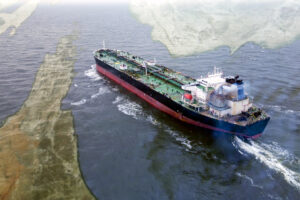
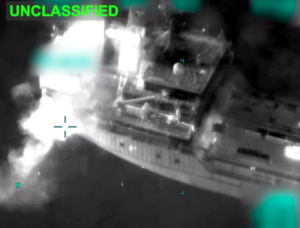
He noted that the current priority is the safety of crews aboard ships and cargo vessels, pointing out that while some vessels have crossed safely, others have come under attack.
In this context, Dr. Al Ansari expressed the State of Qatar’s appreciation for the role played by the Sultanate of Oman, affirming Qatar’s solidarity with Oman against any violation of its sovereignty, whether through attacks or incursions into Omani territorial waters.
Regarding war reparations, he said that in war, there are no winners or losers; everyone loses when war occurs.
He stressed that Qatar’s priority is to end the war, restore normal navigation through the Strait, and protect citizens, residents, and the peoples of the region from the consequences of the conflict.
He added that clearing the strait of mines is a complex process, and that Qatar welcomes any international technical contribution that could assist in this effort, while emphasizing that decisions on how such operations should be carried out rest with the countries of the region.
He noted that the crisis requires an international effort to reach an appropriate solution.