US president Donald Trump has offered an unusually detailed account of secret American operations around the Strait of Hormuz, claiming US forces were taking ships out through the South at night while Iranian radar installations were repeatedly struck. The operation, Trump said, was kept quiet. The lights were off as the US Navy worked to escort commercial traffic away from areas where Iranian weapons posed a threat.
Speaking during an interview to CNBC’s Business Day on Thursday, Trump said one night the US Navy moved 22 ships out of the area. The president revealed the operation lasted for a month and a half.
Trump says US secretly escorted 22 ships in one night
“We did something nobody knew. Every night, we were taking ships out through the South, which is the furthest point from where they have their little weapons, and they were going along the coast with no lights for a month and a half, a lot of ships came out. We had one night where we took 22 ships out. That’s a lot of oil. Those are big ships, some of them are really big ships. And in a way, they had courage going out. But our navy took them out,” he said.
He did not provide details about the exact period of the operation or identify the vessels involved, but described the movement as a silent escort mission carried out without public knowledge.
“We escorted them out, and nobody knew. The lights were off, everything was off, everything was silent. We blew up Iran’s radar, they had no radar, they still don’t. We blew it up again the other night,” he added.
Elaborating on the specific naval operations conducted against Iranian targets, the US president revealed that American forces had systematically destroyed Tehran’s radar infrastructure, forcing them to repeatedly reconstruct their systems.
Describing the stealth operations, Trump stated, “They had a nice new radar, they were all set to go, and we blew it up last week. They have to start all over again for a third time.”
Trump expressed optimism that both nations are on the verge of finalising a deal.
Speaking during the interview, he stated “And we’re negotiating, and we’ll see whether or not. I think they’ve agreed to just about everything we need.”
Turning his attention to the economic situation, the US president suggested that the United States could step in to supply Iran crucial agricultural commodities.
An agreement by the US and Iran to pause a fresh outburst of violence stabilized a truce that is the first step to permanently ending the war and underscored that each side has a vital national interest in doing so.
The monthslong war in Iran, launched by the U.S. and Israel in late February, led to last month’s ceasefire agreement that paved the way for further talks on a permanent deal. But tensions remain high, with the sides exchanging fire at one point and continuing to publicly disagree about key issues.
The U.S. has staunchly opposed any tolls in the Strait of Hormuz. The future of the strait, which was open before the strikes began in February, is still a critical point as Iranian and U.S. officials continue to negotiate a lasting peace.
On 1 May 2026, OFAC issued a warning that US and non-US persons could face sanctions risk if they make payments to, or seek guarantees from, the Iranian regime for safe passage through the Strait of Hormuz. These risks exist regardless of payment method.
Behind the latest flare-ups, there was always a strategic rationale that augured against a return to full-scale war.
The US has moved to waive some sanctions pending a final agreement. An uptick in all maritime traffic through the strait, meanwhile, helped eased global oil prices.
US authorizes Iranian oil sales amid talks on final peace deal
The United States has temporarily lifted major sanctions on Iran, authorizing the production, delivery and sale of Iranian-origin crude oil, petroleum and petrochemical products. The 60-day general license issued by the US Treasury Department remains in effect through August 21 and aligns with the timeline of an interim agreement aimed at securing a final peace deal between Washington and Tehran.
The sanctions relief allows transactions for the safe docking and anchoring of vessels carrying such crude oil, petrochemical or petroleum products, emergency repairs or environmental mitigation or protection activities relating to any such vessel or to such crude oil, petrochemical products, or petroleum products held in storage, and services such as vessel management, crewing, bunkering, piloting, registration, flagging, insurance, classification, and salvage.
Iran, Oman launch joint Hormuz Committee to discuss Strait’s future management
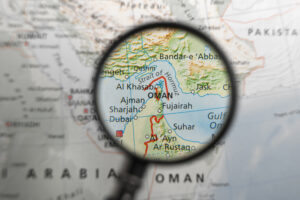
Iran and Oman have held the first meeting in Muscat of their joint Hormuz committee, with discussions focusing on the future management of the Strait of Hormuz.
The Omani delegation was led by Sheikh Abdulaziz Al Hinai, foreign ministry ambassador at large, while the Iranian delegation was headed by Kazem Gharibabadi, Iran’s deputy foreign minister for legal and international affairs.
In that statement, the Omani foreign ministry emphasized that the meeting discussed ways to strengthen coordination on matters concerning the Strait of Hormuz in line with the mutual interests and sovereignty of both nations.
“It also explored frameworks for cooperation in navigation and maritime services, building on the status of Oman and Iran as the two littoral states of the Strait and on existing bilateral and international understandings,” reads the statement.
According to analysts, Washington could not allow Iran to control shipping through the Strait. To do so would suggest it was defeated in a war it started. In the process, US power in the region, expressed by its capacity to protect allies, would weaken.
Now the key question is whether the confrontations over the Strait continue to burn at a controllable level or whether they ignite and destroy the entire agreement and diplomatic process.
China urges ‘Unimpeded Passage’ of Hormuz
China called on Friday for the unhindered flow of shipping through the Strait of Hormuz.
“Resuming safe and free passage in the Strait at an early date serves the interests of all sides. A proper settlement is needed to address issues concerning the passage at the Strait of Hormuz and the shared concerns in the international community need a proper response,” Foreign Ministry spokesman Guo Jiakun said at a regular press briefing in Beijing.