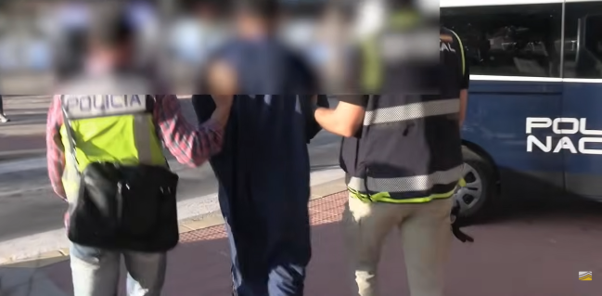
A Spanish-led international police operation supported by Europol arrested 78 suspects in Spain and Algeria, dismantling a major smuggling network across the Western Mediterranean. Its members arranged storage, transport, refuelling, maritime transfers, vessel maintenance, and counter-surveillance services.
Functioning like a logistics company, the network allegedly controlled an entire fleet of vessels, including so-called ghost speedboats, vessels designed to avoid registration and detection, which are prohibited in Spain due to their length and motor power. These types of speedboats are frequently used by organised crime groups, especially drug traffickers, to transport illegal goods.
The network used the same high-powered speedboats to conduct drop-offs at sea in international waters near the Spanish coast. These maritime handovers were designed to minimise detection risks while enabling quick transfers of drugs, weapons, and migrants to shore.
Once the cargo or migrants were handed over at sea, other network members arranged onward transport by land.
This modus operandi allowed suspects to separate maritime and land-based operations, complicating law enforcement efforts and increasing risks for migrants transported in dangerous conditions.
Migrants were often carried in overcrowded boats without lighting or life jackets, frequently under extreme weather conditions.
The members of the organisation were assigned various roles in the criminal chain including skippers, logistics managers, fuel suppliers, security guards, recruiters, and financial operators.
Some were responsible for acquiring and storing vessels, while others arranged crew members, fuel and refuelling at sea, boat and engine purchases, safe houses, land transport, or communications.
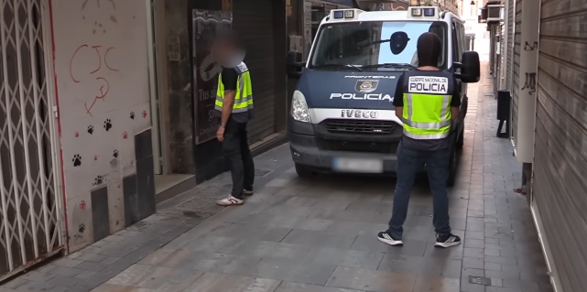
During raids across 17 locations in Spain, officers seized 18 high-speed vessels valued at more than 5 million euros, alongside a 38-caliber revolver, a simulated submachine gun, ammunition, satellite phones, GPS devices, encrypted communication tools, satellite dishes, significant quantities of MDMA pills, hashish, cocaine and more than 25,000 euros in cash.
The suspects, primarily of Algerian origin, had connections to criminal groups in France, Belgium, Portugal, Italy, and Poland.
Operational bases were located in Spain (Almería, Murcia, Cartagena, Alicante, Ibiza), as well as in France (Marseille), Belgium, Portugal, Italy, and Poland, while the leadership resided in France and Belgium.
A criminal network operating like a logistics company
The criminal network evolved from drug trafficking into a dual-flow criminal enterprise designed to maximise profits.
On outbound routes from Spain and Portugal to Algeria, the smuggling focused on synthetic drugs (such as MDMA), firearms, and explosives.
Along return routes from Algeria to Spain, the group smuggled migrants, charging up to 12,000 euros per person.
In just one trip, over 50 migrants could be smuggled. All in all, profits from migrant smuggling alone are estimated to be more than 24 million euros.
The network also provided services to other organised crime groups, facilitating the movement of illicit goods and people across the Western Mediterranean.
Europol supported the Spanish-led operation, which brought together officers from the French National Police, and the Spanish National Police and Guardia Civil. The case was also supported by the Portuguese Judicial Police and the Polish Border Guard.