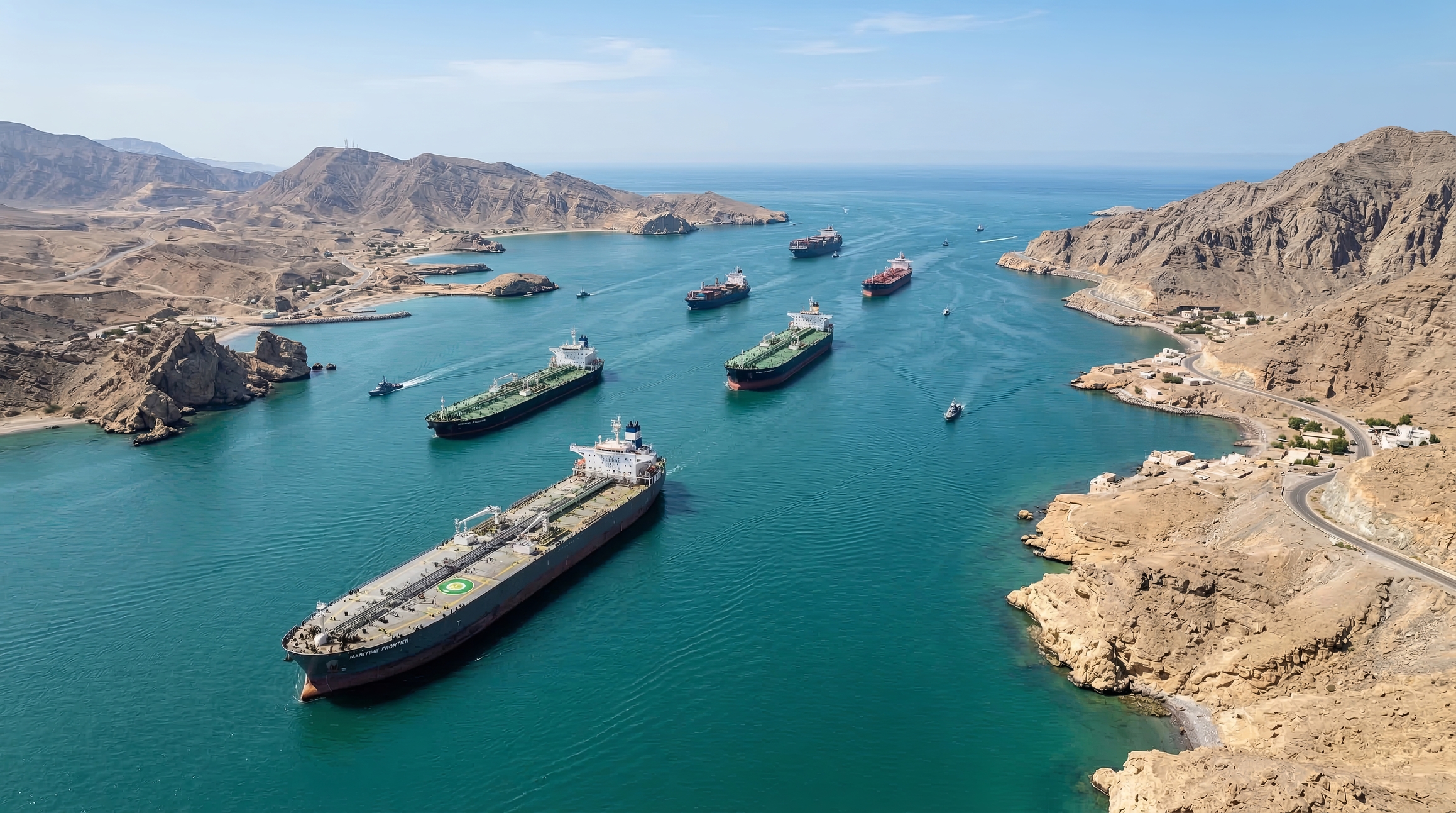
Iran said an agreement reached with Oman on a new maritime route in the Strait of Hormuz does not amount to reopening the strategic waterway.
Iranian foreign minister Abbas Araghchi stressed that the agreement with the Sultanate of Oman should in no way be interpreted as meaning that the strait would be reopened.
Araghchi said the memorandum of understanding sets out the framework and details the new shipping route through the Strait of Hormuz that would be used if conditions are created for reopening the strategic waterway.
Based on the agreement that has been finalized between Iran and Oman, the details and specifications of the new entry and exit routes from the Strait of Hormuz have been determined.
He said Tehran and Muscat had finalized an agreement on establishing the new maritime route and had prepared maps and a joint statement outlining the arrangements.
The foreign minister said a planned meeting in Oman with other Persian Gulf littoral states will focus on the new maritime route through the Strait of Hormuz.
Participating countries will be briefed on the agreement, related maps and the joint statement, after which the documents will be submitted to the International Maritime Organization (IMO), he added.
Araghchi said Iran’s condition for reopening the strait is for the US to return to its commitments under the Islamabad memorandum of understanding.
“If the US returns to the commitments it accepted and signed in the Islamabad understanding and acts accordingly, the conditions will be created for the situation in the Strait of Hormuz to return to normal,” he said.
He also attributed the lack of maritime security in the Strait of Hormuz to US aggressive actions and illegal interventions, saying Washington’s conduct is the main factor behind the absence of security in the waterway.
Araghchi accused Washington of undermining maritime security through what he described as a “naval blockade” and “economic warfare.”
He stressed that the MoU outlines new maritime arrangements in the Strait of Hormuz, but does not mean the reopening of the strait.
He added that Tehran believes responsibility for ensuring security and stability in the region rests solely with regional countries.
Araghchi stressed, however, that the gathering in Oman is limited to the new maritime arrangements in the strait.
The foreign minister expressed hope that talks would pave the way for further consultations on issues of common concern among countries in the region.
Iran, Gulf countries meeting to discuss Hormuz navigation postponed
The regional meeting scheduled to take place on Monday in Salalah, in the Sultanate of Oman, has been postponed to a later date.
Omani foreign minister Badr Albusaidi said the meeting was delayed “in the interests of consensus.”
In an official statement posted on social media platform X, Badr Albusaidi said this is in order to help create the appropriate conditions for constructive dialogue.
In a press briefing on Friday, Iran’s foreign ministry spokesperson Esmail Baghaei announced that foreign ministers from Iran, Iraq, and other littoral states of the Persian Gulf and the Sea of Oman are scheduled to take part in the meeting.
He stated that the meeting would address issues concerning the region, including the outcome of negotiations between Iran and Oman regarding the designation of safe routes for commercial shipping through Hormuz.