White House press secretary Karoline Leavitt didn’t give a timeline for how long the U.S. blockade of Iranian ports would remain in place. White House press briefing took place yesterday, hosted by US president Donald Trump’s press secretary Leavitt.
After an early section of the briefing focused on domestic issues, the news conference touched on the economic impact of the war in Iran – specifically, the price of oil and the Strait of Hormuz.
A reporter asked Leavitt how long the US navy blockade of Iranian ports will go on.
“With respect to the blockade, as you know it has been fully implemented and it’s being enforced against vessels of all nations entering or departing Iranian ports,” Leavitt said. “This includes all Iranian ports on the Arabian Gulf and the Gulf of Oman.”
She said she will “never set timelines on behalf of the president,” but highlighted that the operation has now been fully implemented.
The blockade is being enforced against vessels of all nations that are entering or departing Iranian ports.
For vessels transiting the strait outside of the ports, US forces are supporting freedom of navigation, she added.
She also said she’s seen some “misreporting” on the blockade, adding that for vessels transiting the strait outside of Iranian ports, US forces are “supporting freedom of navigation”.
“I’ve seen some misreporting on that as well. This includes all Iranian ports on the Arabian Gulf and the Gulf of Oman, and our US forces in the region are supporting the freedom of navigation for vessels that are transiting the strait to and from non-Iranian ports. So I know some in the press were confused about that. We are supporting the freedom of navigation, just not with respect to any tanker or vessel that would benefit the economy of Iran as these negotiations continue.”
Leavitt was joined at the press briefing by the US treasury secretary, Scott Bessent.
When the US treasury secretary was asked what he can say to shipping companies to encourage them to do again business in the Strait of Hormuz, he said: “We need to see when the Strait will be permanently open. This is a mechanism … when we declare that it is safe, the companies must have insurance. We want to provide an economically sound basis for the ships to move in and out of the Gulf as they did before the start of the conflict.”
“We are waiting for the ships to be able to get some kind of normality and then they can come to the DFC,” he added.
The U.S. will provide reinsurance for losses up to $20bln in the Gulf region, to help restore confidence for oil, gasoline, LNG, jet fuel, and fertilizer shippers during the war on Iran. The U.S. International Development Finance Corporation (DFC) reinsurance facility will insure losses up to approximately $20bln on a rolling basis. This revolving insurance offering will apply only to vessels that meet eligibility criteria. Furthermore, insurance will focus on Hull & Machinery and Cargo to start.
US treasury secretary Bessent ‘optimistic’ gas prices will fall before late September
Bessent was also asked by reporters when Americans could start seeing lower gas prices which have gone up considerably since the start of the war.
Pressed on whether this can be achieved by the summer, Bessent said:
“I am optimistic that sometime between June 20 and September 20, we can have $3 gas again,” adding that prices will depend on how the negotiations with Iran will go.
Meanwhile, the U.S. military says it has successfully blocked ships entering and exiting Iranian ports during the first 48 hours of the U.S. blockade on ships.
Additionally, 9 vessels have complied with direction from U.S. forces to turn around and return toward an Iranian port or coastal area.
“During the first 48 hours of the U.S. blockade on ships entering and exiting Iranian ports, no vessels have made it past U.S. forces,” CENTCOM wrote in a statement on X.
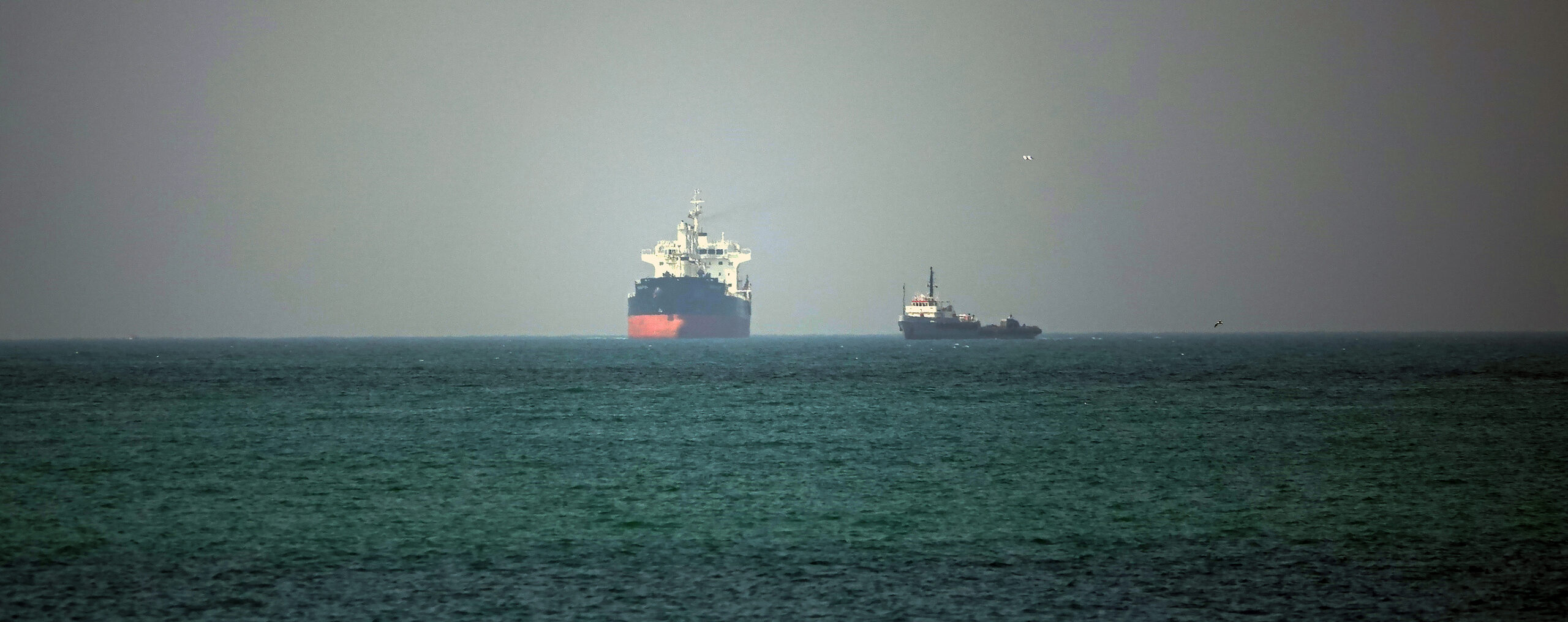
U.S. naval vessels are on patrol in the Gulf of Oman as CENTCOM continues to execute a U.S. blockade on ships entering and departing Iranian ports. U.S. forces are present, vigilant, and ready to ensure compliance. pic.twitter.com/dnHR2oz0ZN
— U.S. Central Command (@CENTCOM) April 15, 2026