Russian foreign ministry spokesperson Maria Zakharova has criticised France over the detention of an oil tanker in the Atlantic, calling the move a violation of international maritime law.
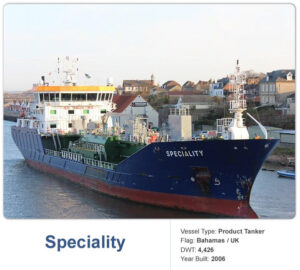
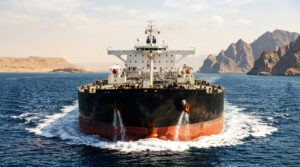
According to the ministry’s press service, the incident occurred on May 31 when French military forces, reportedly with British support, intercepted and detained the vessel, some 400 nautical miles west of Brittany, on the alleged grounds that it was flying a false flag.
The ship was sailing from the Russian port of Murmansk to Cameroon and was said to be carrying “virtually no cargo.”
The Russian Embassy in France has requested detailed information from the French authorities regarding the circumstances of the detention and said it is taking steps to protect the Russian nationals among the crew.
France has cited Article 110 of the 1982 UN Convention on the Law of the Sea, which allows for the inspection of a vessel on the high seas if it “has no nationality.”
“This justification is without foundation,” Zakharova told reporters, arguing that while the law permits a warship to stop and, in strictly limited circumstances, inspect a vessel on the high seas, there is no legal basis for forcibly diverting a vessel from the high seas – a maritime space where unfettered freedom of navigation applies – to a port in the warship’s home country.
She also disputed references by French president Emmanuel Macron that the vessel allegedly violated international sanctions (that caused the vessel to be redirected to a French port), mentioning that only sanctions approved by the UN Security Council are truly international.
“The illegal unilateral restrictive measures adopted by Europeans exist as “international” only in the imagination of the Franco-British pirate tandem. The contradiction between such “sanctions” and international law has been repeatedly noted by the UN General Assembly,” the statement reads.
Zakharova also reminded European colleagues that vessels operating in their interests routinely fly flags of convenience.
“If the French persist in turning their efforts against such vessels on the high seas, where freedom of navigation prevails, it may prove costly for global commercial shipping,” she warned.
French President Emmanuel Macron announced the capture in a social media post on Monday, adding that it happened with support from several allies, including Britain.
“It is unacceptable for ships to circumvent international sanctions, violate the law of the sea, and fund the war that Russia has been waging against Ukraine for more than 4 years,” Macron wrote.
Sharing footage of the operation on X, the French president said vessels evading international sanctions and maritime regulations posed both a security and environmental threat.
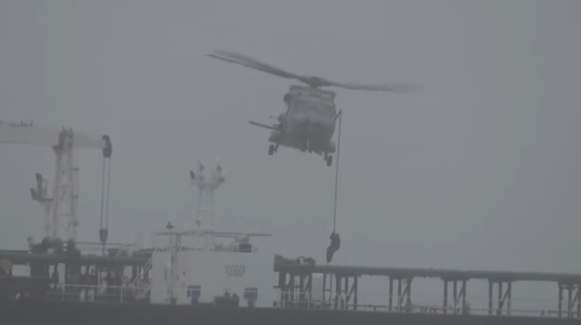
The post included a video showing a person rappelling from a helicopter onto a ship. This move is the latest in a series of French naval interceptions of tankers suspected of links to Russia.
Western governments have long accused Russia of operating a so-called “shadow fleet” comprising hundreds of vessels used to bypass sanctions imposed after the war against Ukraine.
Recently, Türkiye condemned a strike by an unmanned aerial vehicle on a Turkish-owned dry cargo vessel in the Black Sea on the night of May 28. The vessel, owned by a Turkish company, Vanuatu-flagged, was transporting dry cargo from the Port of Odesa, Ukraine, to Türkiye when it was attacked by an unmanned aerial vehicle, according to Turkey’s foreign ministry.
Türkiye stated that two of its citizens in the crew sustained minor injuries as a result of the attack on the ship in the Black Sea. Turkey’s foreign ministry expressed concern over the escalation in the Black Sea related to the war.
The Ukrainian side directly accused Russia of being involved in the attack, mentioning that ports and crews continue to ensure the movement of cargo and global food security despite the constant attacks.
When asked about the recent attacks in the Black Sea, Zakharova blamed Ukrainian armed forces for carrying out raids on ships using USVs (uncrewed surface vessels) or UAVs, and blaming it all on Russia.