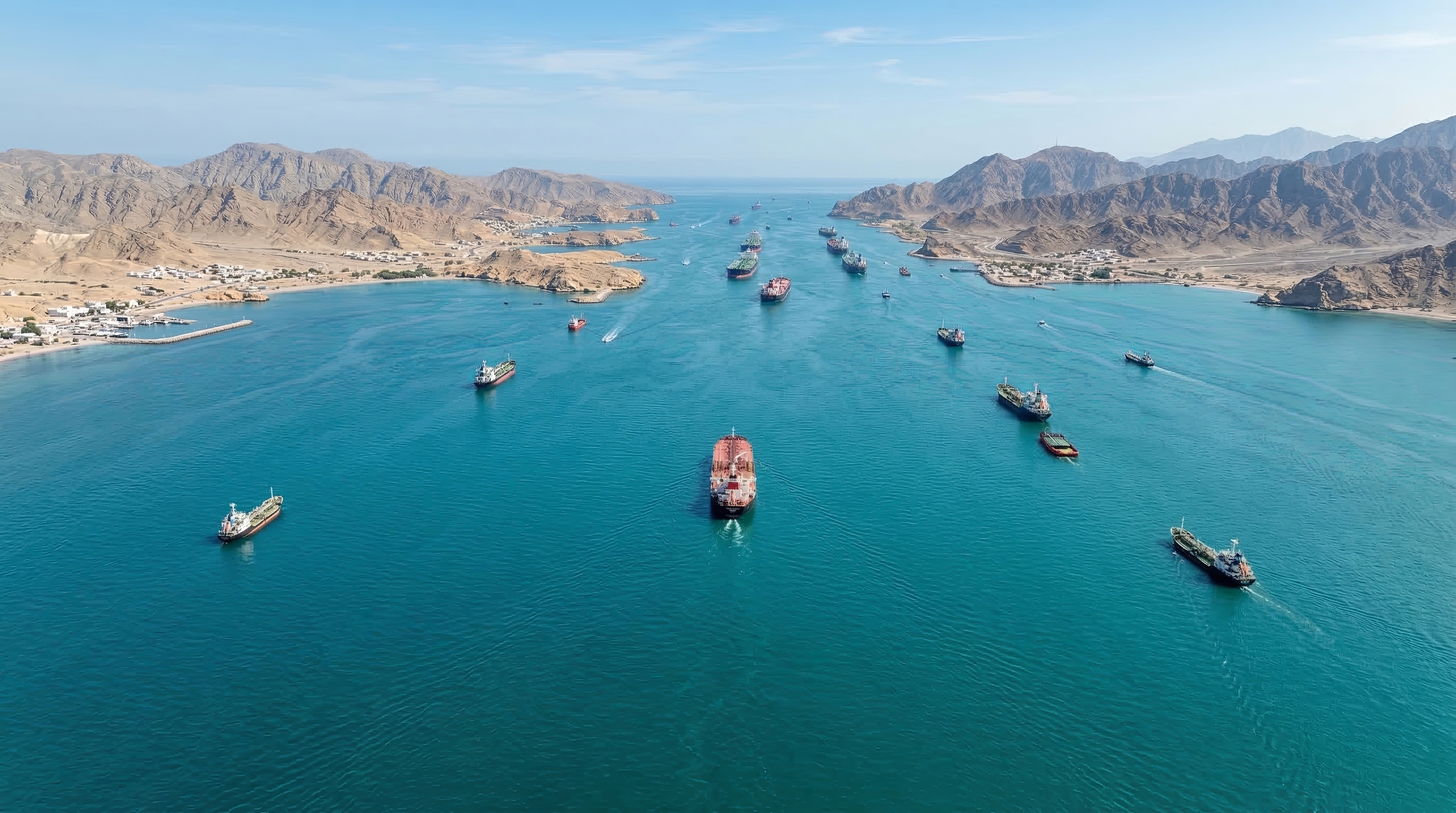
A more defined transit framework is emerging in the Strait of Hormuz requiring vessels to submit full details prior to clearance, undergo cargo verification, and pay $1 per barrel fee as transit through Hormuz.
According to new operational insights, gathered by data and analytics platform firm Kpler, a new transit framework for ships in the Strait of Hormuz will be put in place, with Larak Island serving as both the administrative and enforcement centre, and vessels being required to submit full details, including Q88 documentation, prior to clearance.
The fresh operational insights indicate a more defined transit framework emerging in the Strait of Hormuz. New protocols are being put in place to regulate how ships transit the strait.
Liquid cargoes are subject to a US$1 per barrel fee, payable on exit from the Gulf, reportedly in cryptocurrency. The process includes pilot boarding and cargo verification before onward transit.
Restrictions on certain flagged or owned vessels, alongside administratively controlled traffic, point to a more regulated environment with implications for cost, compliance, and transit times.
Hormuz transit system takes shape
— Kpler (@Kpler) April 14, 2026
Fresh operational insights indicate a more defined transit framework emerging in the Strait of Hormuz. Larak Island serves as both the administrative and enforcement centre, with vessels required to submit full details, including Q88… pic.twitter.com/Ma11KeaRtJ
US deploys 10,000 troops, over 12 warships & more for Hormuz blockade
The United States’ naval blockade around Iranian ports, which began on Monday, now has more than 10,000 American personnel and multiple warships and aircraft deployed for the operation, according to a statement by U.S. Central Command (CENTCOM).
More than 10,000 U.S. sailors, marines, and airmen along with over a dozen warships and dozens of aircraft are executing the mission to blockade ships entering and departing Iranian ports, the statement further read.
CENTCOM also informed that in the first 24 hours of the operation, no ships were able to pass through the U.S. blockade.
It said that six merchant vessels complied with directions from the US forces. “During the first 24 hours, no ships made it past the U.S. blockade and 6 merchant vessels complied with direction from U.S. forces to turn around to re-enter an Iranian port on the Gulf of Oman.”
The US mission is being executed by 10,000 plus service members, 100 plus fighter and surveillance aircraft and 12 plus warships.
The blockade, according to the statement, is being enforced “impartially” against vessels of all nations entering or departing Iranian ports and coastal areas, including all Iranian ports on the Arabian Gulf and Gulf of Oman.
According to analysts, the blockade is part of an effort to force Iran to fully open the Strait of Hormuz and agree to a permanent peace agreement.
From their standpoint, the blockade is considered another pressure tactic – one intended to increase the temperature on Iran to return to talks in a more conciliatory fashion.
China has called the US naval blockade of Iranian ports “irresponsible and dangerous.”
Beijing’s foreign ministry said the move would “undermine the already fragile ceasefire” and further jeopardize safe passage through the Strait of Hormuz.
A delicate and fragile ceasefire between the US and Iran remains in place, having been implemented earlier this month. Major points of contention between USA and Iran include the status of the Strait of Hormuz.
Pakistan mediated a ceasefire between the warring parties, paving the way for rare, high-level talks between US and Iranian negotiators in Islamabad on Saturday. The discussions lasted roughly 20 hours but ended without an agreement to end the war, jeopardizing the fragile two-week ceasefire.
China’s foreign ministry spokesman Guo Jiakun told a news conference on Tuesday that only a complete ceasefire can fundamentally create conditions for easing the situation.
He also urged all relevant parties to honor the ceasefire agreement, stick to the direction of peace talks, and take concrete actions to deescalate the situation so that normal traffic via the Strait will be able to resume as soon as possible.