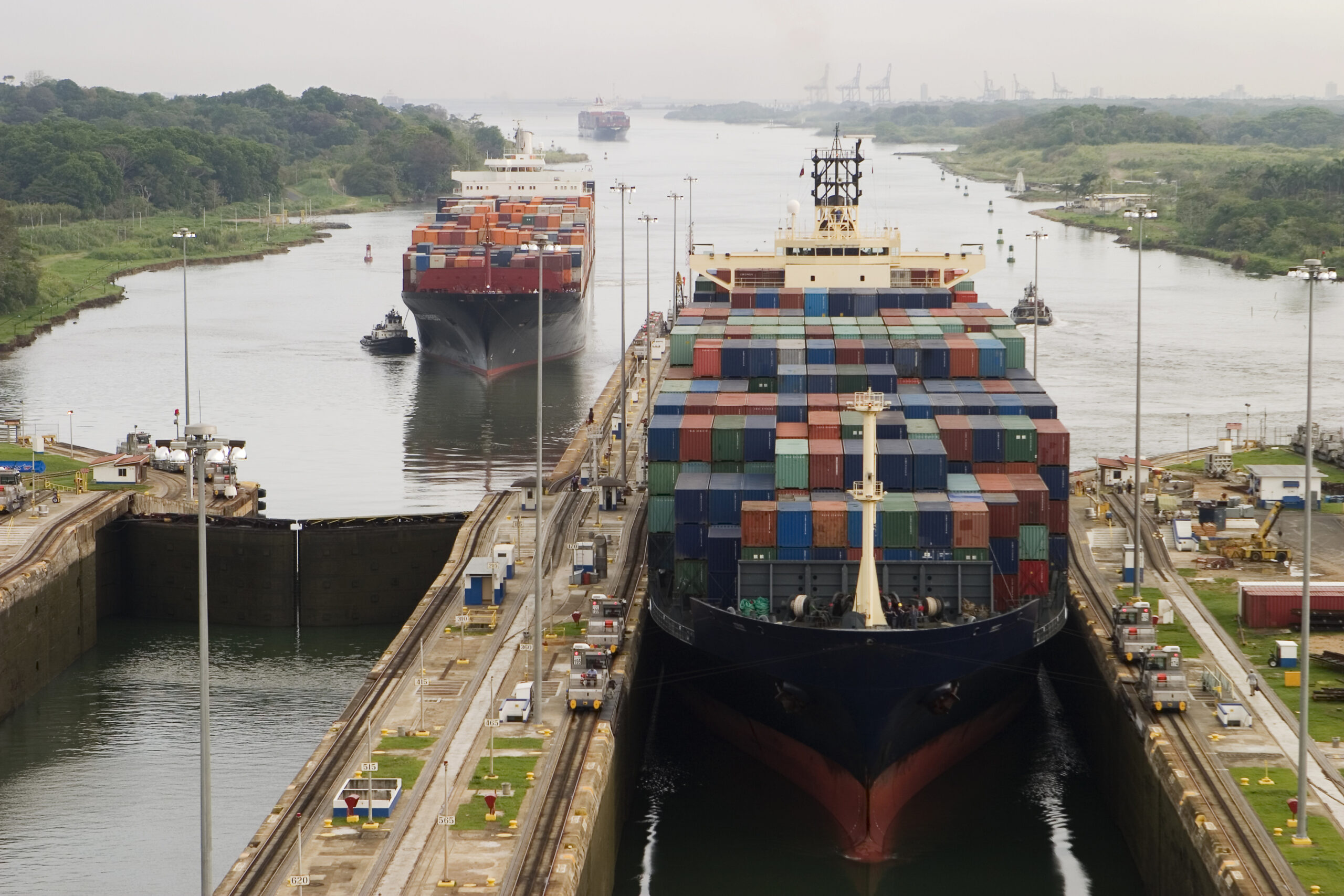
The Panama Canal Authority (ACP) announced a draft adjustment for vessels passing through the Neopanamax locks. Effective July 3, the ACP will implement a draft reduction at the Neopanamax locks, as part of a water-management strategy aimed at safeguarding operations of the Canal.
Based on present and projected Gatun Lake levels for the upcoming weeks, the authority announced that the maximum authorized draft for vessels transiting the Neopanamax locks will be 15.09 meters (49.5 feet), tropical fresh water.
The authority described the move as part of its water management strategy designed to ensure safe, reliable and sustainable operation of the Canal under current hydrological conditions and considering the potential development of an El Niño phenomenon over the watershed in the upcoming months.
Panama Canal specialists continue to closely monitor lake levels and hydrological projections, and any additional operational adjustments will be announced, as ACP said, as deemed necessary.
NOAA’s National Weather Service is predicting El Niño is likely to emerge by July 2026 and continue through the winter, and for many locations in the U.S. this could mean more high tide flooding.
According to NOAA, El Niño is likely to emerge soon (82% chance in May-July 2026) and continue through Northern Hemisphere winter 2026-27 (96% chance in December 2026-February 2027).
While confidence in the occurrence of El Niño has increased recently, there is still substantial uncertainty in the peak strength of the El Niño weather phenomenon.
El Niño is a naturally occurring climate pattern associated with warming of the ocean surface temperatures in the central and eastern tropical Pacific Ocean, which can significantly influence weather patterns, ocean conditions, and marine fisheries worldwide.
NOAA said the next El Niño-Southern Oscillation (ENSO) Diagnostic Discussion is scheduled for 11 June 2026.